


Les Cunningham's NHL career was brief, but the AHL's most valuable player award was named for him in recognition of his excellence
Les Cunningham's NHL career was brief, but the AHL's most valuable player award was named for him in recognition of his excellence
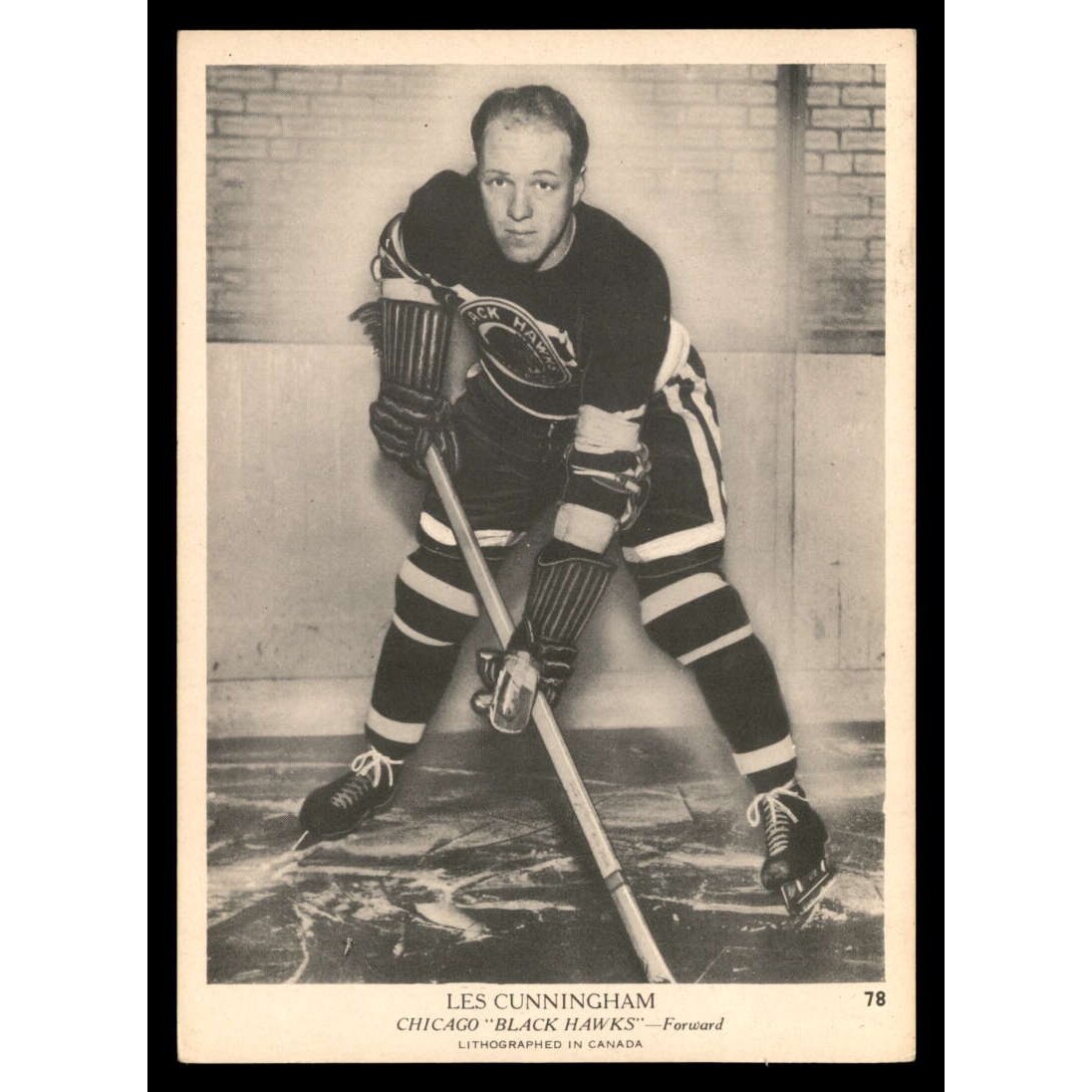
Les Cunningham's last NHL game was played in 1940, and other than one significant highlight he didn't have much of a career to speak of at that level. But his name is known today by anyone who's on familiar terms with the AHL.
Cunningham was born in Calgary on this date in 1913. He played junior hockey in his hometown and in Regina, then played a season of senior hockey in Saskatoon before turning pro in 1934 with the Buffalo Bisons of the old International Hockey League, a predecessor league of the AHL.
After starting the 1936-37 season with the Cleveland Falcons, who later became the Barons, he was traded to the New York Americans in January 1937 and made his NHL debut in a game against Boston. He scored only one goal and nine points in 23 games with the Amerks, who sold him back to Cleveland.
The Chicago Black Hawks brought Cunningham back to the NHL in 1939-40, his only full season in the big league. He dressed for 37 of the team's regular season games and one playoff contest, scoring six goals and 17 points. By far his greatest success came in games against the last-place Montreal Canadiens; on Jan. 28, 1940, he had two goals and three assists in the final frame of an 8-1 Chicago victory, tying an NHL record and becoming only the sixth player in league history to record five points in a period. A month later, he had a goal and four points in another lopsided win over the Habs. Unfortunately, the Black Hawks couldn't play all of their games against Montreal, and they sold Cunningham back to Cleveland at the the end of the season.
Cunningham became a star in the AHL, where he was a perennial top scorer with the Barons. He helped them to Calder Cups as playoff champions in 1939, 1941, and 1945, and won the AHL scoring title in 1940-41, finishing in the Top 10 of league scoring on six other occasions. When he left Cleveland in 1947 to finish his hockey career with a Barons' affiliate team in San Francisco, no one in AHL history had scored more goals (233) or points (579).
Cunningham’s AHL records were surpassed long ago, and he no longer shares the NHL record for points in a period - Bryan Trottier and Mika Zibanejad do - but the AHL commemorated his career by immediately establishing an award for its most valuable player and naming it after him. It was presented for the first time in 1948.
More than 30 years after he passed away in 1993, the Les Cunningham Award lives on in the league that also inducted him into its Hall of Fame in 2009.
Also born on this date:
1934 – Connie Madigan was born in Port Arthur, Ont. A rugged defenseman and another minor-pro lifer, Madigan made news in February 1973 when he made his NHL debut with the St. Louis Blues at age 38. He was believed at the time to have been the oldest rookie in league history. (That honor actually belongs to Lester Patrick, who was 43 when he played in his first NHL game in March 1927.) Madigan registered three assists in 25 total games with the Blues. He was long considered one of the toughest and most feared players in the old Western Hockey League, where he toiled mostly with the Portland Buckaroos and earned the nickname “Mad Dog.” His reputation helped him get hired for a memorable cameo appearance as a goon named Ross “Mad Dog” Madison in the classic hockey movie Slap Shot. He was on screen for eight seconds, offering a one-fingered salute to an arena full of hostile fans. Madigan passed away in January 2024, aged 89.
1940 – Vic Hadfield was born in Oakville, Ont. Drafted by the New York Rangers out of the Black Hawks organization in 1961, Hadfield played 13 seasons on Broadway, mostly as the left winger alongside center Jean Ratelle and right winger Rod Gilbert on what became known as the GAG Line (GAG stood for “Goal a Game.”) In 1971-72, his first season as the Rangers' captain, Hadfield became only the sixth player in NHL history to score 50 goals in a season, a milestone he reached with two goals on the final day of the campaign; he got his 50th with just over five minutes left in the game. That was only one of the 350 goals he scored in a career that lasted 1,078 regular season and playoff games.
1948 – Tom Webster was born in Kirkland Lake, Ont. Webster was a 1966 draft pick by the Boston Bruins and the 1968 OHA Junior A scoring champion, leading the Niagara Falls Flyers to the Memorial Cup that same year. He continued to score well in the minors but couldn’t crack the Bruins’ lineup. The Detroit Red Wings picked him up in 1970 with the idea that he could be their first-line right winger after Gordie Howe finally retired, and Webster responded by leading the team with 30 goals and 67 points and finishing fourth in the Calder Trophy voting. The Red Wings rewarded him by trading him to the California Golden Seals early in the 1971-72 season, which soon ended for Webster due to a serious back injury that required spinal fusion surgery. Bolting to the WHA, Webster scored 53 goals and 103 points with the New England Whalers and added 12 goals and 26 points in 15 playoff games to lead them to the first Avco World Trophy as WHA champions. Webster continued to be a prolific scorer for the Whalers, but continuing back issues led to two more surgeries and the end of his career in 1980 when he was only 31. He spent the next 30+ years coaching and scouting junior and pro hockey, and had head coaching stints with the Rangers and the Kings. He was 71 years old when he died in April 2020.