


Stephen R. Sylvanie-Imagn Images


Sep 10, 2025 4:45 PM
The world of junior hockey has changed a great deal over the last year.
The rules regarding NCAA eligibility for CHL players have become much more relaxed, with any player not having signed their entry-level contract becoming eligible to join an NCAA squad. That decision has affected North American junior hockey at all levels and the college game in Canada and the United States.
Now, there seems to be another change on the horizon.
Although it’s not official, the NHL is working with the CHL to create a path for a limited number of 19-year-old major junior players to get an automatic pass into the AHL as soon as this season, according to PuckPedia.
This is not an AHL rule, as players 18 and up are already eligible to play in the league. It's based on an agreement between the NHL and CHL.
But in a memorandum of understanding for a new collective bargaining agreement between the NHL and NHLPA, the NHL will reopen its agreement with the CHL to seek to eliminate the mandatory return rule for 19-year-olds. Instead, the NHL wants its clubs to be able to loan one player per year to the AHL without being required first to offer them to their junior club.
This could affect up to 32 players in the CHL every season, although the number will likely come in far lower, as not every team will have a player worth moving to the AHL that soon. For CHL clubs, that could be detrimental. With some of their top talent now being poached by NCAA clubs during their age-19 or 20 season, the pool of talent was already set to be diluted somewhat.
A new loan to the AHL would not only remove some good talent from the CHL, but it would skim the best talent right off the top as NHL clubs try to get their highest-end prospects in pro systems.
Instead of losing just players like Henry Mews, Luke Misa and even an elite talent like Gavin McKenna, who all went to the NCAA, there is a risk of losing talents on entry-level contracts, such as Beckett Sennecke, Berkly Catton and Sam Dickinson.
There will likely be financial compensation of some sort from NHL clubs to the CHL teams that are losing their top-end talent, but that doesn’t replace the impact those players have on and off the ice. Fans come to see stars, and the CHL must adjust to not only marketing their young players but also allowing them to grow into stars earlier than they’ve typically been accustomed to.
Strictly from a CHL perspective, it comes out like another punch to the gut for a league that is losing talent it wouldn't have otherwise lost a year ago.
From the perspective of a player and their development, it’s a much different viewpoint.
Let’s take Liam Greentree as an example.
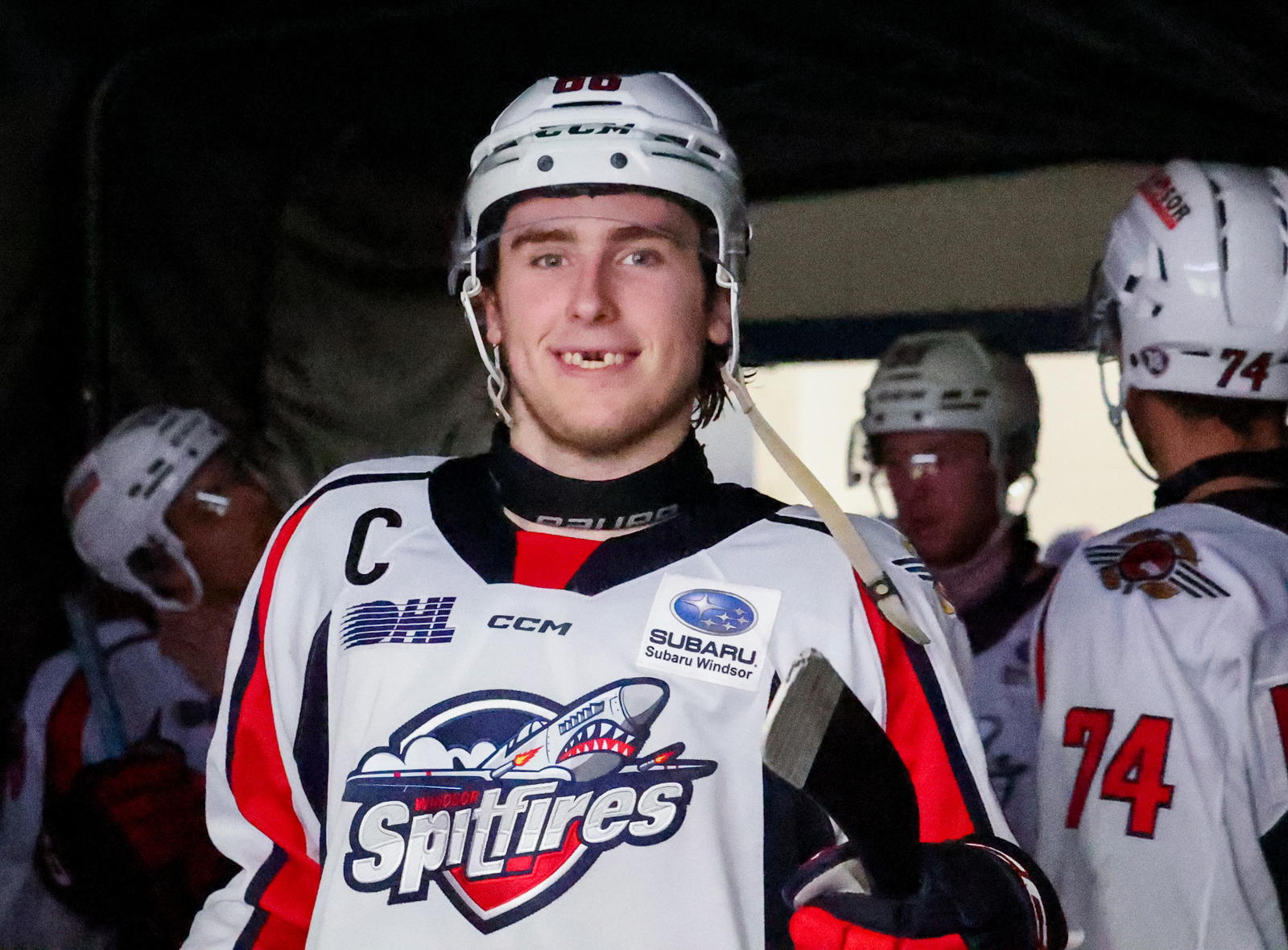 Liam Greentree (Natalie Shaver-OHL Images)
The Windsor Spitfires right winger was selected in the first round of the 2024 NHL draft after an excellent OHL season, where the captain put up 90 points in 64 games. He returned last year for his third OHL season, finishing third in league scoring with 119 points. Having signed his entry-level contract already, the NCAA isn’t an option.
Greentree has proven basically everything he can in the OHL, averaging nearly two points per game last season, and he's improved in all the areas he needed to work on when he was drafted. Greentree looked faster and was quicker to make decisions with the puck, but he could still make plays through contact as well.
Another season in the OHL would be fun for fans, and the Spitfires would certainly be happy to have their captain back, but is putting up 140 points necessarily what’s best for him?
That’s where this potential new agreement could be a massive benefit for players who are pushing their limits at the CHL level statistically, physically and developmentally. Someone like Greentree has put up huge numbers and punished junior players to an extent with his body, and his development would likely fare much better in a pro environment at this point.
This theory won’t apply to every high-end scorer, however.
Some will look at the NCAA as the logical next step as a 19-year-old. Henry Mews is a great example of a player who was statistically starting to outgrow the CHL. Mews opted to go to the University of Michigan, where he can work on growing physically to become a bit stronger and sturdier while taking a step up in competition.
Other players will have excellent statistical success and even some physical advantages over junior players, but they still have room to grow in junior hockey. They can still refine some of their habits before taking the next step.
Soon-to-be 19-year-old Kashawn Aitcheson, drafted 17th overall this year, is an excellent example of that. His return to the Barrie Colts will allow him to refine his defensive game and grow into the player the New York Islanders hope he can become when they drafted him.
At the end of the day, some players out there just won't fit into the NCAA. Whether they want to stay close to home and play in their native CHL league or they don’t view school as part of their plans in general, the CHL will remain a path for players. The potential AHL loan could be an interesting path for a small group of those players to exploit.
It will be interesting to learn how this new agreement is implemented, if and when it comes into place. All of that still has to be worked out, but we should know soon how each party involved, from players to teams to the leagues involved, will all adapt to the changing landscape in the hockey world.
For action-packed issues, access to the entire magazine archive and a free issue, subscribe to The Hockey News at THN.com/free. Get the latest news and trending stories by subscribing to our newsletter here. And share your thoughts by commenting below the article on THN.com.
1
Comments

Powered by RoundtableBuilt on infrastructure designed for real-time media. Learn more at RTB.io.© Roundtable 2026. By using this site you agree to the Terms of Use and Privacy Policy