


One year removed from his breakout 'Norrissey' campaign, the Jets' Josh Morrissey is flying under the radar with a defensive season that is going above and beyond even his last.
One year removed from his breakout 'Norrissey' campaign, the Jets' Josh Morrissey is flying under the radar with a defensive season that is going above and beyond even his last.
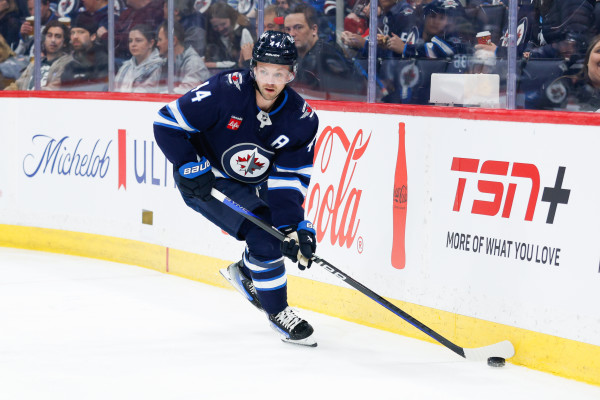
Josh Morrissey doesn’t have the same hype surrounding him as last season, but he deserves it.
It’s not hard to understand why, given that much of the discussion was centered around Morrissey coming out of nowhere and putting together a 76-point campaign that tied him for second among defensemen. And this season, the talk about the league's best defenseman revolves around the Vancouver Canucks' Quinn Hughes and Colorado Avalanche's Cale Makar.
Morrissey’s breakout campaign coincided with Rick Bowness taking over behind the bench of a Winnipeg Jets club that Paul Maurice had run for nearly a decade. Alongside associate coach Scott Arniel, Bowness met with Morrissey in October of last season and showed him a series of clips in which he opted for the safe play as opposed to a high-risk, high-reward play.
“They basically said, ‘We need you and we want you to make plays, to create offensively, to be a threat at the right time and the right situation ... that’s how you’re the most effective player for us,’” Morrissey told the Canadian Press last season. “I’d never really been encouraged to do that in my career up until then.”
The 13th overall pick by Winnipeg in 2013 has always had the tools. He’s an elite passer who processes the game at a high level. While he’s not an explosive skater, he weaponizes his exceptional edgework to create separation as a puck carrier and close off gaps when defending. Having played alongside Dustin Byfuglien, Tyler Myers and Jacob Trouba in his formative years, Morrissey had always been encouraged to play a ‘safe’ game.
Ever since that meeting, though, Morrissey has ascended as one of the NHL’s truly elite — and possibly underrated — defensemen. While the ‘Norrissey’ chatter has subsided, you could even argue that Morrissey is playing even better this year and deserves heavy consideration on the Norris Trophy ballot.
“He plays so many important minutes against the best lines [and on] the power play. He never disappoints you,” Bowness told reporters after Winnipeg’s 5-2 win over the Sabres on March. 3. “He always seems to have that ability to rise to the occasion that’s needed, whether that’s a really good defensive play or joining the rush and making the big goal he did (on Sunday). He’s an elite athlete with elite competitive skills.”
Morrissey’s 5-on-5 expected goals against and Corsi against ratings per 60 minutes played have taken a huge leap from last season. The same is true for his takeaways per 60 minutes, where he is now among the league's elite.
Sure, the Jets are one of the NHL’s best defensive teams, but Morrissey — who averages a team-high 24:14 minutes per night — is a big reason for that. His relative stats at 5-on-5 play speak to that, with Morrissey leading all Jets defensemen with a 2.56 relative Corsi-for percentage and a 3.31 relative expected goals-for percentage — which places him in the 79th and 84th percentile, respectively, among defensemen who have played at least 200 minutes this season. What’s even more impressive is that Morrissey’s defensive improvements haven’t come at the detriment of his offensive production. He’s on pace for just nine fewer points than last year. Despite the slight dip in counting stats, his underlying on-ice metrics reveal he’s driving more 5-on-5 offense this year.
Morrissey isn’t going to win the Norris this year — nor did he have a shot last year, given Erik Karlsson’s 100-plus point campaign and the seasons of Adam Fox and Makar — but he’s closer to that echelon this time around.
Given how little leaguewide love he has received this year, it wouldn’t be outlandish to suggest Morrissey is approaching ‘criminally underrated’ territory. That's especially considering he has topped last year's breakout campaign.