


If baffling roster decisions happen under multiple GMs or teams keep avoiding rebuilds in the NHL, the blame may lie higher up the chain, says Rachel Doerrie.
If baffling roster decisions happen under multiple GMs or teams keep avoiding rebuilds in the NHL, the blame may lie higher up the chain, says Rachel Doerrie.
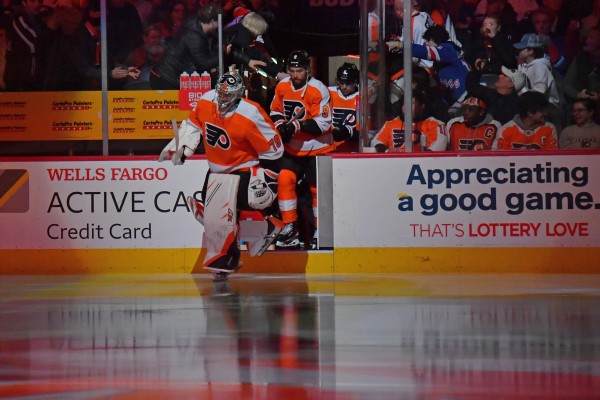
Friday morning was interesting. After allowing Chuck Fletcher to steer the ship at the trade deadline and trotting him out in front of angry fans at the town hall, the Philadelphia Flyers brain trust dismissed him after nearly five years with the club.
Philadelphia fans have never been known as patient, reasonable people. Of course, they are famously known for booing Santa, throwing plastic bracelets on the ice and pelting various figures with snowballs.
As Jeff Marek pointed out, under the Snider family, "rebuild" was a forbidden word. There was no “taking a step back” or “tearing it down” in Philadelphia. The Flyers were always expected to compete, leading to the Shea Weber offer sheet, signing Andrew MacDonald to a contract worth $5 million per year and more recently, trading for and signing both of Rasmus Ristolainen and Tony Deangelo.
Now, after years of struggling to make the playoffs, it would seem Philadelphia ownership is ready for a proper rebuild, and therein lies the problem.
The problem is not the fans opposing the rebuild. The problem is not multiple GMs hired and fired after failing to lead them to success. The problem is this: At the end of the day, the people who own the team chart the direction, regardless of whether it makes sense or not. In sports, owners rarely know much about the sport. They make their money in business and buy a team as a toy of sorts. Fans play Be a GM mode in NHL 23, owners play Be a GM mode with the actual franchise.
The best example is Jerry Jones with the Dallas Cowboys. The man is the owner and GM of the team – think about that for a second. But here’s the thing…he’s just saying the quiet part out loud. While there are some hands-off owners, and they are the best ones, most are far more involved than fans believe.
In the NHL, owners who are completely hands-off are very rare, and you can probably guess who they are. Nashville, Toronto, Detroit, Los Angeles, Winnipeg and the New York Islanders immediately come to mind. Those owners will check in, expect an end-of-year budget presentation and largely allow their presidents and GMs to steward the ship in the way they see fit. Essentially, they hire people to do their jobs and don’t interfere, like how a regular business runs.
The problem in professional sports is that it’s a club. Owning a team comes with clout. and owners, even though their expertise is in business, sometimes believe they can run a hockey team. It never made sense to me why a businessman did not micromanage his business but had both hands on the wheel with his sports franchise, something he largely knows nothing about running successfully. It did not make sense until I saw it first-hand and heard about it second-hand.
One owner (non-hockey) recently described it as, “Most owners look at franchises as toys, and more importantly, a way to compete with other billionaires in what usually becomes a (expletive) measuring contest.”
Well, when you put it that way, things start to make a lot more sense.
Fans around the league are more invested in advanced statistics, draft prospects and contract values. They are getting smarter. There are owners who do not have an understanding of how the salary cap works, how free agency works or that NHL trades are not at all similar to NBA trades. Yet, those are the people who chart the direction of the franchises you are a fan of, not because they know how to run a team but because they have 10 zeroes in their bank account.
That same owner also told me that teams who are successful in the long term are successful because the owners allow the people they hire to make tough decisions on a day-to-day basis.
This is not a defense of GMs doing things that go against what the consensus is. This is a look into why those GMs do things that drive fans to chant for their firing and yell on Twitter. The reality is most GMs are paid a few million dollars a year to be professional dartboards.
When a team signs a bad contract, does or does not make a trade that aligns with common sense, it may not be the GM’s choice. When a team trots their GM out to say something to the effect of “we are going to be competitive/this is not a rebuild/etc.,” it is because the GM is not allowed to say, “I want to execute Plan X, but the owner wants Plan Y, so we have to do that instead.”
Fans will yell and scream that their respective GMs aren’t in tune with reality because what they’re saying makes little sense. Fans will point the finger at the GMs, directing attention away from the person who more than likely made the decision. A GM throwing the owner under the proverbial bus would get them ousted in short order, but at least there would not be any misunderstanding of who is pulling the strings.
Some GMs are outright told how to operate, who to sign, who they can and cannot trade. I’ve seen and heard it all. There is one team who is not allowed to trade what equates to a B prospect because he had a great dinner with the owner in his draft year and is now the owner’s favorite player. Another team is not allowed to trade from a certain pool of prospects because that is how the owner believes the team should be run.
Another team is not allowed to rebuild because the owner is worried fans may not show up for two years…not realizing that if you have a sustainably competitive team, you can make longer playoff runs, where tickets are more expensive, and the revenue is not shared. Instead, owners are afraid of rebuilding because of the short-term pain. Reality is the short-term pain can mean long-term gain and if you do not commit to that, you may end up in long-term pain that harms the team’s brand.
I’m not saying GMs should be absolved of all their poor decisions. Everyone, regardless of where they work or what they do, makes mistakes. However, those big contracts aren’t signed or traded without the owner’s stamp of approval. Sometimes, a GM may want to trade or walk away from a player they believe does not fit with their vision for the team. But, if the owner tells the GM that a player is to be kept, that player is staying regardless of how it impacts the salary cap.
My personal favorite is when the owner demands a GM get a player who everyone knows is not the player the owner thinks he is and then gets mercilessly dunked on because it goes poorly, and the owner won’t allow a buyout. But hey, let’s all dunk on the GM because surely the owner had nothing to do with that.
The opposite can be true, too. Arizona did not get the best return for Jakob Chychrun because GM Bill Armstrong was not able to take any money back in a trade. He was actively hamstrung in a decision he surely would not have made.
Make no mistake, what happens in Arizona is the norm, not the exception as it pertains to ownership involvement. They are the league’s dunk fest right now, but other owners are similarly involved with their teams.
While GMs do sign bad contracts and make bad trades, remember that no big-money decisions get made without the approval or forcing of the owner. Only a few GMs can say they have full autonomy over their decisions. The biggest clue to how involved an owner is lies in the pattern.
If baffling decisions continue to occur under multiple GMs, set your sights higher up the chain when you decide who to aim the dart at because that’s usually where the majority of the blame lies.