


One league? The benefits are endless for the future of not only professional women's hockey, but all women's hockey.
One league? The benefits are endless for the future of not only professional women's hockey, but all women's hockey.
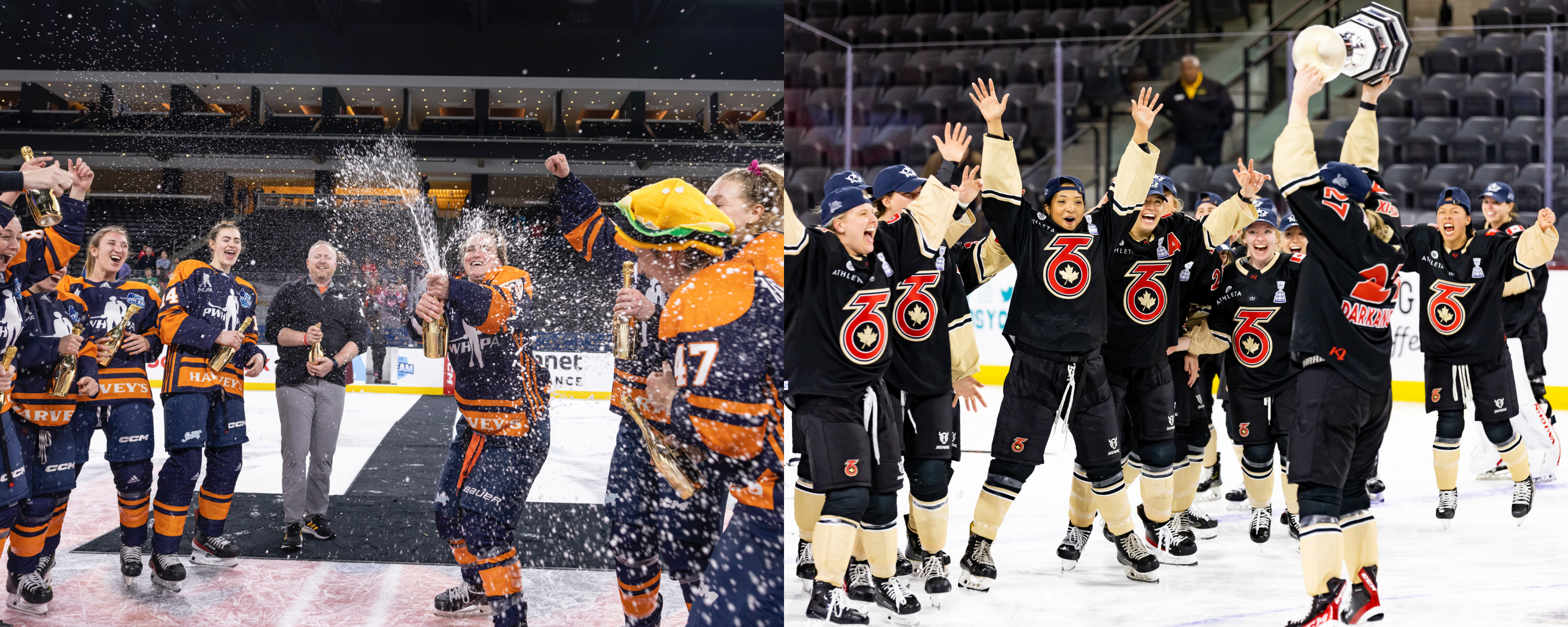
The process to get here was rocky, but now that a single entity league is destined to launch, it's hard to ignore the benefits. Much like the WNBA and NWSL on the women's side, or the NHL on the men's, a single top league in North America will come with a flood of benefits for fans and players.
Here's a look at five benefits a single professional women's hockey league will bring to the sport of women's hockey:
1. One League = One Goal
When young boys play hockey, whether it's in Canada, USA, or Sweden, the goal is almost certainly the same...someday, those players want to play in the NHL. Of course young players can also have dreams of playing in the SHL or Liiga, but in the end, the NHL is the goal. In women's hockey, that singular goal has never emerged...until now. Until now, young girls would see the NCAA or USports, the PHF and PWHPA, and national programs as a spectrum of goals, each assigned their own value. Of course the Canadian and American national teams were a fantasy for many, but the new single league will now serve as the ultimate goal, and success in that league will lead to national team inclusion. If you can see it, you can be it, and now young girls will know what they want to be in hockey - members of the new professional women's hockey league.
2. Media Exposure
Prior to the acquisition of the PHF, media exposure was split between the PHF and PWHPA, between the Rivalry Series, and the once yearly international events. Because of this split, broadcasting deals were scarce. They typically covered single games or events, with the exception of some regional coverage. In the PHF, this issue even impacted the ability to host a championship series. The un-televised semi-finals were best two-of-three, but the Isobel Cup final was a single game. Why? Because networks would only guarantee one game. Now, working to build regular network coverage will be far easier, as resources are no longer split, venues will be better suited for television, and the star power of household names and rising talent will be concentrated into six all-star calibre teams. Similarly, with all of the best players in the world playing in one league, attached to physical locations, not simply touring the continent, local media outlets will have more motivation to regularly provide coverage.
3. Best-on-Best Action
Marie-Philip Poulin battling with Brianne Jenner, or playing on a line with Taylor Heise or Alina Muller. Those offensive powers shooting against Emma Soderberg and Ann-Renee Desbiens. Loren Gabel and Kennedy Marchment working their magic against Lee Stecklein and Megan Keller, who look to shut down their opponents. It's a dream of talent, not only on the top two lines of PWHPA or PHF teams, but four lines deep. The PWHPA had the top 30 North American players, but beyond that group, the PHF and PWHPA were largely on par in terms of talent, and combining those forces will lead to competition unseen in the history of women's hockey. Fans will no longer need to wait until the World Championships or Olympics to see best-on-best action, it will be coming through their computers, tablets, phones, and televisions, and live in arenas every week. For fans this will also open more excitement related to free agency, drafts, and trade talk. The skill level will be elite, and will be even better once top the contracts of top European players expire. As that happens, expansion will become the next topic sure to provide more excitement. Fans want best on best, and they're about to get it.
4. Time To Turn A Profit
The PWHPA and PHF did well over the last four years. They kept women's hockey alive and well, and raised the bar by pushing each other to reach this point. What neither group could manage successfully however, was turning a large profit. In fact, most PHF teams were bracing for significant losses in 2023-2024. With one league, sponsorship dollars won't be split. Each of the PWHPA's four franchises were branded with sponsors, as what their Secret Dream Gap Tour itself. The PHF also had major sponsors, whether it was Discover, or Canadian Tire on jersey patches. Now these dollars won't be split, they'll all go to a single league. Similarly, media deals will provide a significant boost to ownerships bottom line. The crowds will be the x-factor, but the market for women's sport is booming, which suggests fan bases will quickly grow, including the continuation of the many strong fan bases in the PHF and following the PWHPA. As ownership profits, it will allow for expansion, and renegotiations of CBA to provide more benefit to players. Similarly, with the added regional profile of players, sponsorship and endorsement deals will become more prevalent, as will the paid public appearances as outlined in the CBA. There is money to be made for owners and players when the league thrives.
5. Trickle Down Effect
Based on the timing of the PHF acquisition, the trickle down effect didn't have the chance to fully come into force this season, but it's coming. As players fight for roster spots in the new professional women's hockey league, others who don't secure roster spots, or need time to develop, will head to Europe. Following the PHF announcement, a handful of PHF players signed in Sweden's SDHL, Switzerland's SWHL, and the multi-nation EWHL. The more talented North American products who compete overseas, the better those domestic leagues will become, and the more opportunity there will be for international growth. It's presumed that many international players will also compete in the new pro league, continuing the work the PHF was doing to bring European and Asian players overseas. The lasting impact has been leaps forward for nations like Czechia, who has now solidified their spot as the third best nation in the world. Once the league has its footing, a development league is the next logical path as teams and the league itself find the need for a steady stream of talent, including as injuries or suspensions factor in. The immediate impact may be small, but the long term trickle down effect will help the global game improve.