


Connor Somerville-The Hockey News

Jan 5, 2026 6:44 AM
The Minnesota Wild owner discusses being the host of the WJC, the profitability of the tournament, the pause on NHL games, the Olympics, the relationship between the players and the NHL and Kirill Kaprizov's new deal.
The Hockey News' Money & Power 2026 hockey business annual is available at THN.com/free, featuring the annual 100 people of power and influence list.
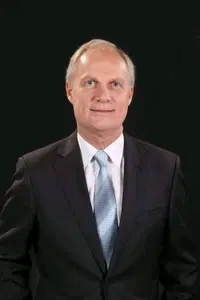
W. Graeme Roustan, owner and publisher of The Hockey News, sat down with special guests for peer-to-peer conversations also featured in the issue, including Minnesota Wild owner Craig Leipold.
Here's their full conversation in The Hockey News' True Hockey Talk:
Read along with an excerpt from their discussion:
W. GRAEME ROUSTAN: St. Paul and the State of Hockey are hosting the world juniors. I know the Minnesota Wild are very involved in it. How important is it for not only the state of Minnesota but the Minnesota Wild that the World Junior Championship is here?
CRAIG LEIPOLD: It is extremely valuable to what we talk about. We're the State of Hockey, right? So that's kind of our motto, and we're not ashamed of it. We're very proud of that. That was a big part of our pitch when we pitched to get the world juniors here. It seems like it was a decade ago, but it was only a couple of years ago when they awarded it to us. And it means a lot to our fans.
There is clearly a statement that reinforces what we all think about the game, and it just means a lot to us. So we want this to be successful, and it's not something that's just happening overnight. We've been working on this for a very long time, and it's a very complicated thing to do because you're talking about a lot of countries.
WGR: This tournament has been around for a long time, but it's never been better – not only just on the ice but off the ice as well. This is a very profitable tournament. And these countries depend on this revenue to feed all of their programs.
CL: Exactly right. This is a business that is very important to the survival of USA Hockey. It helps pay for the development program that we have in Ann Arbor. It helps pay for the different buildings and operations we have around the United States, particularly in Colorado Springs, where we have our headquarters. This is an important event that pays for a lot of what the mission is for USA Hockey.
WGR: Let's put your Minnesota Wild hat on. You're hosting this. What are you and the Minnesota Wild staff focused on and thinking about during this tournament?
CL: We're gone. We're all on the road on the West Coast. We're all part of the game presentation. This is what they're working on. They're working on interviewing players and things like that. We are not responsible for the ticket sales, although we are personally calling all of our season-ticket holders and suite holders trying to get them to support. We're supporting it any way we can. We're continuing to work with Canadians because we're having a really hard time getting Canadians across the border to come down. So that is a challenge that is happening right now. We're working with USA Hockey and the Twin Cities Sports Alliance.
"This is not an All-Star Game. This is like the final of the Stanley Cup."
WGR: After the tournament ends, the Olympics are right around the corner. And you shut down for a couple of weeks. There's no NHL hockey in Minnesota or around the league. How does your market feel about a lack of games in a two- or three-month window?
CL: It's a big issue, right? And the Olympic issue is really compounded because of the world juniors. We've got so many home games early, which is October, November and the beginning of December. For us, historically, that is our weakest attendance because there are so many other high-school, college and other hockey events that are going on with all of our hockey fans. So it kind of hurts us. There's too much hockey going on. Our best time is January, February, March and April. That is when we sell so many tickets.
But being out of our arena again, we are concerned. We don't want to lose any momentum. We started off slow. We've really gone on a great run. And you want to take advantage of that and keep having home games, but it is what it is.
We knew what we were biting off when we took the world juniors. And our fans, I think they understand it. So we're going to have to work really hard in the last three months to continue to sell tickets and make sure our fans are engaged.
WGR: Every NHL owner and club has to deal with the Olympics. You're shut down for the whole time. But some teams have more players going to the Olympics than others.
CL: We could possibly have 11, but they haven't named them yet. I read this in the paper. And it's like, "Whoa." We may have two goaltenders going to the same country. And does that scare me? You bet it does. That's a lot of players gone. The chance of somebody getting hurt if they play hard. This is not an All-Star Game. This is like the final of the Stanley Cup. They want to win it more than anything, other than the Stanley Cup. So it scares me.
WGR: Are you going to be watching the games, or are you just better not watching it?
CL: Oh, I'm clearly going to be watching the games. But the only difference is I wouldn't just watch the American team. You just don't want them to get hurt. You want them to come back and feel good about representing their country. If that's what happens, then it's all fine.
WGR: The hockey-related revenue of the league was above $6 billion the last time I heard. It keeps growing every year. The salary cap keeps going up. There's never been, in my memory, a better time for relations between players and the league. Do you see it that way?
CL: I absolutely believe that to be true. I think the players are smarter than they've ever been. And I'm not saying they weren't smart before. I'm only saying these kids are even more interested in the business of the game, rather than just playing the game. And they recognize that the bigger the pie gets, they get half of it. So as a result, we get no pushback from our players. When we ask them to do something in the community, to go visit with one of our sponsors or if they're hurt and they have the ability to walk around the arena to come visit a couple of suites, it is unbelievable how that has changed in 25 years. It's, "Whatever you need, ask us," because they're getting half of it. And it's a great relationship.
And Marty Walsh is a person that you can work with. He wants it to grow. He wants us to grow internationally. He's open to brainstorming about how we can make that pie bigger. And I think we have a really good relationship with the union. I am not a union member, but I believe that they look at the system that we have now with the hard cap and the revenue sharing as something that has been very positive. Players are making more money than they ever have. The future looks incredible, even better than it is right now.
Right now, we're kind of in a win-win situation because the business of hockey is so good, the quality of the players on the ice is dramatically better than it was and the quality of the players off the ice and their willingness to be part of our business has never been better.
 Leipold, right, is relieved to have superstar left winger Kirill Kaprizov locked up for the next nine years. (Connor Somerville-The Hockey News)
WGR: You made history recently with Kirill Kaprizov and his record-breaking deal. It shook the industry, and it opened up a lot of eyes. It goes to this whole thing you're talking about a partnership. We're heading to a $20-million player very soon. How important was it for you and the Wild to do that deal?
CL: For me, personally, it was so important because I understand and we understand what an impactful player he is. We've never had a player like him in 25 years. That makes the statement right there, and we weren't going to let him go. We could have done it for less, but it would have been fewer years. We want it for eight years. And I can sleep at night knowing we've got our franchise player, and he's locked and loaded. That's the reason I like it.
For our market, they understand we're committed to winning. And we have been very successful at making the playoffs. That's something that a team always strives to do. We have not been successful at getting out of the first round. And that is a failure on our part. We wanted to make sure we had the cornerstone of our franchise locked and loaded for nine years. And we're going to build around him, so it's very important.
For more interviews with a deep look into the world of the hockey business, check out The Hockey News' Money & Power 2026 issue, available at THN.com/free.
Comments

Powered by RoundtableBuilt on infrastructure designed for real-time media. Learn more at RTB.io.© Roundtable 2026. By using this site you agree to the Terms of Use and Privacy Policy