


May 12, 2025 5:07 PM
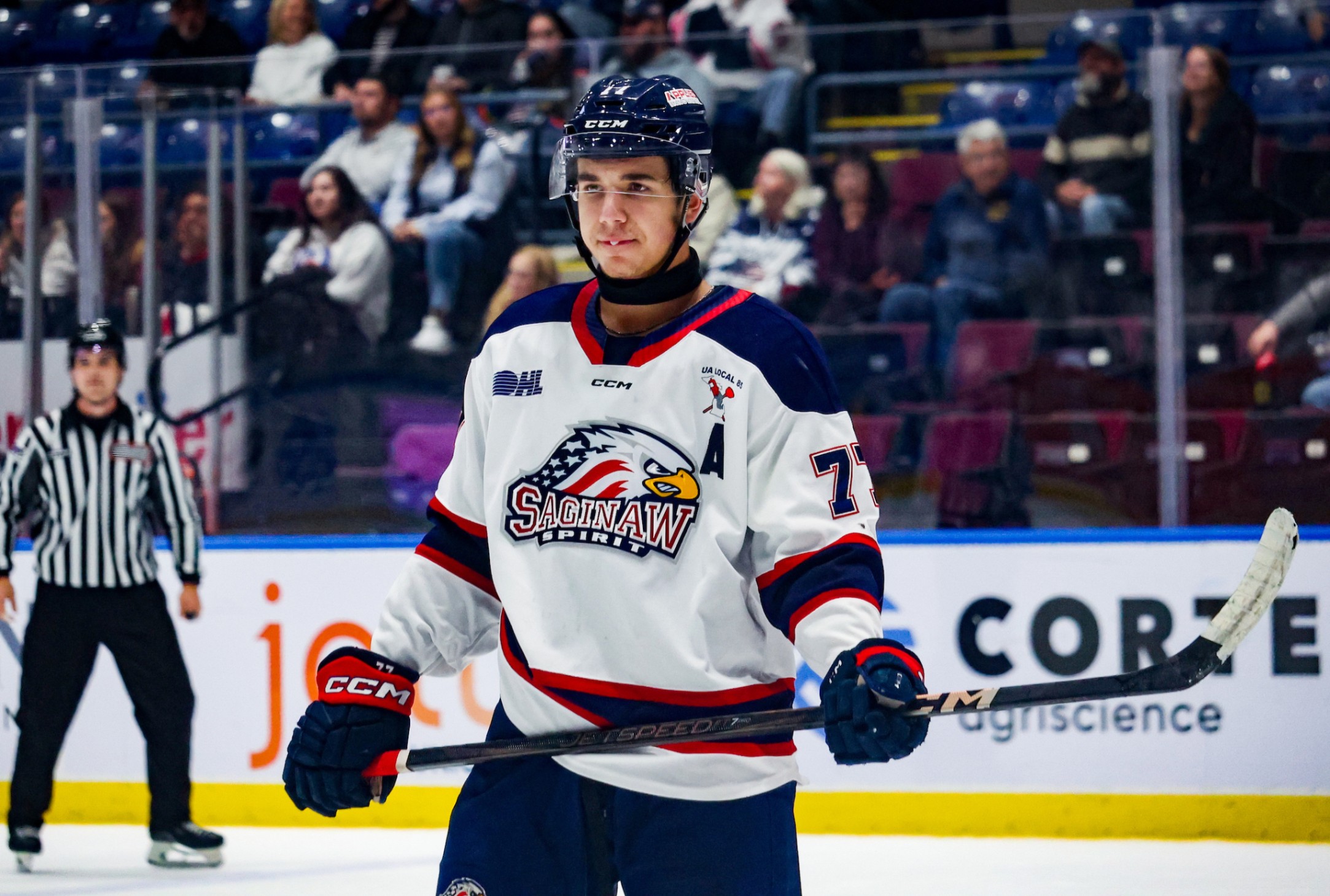
 Michael Misa (Photo by Natalie Shaver/OHL Images)
One week after the NHL’s draft lottery decided which franchise received the first-overall pick, it’s time for a new round of draft rankings.
In a year of chaotic lottery wins, the 10th-last New York Islanders secured the top pick, and the newly named Utah Mammoth jumped up 10 spots to grab fourth overall.
With the World Men’s Under-18 Championship also in the rearview mirror, it’s the perfect time to look at my latest NHL draft rankings for the 2025 class. If you want the full breakdown of how I evaluate prospects, you can find it in the introduction to my previous rankings by clicking here. My final ranking will come out just before the NHL draft, featuring a detailed top 100.
It’s important to note that this is not a mock draft. It’s an evaluation of the draft class from my point of view, having watched countless games in person and on video. As you’ll see below, the top two players are more 1A and 1B than a true Nos. 1 and 2.
The Islanders have a really fun decision to make, and they will get a very good player to build around moving forward.
Height and weight information are rounded and according to NHL Central Scouting data.
1. Michael Misa, C/LW, Saginaw (OHL), 6-foot-1, 184 pounds
The ultimate do-it-all center has been unbelievable this season. An unfortunate injury in the playoffs kept Misa from participating in the U-18s for Canada, but everything we have seen from him this year has been fantastic.
Misa has the intelligence and work ethic to excel in all three zones and a detail-oriented game that should make him a very stout player in the small-area game. He was the CHL’s leading scorer and second-highest goal-scorer.
Misa’s game has very few holes, and you could reasonably see him developing into a very solid top-line center or an elite second-line pivot.
2. Matthew Schaefer, D, Erie (OHL), 6-foot-2, 183 pounds
Between the OHL, Hlinka-Gretzky Cup and world juniors, Matthew Schaefer played in just 26 games this year. The level at which he played those games was elite.
His fluidity and poise with and without the puck were notable, and his constant desire to attack the play head-on as a puck rusher and a playmaker was incredible. Schaefer’s defensive game needs some fine-tuning, but he is a solid transitional defender, using his skating and active stick to deter chances.
The margins between Misa and Schaefer are non-existent when it comes to who is the top player in the class, so there is no wrong answer between the two OHLers.
3. James Hagens, C, Boston College (NCAA), 5-foot-10, 177 pounds
Coming into the year, Hagens was considered the top prospect in the class. With expectations for NCAA draft eligibles rising because of Adam Fantilli and Macklin Celebrini having Hobey Baker seasons, Hagens having a point-per-game campaign on Boston College’s top line was viewed as just fine.
His dynamic stickhandling and cerebral passing abilities are among the best in the draft. Not ranking first is less about Hagens having a bad year – he didn’t – and more about the two guys ahead of him showcasing some special talent.
4. Victor Eklund, LW, Djurgarden (Swe.2), 5-foot-11, 161 pounds
He may be an undersized winger, but if anyone tells you they have concerns about how he will hold up playing the more physical brand of hockey in the NHL, they haven’t been watching Eklund play.
The tenacious, high-motor winger consistently pushes the pace and tries to force defenders into making mistakes. He has a very underrated shot, and he’s always crashing the slot. Eklund is a menace on the forecheck, blending his physicality with his skill to pull pucks out of trouble and into potentially dangerous situations.
5. Anton Frondell, C, Djurgarden (Swe.2), 6-foot-1, 198 pounds
After dealing with injuries for part of last season and the first half of this year, Frondell had a fantastic second half and showed everyone he is well worth being a top pick in this year’s NHL draft class. He put up 25 points in 29 games at the second-tier Allsvenskan level in Sweden. Frondell could play on the wing or at center, using his speed and excellent reads to put himself in position to make plays. He plays a pro-style game and should be one of the more interesting dual-threat centers early in the draft.
6. Porter Martone, RW, Brampton (OHL), 6-foot-3, 208 pounds
There has been so much discussion about what Martone will be at the next level. He is a power playmaker who has a very good shot, and he brings some really intriguing physicality. Some believe there is some Matthew Tkachuk in him, while others believe he’s a bit more like Brady Tkachuk. Either way, there is a very good player here in Martone. He gets nasty when he needs to, but he’s always looking to punish opponents by putting up offense first.
7. Carter Bear, C/LW, Everett (WHL), Six-foot, 179 pounds
In a draft with plenty of injury worries, Bear’s lacerated achilles tendon shouldn’t be a long-term concern. The recovery time might affect him next season, but whoever drafts Bear isn’t expecting him to be effective on the NHL roster next season. They can be patient because the controlled chaos Bear plays with thrives in the NHL playoffs. He plays at a breakneck pace, throws his weight around and loves to attack off the rush.
Bear is constantly in motion and looks to change the angle on the netminder whenever he can. Speed, physicality and a very good shot should make him an attractive option once the top names are off the board.
8. Lynden Lakovic, RW, Moose Jaw (WHL), 6-foot-4, 190 pounds
To start the season, Lakovic was a player with size, speed and plenty of tools, but he needed to put it together. As things rolled along, something clicked, and his game became more consistent. His flashes of dynamic play turned into games where he controlled play all night long. He understands the most dangerous area on the ice is the slot and around the net, so he’s always looking to get the puck there. If Lakovic fills out his frame and realizes he’s bigger than everyone else, he could be a handful.
9. Jackson Smith, D, Tri-City (WHL), 6-foot-3, 195 pounds
Much like Lakovic, the physical tools are all there for Smith, and the question coming into the year was whether he could refine his game. While there is still work to do, Smith became a very solid rush defender and a more-than-capable puck-mover on the breakout.
In the offensive zone, Smith is mobile all over the zone. He shows some really impressive passing ability and gets himself into position to take good shots. With no clear-cut second-best defender in the draft, Smith brings all of the tools to present a high upside and a safe floor.
10. Cullen Potter, C/LW, Arizona State Univ. (NCAA), 5-foot-10, 172 pounds
Every year, there is a player who is overlooked because they are small and play somewhere that doesn’t get as much attention or viewing opportunities. This year, Cullen Potter is that player.
Playing in the NCAA for Arizona State, Potter consistently drove offense and showed the ability to generate chances for himself and teammates all over the ice. His size will be an issue for some teams, but if there was ever a Brayden Point-type of center, Potter may be it. He was always the player making things happen for ASU, and although his assist totals this year may not show it, he is a supremely skilled playmaker and true dual-threat scorer.
11. Braeden Cootes, C, Seattle (WHL), 5-foot-11, 183 pounds
When watching Cootes in Seattle this season, it was evident he was consistently asked to shoulder much of the load at both ends of the ice. It helped make him an effective two-way center and further develop his physical edge when needed.
Cootes plays with speed and brings a high work rate. His offensive game has always been the question, because although there were flashes of high-end ability, he was doing everything else for the team as well.
He showed all of his offensive tools for Canada at the U-18s, where he captained them to gold and led the team in scoring. His blend of tenacity and skill will make coaches and GMs quite excited in the early to mid-first round.
12. Jake O'Brien, C, Brantford (OHL), 6-foot-2, 172 pounds
In a draft class sorely needing true centers, O’Brien’s emergence throughout the season has been a blessing for scouts. He has just about everything you want from a middle-six center at the next level. He’s got great size, good mobility and excellent vision as a playmaker. He’s become more and more creative as the year wore on. On many nights, O’Brien was the Bulldogs' best player and consistently drove offense.
O’Brien could go early because teams value the projectability and the impressive point totals.
13. Radim Mrtka, D, Seattle (WHL), 6-foot-6, 207 pounds
There is so much to work with when it comes to the package Mrtka brings to the game. He’s a hulking defender who skates with agility and excellent multi-directional movement. He’s capable of being a creative player inside the offensive blueline with the puck. Defensively, he’s inconsistent but has shown the ability to shut down play in transition with an excellent stick or quick closeout, and he can disrupt the cycle. He must work on finding a level of consistency, but he has some very intriguing flashes.
14. Cameron Schmidt, RW, Vancouver (WHL), 5-foot-7, 161 pounds
There aren’t many players in this draft with the kind of one-shot scoring ability Schmidt has. But he’s an undersized right winger who can take his foot off the gas at times, so teams may view his flaws as bigger red flags.
Schmidt can fly in transition, and when he unleashes his shot on the rush, he can beat a goalie clean. He has a lightning-quick release, and he loves to change the angle as he shoots. Schmidt also brings a bit of snarl, getting into his fair share of shenanigans during and after play.
15. Bill Zonnon, LW, Rouyn-Noranda (QMJHL), 6-foot-2, 187 pounds
While the QMJHL typically allows low-pace offensive players to thrive, Zonnon broke the mold by playing a relentless, physical game that pushes defenders onto their heels and forces mistakes. Zonnon’s hardly a technical expert when skating, but he simply flies around the ice, forechecking hard and disrupting play all over the ice. His offensive value comes from his playmaking, but his intensity and aggression will make him a valuable, 200-foot player who just makes life easier on those around him.
16. Caleb Desnoyers, C, Moncton (QMJHL), 6-foot-2, 178 pounds
Desnoyers has consistently put up points, showed some nice play-connecting ability, moved well with good size and excelled when placed with high-skill players.
My issue with Desnoyers is his tendency to allow play to fall into his lap and take advantage of mistakes rather than dictating play and creating for himself. I worry about his transition to the NHL, but if he’s not asked to be a top-six center or if he’s put in a position to play with a high-paced transition winger, he has the skill and intelligence to make things happen.
17. Roger McQueen, C, Brandon (WHL), 6-foot-5, 197 pounds
Evaluating McQueen has been the most difficult task of the season. He has size, good stickhandling and quite the shot, but his skating, playmaking and pace are all concerns.
McQueen missed most of the season with a back injury and, upon returning, was taken out of the lineup once again just a few games later. NHL teams must decide whether they are comfortable with his injury history, but even the top end of his game this season didn’t blown me away. At some point, it makes sense to take a chance on a center with exceptional size and a willingness to use it while also having nice mitts and finishing ability. It just wouldn’t be earlier than the middle of the first round for me.
18. Eric Nilson, C, Djurgarden Jr. (Swe.), Six-foot, 156 pounds
Nilson is an intelligent, understated player who really seems to know how to advance play in just about any situation. He certainly must get stronger, but the way he plays the game is already so refined and crisp. Nilson doesn’t have one defining tool that sets him apart, outside of his intellect. His ability to read the game allows him to be quite the facilitator in all three zones.
19. Michal Svrcek, C/W, Brynas Jr. (Swe.), 5-foot-10, 178 pounds
Although he didn’t score massive point totals at the U-18s, every time he stepped on the ice, he made something happen. Svrcek was a bit snakebitten at the tournament, but if you’ve seen him play all season, you know his speed, pace and creative skill should be valuable assets moving forward. Svrcek is daring with the puck, and he works his tail off to get it back when he doesn’t have it. The guy is a mini buzzsaw.
20. Blake Fiddler, D, Edmonton (WHL), 6-foot-4, 209 pounds
The best defensive blueliners have the mobility and skill to be more offensively inclined if they wanted to, to an extent. They must be able to move the puck or escape pressure because becoming too reliant on passing to their more offensive partner can lead to the opposing team clamping down on them.
Fiddler fits this bill perfectly. He can skate and make clean passes on the breakout. He shows some nice hands in transition, and he can even facilitate high in the offensive zone. His defensive game is based around excellent reads and cutting plays off with angles. Fiddler is the exact kind of defensive defender who helps teams win.
21. Logan Hensler, D, Univ. of Wisconsin (NCAA), 6-foot-2, 192 pounds
It was a bit of a tale of two seasons for Hensler. As he adjusted to the NCAA and the University of Wisconsin, he looked a bit lost and tepid during the first half of the year. He seemed to hit his stride after the world juniors.
Hensler is an excellent skater and a very solid puck-mover. He makes an excellent first pass, and he can contribute quite well offensively as well. Hensler is a two-way defender who will need to get a bit stronger and steadier in front of his net, but he has a good basis to build on.
22. Brady Martin, C, Sault Ste. Marie (OHL), Six-foot, 178 pounds
He crashes, he bangs, and he can score. Martin does the things a lot of NHL scouts get excited about. Martin accomplishes a lot by simply trying hard and playing harder. Although he may lack some dynamism, NHL teams will value his steady game, knowing he will work hard, get involved physically and clear some space for those around him. He could be an excellent middle-six forward who brings some jam to a skilled line.
23. Benjamin Kindel, RW/C, Calgary (WHL), 5-foot-10, 176 pounds
Kindel had some instances of simply elite playmaking throughout this season. He isn’t the biggest player, but he puts in the work to stay in position, open himself up for a pass and hunt pucks down. He must add some bulk and strength to succeed at the next level because he can get pushed around, but he doesn’t often get pushed off the puck. He does so much so well from a puck-transporting and creation perspective that he could be a very solid pick in the late first or second round, banking on his physical development.
24. Malcolm Spence, LW, Erie (OHL), 6-foot-1, 203 pounds
Spence is a workmanlike, pro-style forward who busts out some really intriguing skills. Many see him as the fall-off point in this draft class. Coaches will love him, and he can fill a role in the middle six as a hard forechecker with good speed and physicality that generate some chances. The question is whether he has the requisite skill to take advantage of those chances.
Spence has been a clutch player in his career, so he could be valued a bit higher on the team side of things.
25. Shane Vansaghi, C/RW, Michigan State Univ. (NCAA), 6-foot-2, 210 pounds
Vansaghi is a physical power forward who played all over the MSU lineup this year. He loves to drive to the inside, carry the puck through defenders to the net or pull pucks out of battles along the walls. He forechecks hard and plays heavy. Questions arise about his offensive skill, but Vansaghi always finds a way to generate chances thanks to his simple, effective game.
26. Cole McKinney, C, USA U-18 (NTDP), Six-foot, 200 pounds
McKinney is a rock-solid, do-it-all center who plays hard and fast. McKinney won’t wow anyone with his skill or offensive prowess, but he always seems to find a way to end his shifts with something positive happening. He uses his speed to be a stout defender, rarely giving a poor effort. Fan bases can fall in love with McKinney as a complementary piece on the roster.
27. Sascha Boumedienne, D, Boston Univ. (NCAA), 6-foot-1, 175 pounds
Playing in college hockey as one of the youngest players in the nation is always difficult, but Boumedienne found his role, played quite well and used the U-18s to remind everyone he can be an offensive force as well.
The fluidity in his movement and quickness allow him to defend at a high level and capably move the puck up ice when he recovers it. Boumedienne is a very toolsy player, and he’s the kind of prospect you let marinate in college for another couple of years to really give him the time to work on the details of his game.
28. Milton Gastrin, C/LW, Modo Jr. (Swe.), 6-foot-1, 185 pounds
He has size and can protect the puck at times with his frame, but Gastrin lacks a physical edge away from the puck. His flashes are intriguing, but his tendency to put on an invisibility cloak is an issue. Gastrin has the speed and skill to be an effective scoring forward, but he takes his foot off the gas more often than you’d like to see at this stage in his development. Gastrin is a bit of a hit-or-miss player who could very well wind up being a solid secondary scorer.
29. William Moore, C, USA U-18 (NTDP), 6-foot-1, 175 pounds
Moore is a play-connecting center who always seems to know where to move the puck next. He has good vision and a good shot. There have been concerns with his mobility, but he gets to his spots and doesn’t find himself behind the play. Moore has size and can use it from time to time, but using his frame more will only help him become even more effective.
30. Gustav Hillstrom, C, Brynas Jr. (Swe.), 6-foot-2, 174 pounds
With a well-rounded off-puck game and a really nice complement of skill, Hillstrom might be one of the more undervalued players in the class. He is a very good skater who can effortlessly get from spot to spot. In his own end, Hillstrom uses his body and reach to disrupt passes and poke pucks free. Although he may project as a bottom-six player, his development in the Swedish League against men should give him plenty of room to grow and get even better.
31. Cole Reschny, W/C, Victoria (WHL), 5-foot-10, 187 pounds
Despite his small stature, Reschny plays a much tougher game than you’d expect when it comes to battling through pressure. He’s constantly going into battles he has no business winning, but he comes out with the puck. Combine that with the fact that he’s an incredibly skilled passer who piled up 92 points this year on the back of a ridiculous 66 assists. Reschny is a highly skilled player who pushes the physical limits of his game. The question around Reschny is whether he can continue playing that way at the next level.
32. Adam Benak, C, Youngstown (USHL), 5-foot-7, 164 pounds
Although he’s undersized, the hyper-skilled Benak is such an interesting player. He can make passes that many other players wouldn’t dream of, and he sees the ice so well. Benak was good at the U-18s recently as well. Benak won’t even be on some NHL boards because of his size, which is unfortunate because of just how high-level his raw talent is. Benak will be one of the most interesting players because although you could see him squeaking into the first round or falling to the middle rounds.

33. L.J. Mooney, RW/C, USA U-18 (NTDP), 5-foot-7, 157 pounds
34. Cameron Reid, D, Kitchener (OHL), Six-foot, 193 pounds
35. Benjamin Kevan, F, Des Moines (USHL), 5Six-foot, 173 pounds
36. Arvid Drott, RW, Djurgarden Jr. (Swe.), 6-foot-1, 183 pounds
37. Jamiro Reber, LW, HV71 (Swe.), 5-foot-10, 176 pounds
38. Ryker Lee, RW, Madison (USHL), Six-foot, 170 pounds
39. Eddie Genborg, LW, Linkoping Jr. (Swe.), 6-foot-1, 179 pounds
40. Viktor Klingsell, LW, Skelleftea Jr. (Swe.), 5-foot-10, 188 pounds
41. Justin Carbonneau, RW, Blainville-Boisbriand (QMJHL), 6-foot-1, 191 pounds
42. Conrad Fondrk, C, USA U-18 (NTDP), Six-foot, 193 pounds
43. Tinus Luc Koblar, F, Leksand Jr. (Swe.), 6-foot-3, 187 pounds
44. Jakob Ihs Wozniak, F, Lulea Jr. (Swe.), 6-foot-2, 186 pounds
45. Theo Stockselius, C/W, Djurgarden Jr. (Swe.), 6-foot-2, 181 pounds
46. Kashawn Aitcheson, D, Barrie (OHL), 6-foot-1, 185 pounds
47. Topias Hynninen, C, Jukurit (Fin.), 5-foot-10, 172 pounds
48. Anthony Allain-Samake, D, Sioux City (USHL), 6-foot-2, 183 pounds
49. Sean Barnhill, D, Dubuque (USHL), 6-foot-5, 205 pounds
50. Ivan Ryabkin, C, Muskegon (USHL), 5-foot-11, 205 pounds
51. Harry Nansi, RW, Owen Sound (OHL), 6-foot-3, 179 pounds
52. Ludvig Johnson, D, Zug Jr. (Sui.), Six-foot, 181 pounds
53. William Belle, RW, USA U-18 (NTDP), 6-foot-4, 220 pounds
54. Quinn Beauchesne, D, Guelph (OHL), Six-foot, 185 pounds
55. Viggo Nordlund, F, Skelleftea Jr. (Swe.), 5-foot-9, 168 pounds
56. Jack Nesbitt, C/LW, Windsor (OHL), 6-foot-4, 185 pounds
57. Filip Ekberg, LW, Ottawa (OHL), 5-foot-10, 166 pounds
58. William Horcoff, C, Univ. of Michigan (NCAA), 6-foot-5, 190 pounds
59. Jack Murtagh, C/LW, USA U-18 (NTDP), 6-foot-1, 200 pounds
60. Vaclav Nestrasil, RW, Muskegon (USHL), 6-foot-5, 187 pounds
61. Matej Pekar, C/LW, Seattle (WHL), 5-foot-10, 158 pounds
62. Luka Radivojevic, D, Muskegon (USHL), 5-foot-9, 161 pounds
63. Lev Katzin, C, Green Bay (USHL), 5-foot-8, 176 pounds
64. Haoxi Wang, D, Oshawa (OHL), 6-foot-6, 215 pounds
Get the latest news and trending stories by following The Hockey News on Google News and by subscribing to The Hockey News newsletter here. And share your thoughts by commenting below the article on THN.com.
16
Comments

Powered by RoundtableBuilt on infrastructure designed for real-time media. Learn more at RTB.io.© Roundtable 2026. By using this site you agree to the Terms of Use and Privacy Policy