


Megan DeRuchie-The Hockey News


Nov 13, 2025 7:27 PM
The Philadelphia Flyers didn’t get the result they wanted Wednesday night, but they proved plenty in a 3–2 overtime loss to the Edmonton Oilers.
Against one of the league’s fastest, most offensively dynamic teams, Philadelphia matched tempo, battled through momentum swings, and nearly stole it at the end of regulation.
Travis Konecny thought he had the game-winner with 23.5 seconds left — until a further review of the play wiped it away due to Owen Tippett being in an offside position.
Instead, it went to overtime for the seventh time this season. The Oilers ended up coming out on top, but, as always, there's plenty for the Flyers to take away from this outing.
1. Dan Vladar Continues to Impress
This was the kind of game that tests a goaltender’s poise more than his reflexes.
Edmonton’s offense comes in waves and flashes — one mistake and it’s behind you. Vladar handled it calmly, tracking through layers of traffic, staying upright, and making efficient reads on east–west passes that have embarrassed better goalies this season. In the third period, he even threw a punch after Mattias Janmark toppled over into his crease.
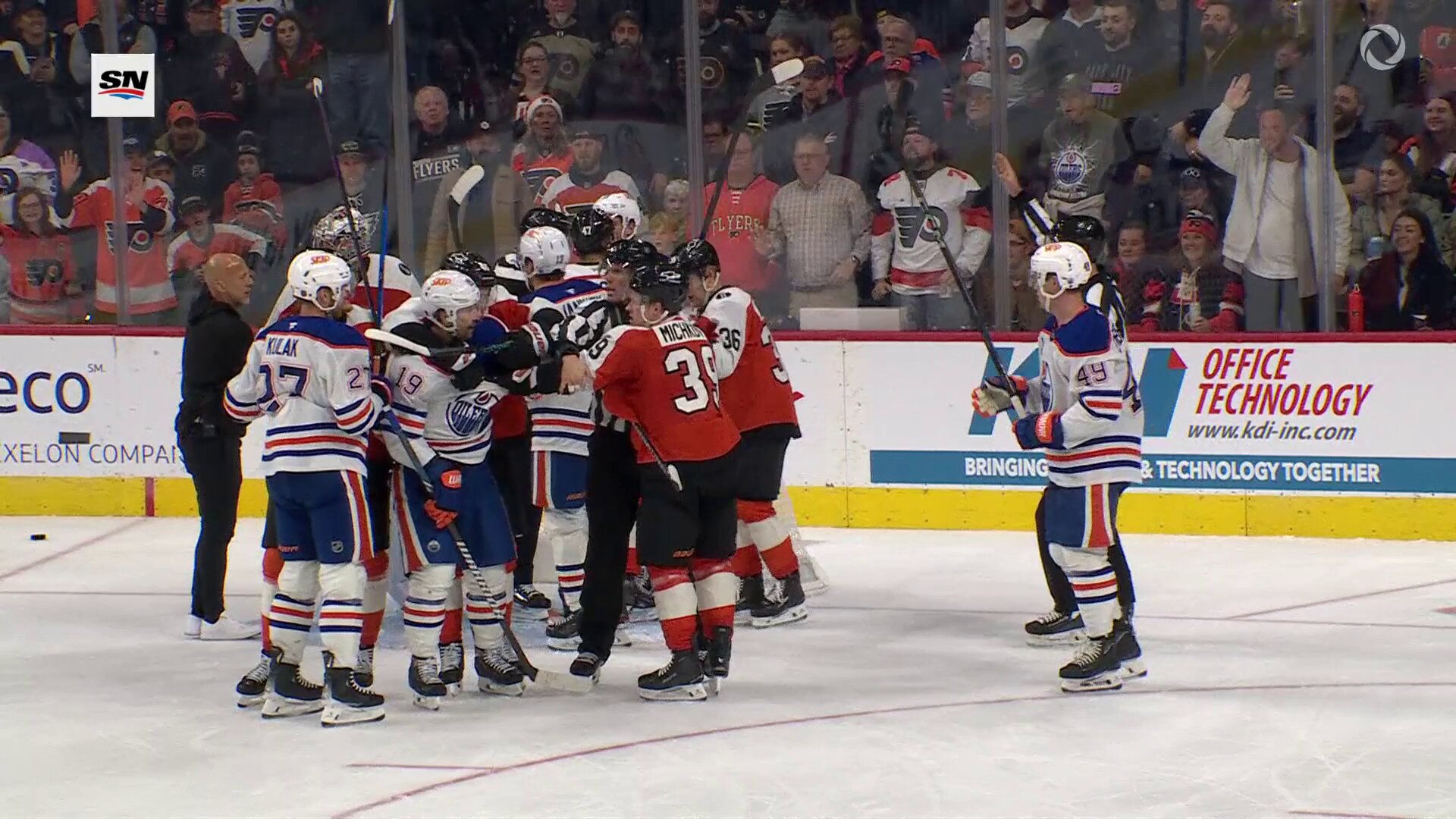
The Czech goalie continues to look strong against some of the top teams in the league, and continues to earn the admiration of his coaches and teammates. After practice on Thursday, Tocchet said that Vladar was a "cheerleader," praising how engaged the 28-year-old has been during games.
"During timeouts, he comes by the bench, he hits the bench," Tocchet said. "Most goalies are pretty quiet. They just put their mask on and drink and they go back to their net... He's got a lot of fire in between periods."
2. Matvei Michkov Is Finding His Stride — Literally
Matvei Michkov’s early-season learning curve has been under a microscope, but it’s starting to flatten out in real time. His power-play goal against Edmonton marked his third straight game with a goal — the first such streak of his NHL career — and the clearest evidence yet that he’s finding his footing.
 Matvei Michkov (39). (Megan DeRuchie-The Hockey News)
More than the goal itself, it’s how he’s moving. The hesitation in his game has faded. He’s playing lighter, looser, with more pace in transition. Tocchet noticed it too. “He looks faster,” the coach said earlier this week, “and he’s playing better every game.”
What’s most encouraging is that Michkov’s growing confidence hasn’t come at the expense of responsibility. He’s tracking back, positioning himself better in the defensive zone, and finding ways to win touches that he might’ve shied away from earlier.
3. Cam York Is Settling Into His Sweet Spot
Cam York continues to build the case that he’s ready for a larger role — and not just as a steady, positionally sound defenseman.
With an assist on Michkov’s goal, he’s now got five points in his last four games, re-establishing himself as one of the Flyers’ most reliable offensive defenseman and an increasingly confident power play quarterback.
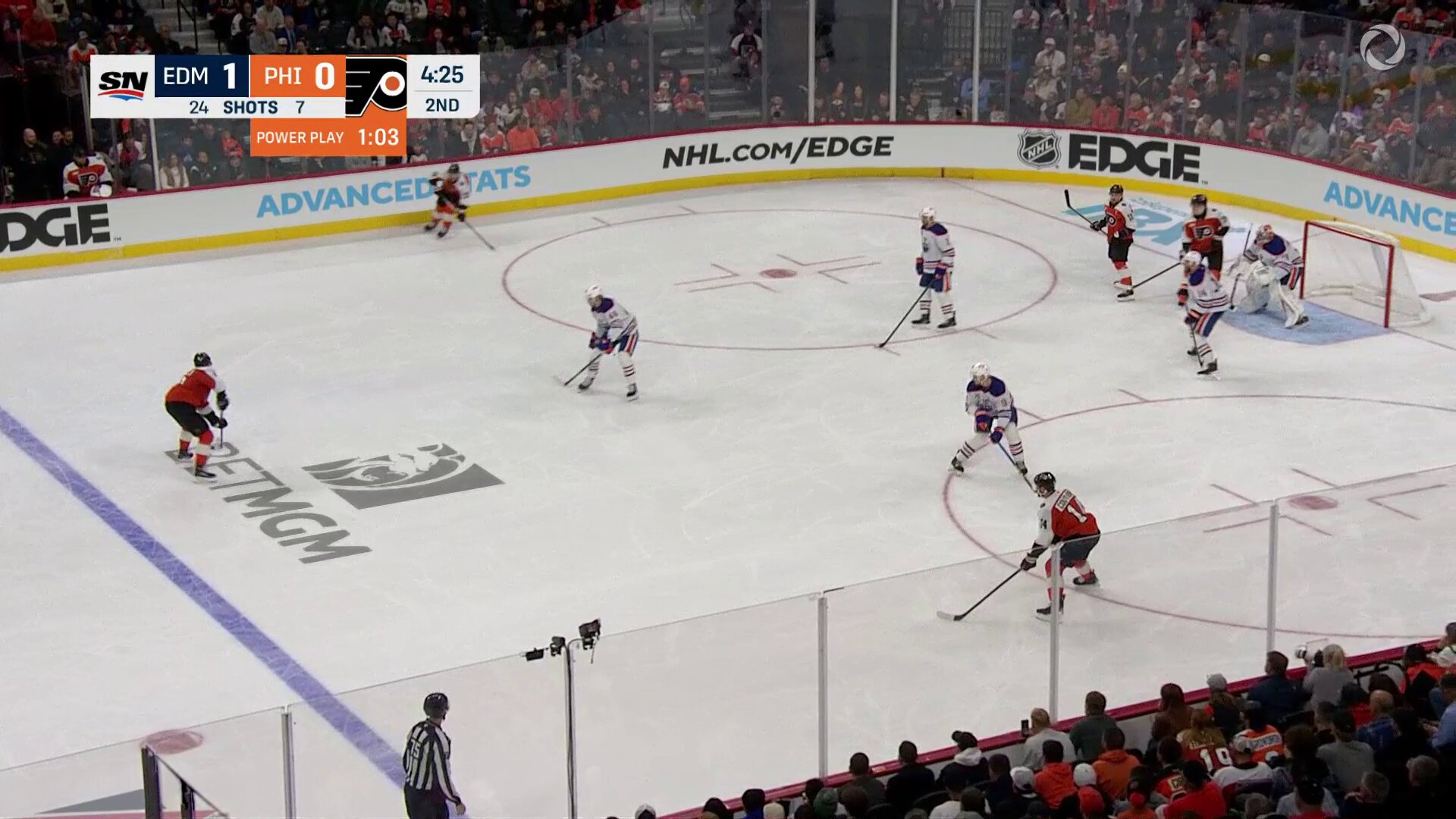
The coaching staff has taken notice. “He doesn’t show that he has a chip on his shoulder, but I know it’s there,” Tocchet said on Thursday. “He’s got a little bit of ‘eff you,’ a little bit of something to prove.”
That edge is translating into assertiveness. York is skating with purpose, jumping into rushes without losing his structure, and using his mobility to manipulate space on the blue line. His reads on the power play have been crisp — and with Michkov now asserting himself on the flank, the Flyers’ top unit is beginning to show real rhythm.
If York keeps trending this way, it won’t just be a nice stretch; it’ll be a turning point in his development.
4. A Fast Game Didn’t Rattle the Flyers
Edmonton plays at a velocity few teams can match, but the Flyers didn’t look too overwhelmed. The pace of the game was high, but Philadelphia kept its shape, supported the puck well, and countered with sharp transitions of its own.
Tocchet was measured afterward. “Every game, it seems like it’s tight,” he said. “We’ve just got to learn… We want to make plays and that’s the learning process, playing through pressure.”
What’s striking is how adaptable this team is becoming. Earlier in the season, fast-paced games might have caused burnout. Now, they’re learning how to use those situations to their advantage — drawing penalties, forcing turnovers, and generating power-play opportunities.
5. Perspective Matters
The disallowed goal hurt. Losing in overtime hurts. But Tocchet’s postgame tone captured what’s been the story of this Flyers team since opening night.
“Everybody expected us to be in last place,” he said. “So I’ve got to give these guys a lot of credit. I’m proud of them.”
Konecny also summed up the Flyers' confident standpoint after being asked about playing the consistent Cup contender Oilers: "I think we're a great team, too."
7
Comments

Powered by RoundtableBuilt on infrastructure designed for real-time media. Learn more at RTB.io.© Roundtable 2026. By using this site you agree to the Terms of Use and Privacy Policy