


Megan DeRuchie-The Hockey News


Nov 17, 2025 9:39 PM
The Philadelphia Flyers were battling hard in practice on Monday.
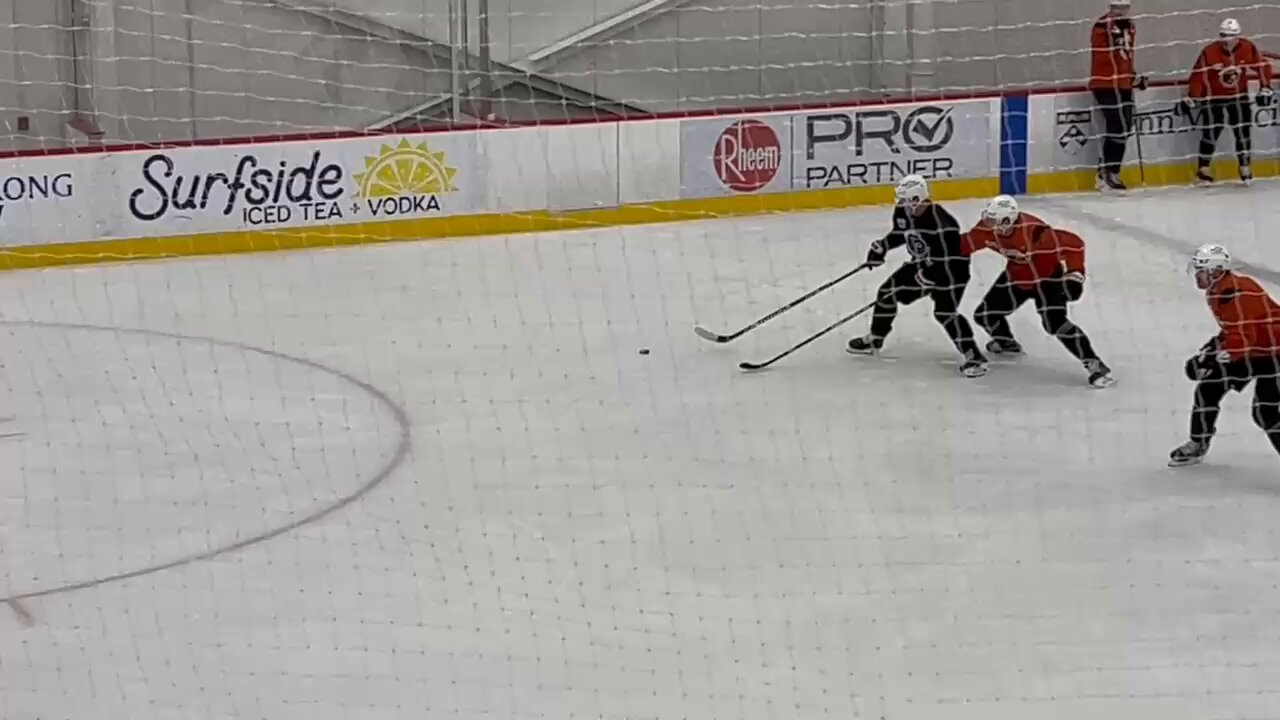
Scrappy plays against the boards, small-area plays where teammates temporarily turned to foes, and a palpable sense that this team is going all-in on being able to bring not just the puck possession and intelligent hockey that Tocchet has implemented, but also a sharp, physical, and resilient mindset that can carry them through 60 minutes (and, especially as of late, extra time, if needed).
A Needed Jolt
The Flyers’ recent dip wasn’t about effort so much as edge. Breakdowns were piling up in similar ways—too much space given up in transition, forechecks arriving half a step late, and defenders collapsing rather than confronting.
Tocchet didn’t mince words about why he dialed up the pace and physicality in practice, saying, “I think there’s been a trend of backing in and too much containment… We needed a good practice of getting in on people and working on our forecheck. It’s not just one guy—it’s five guys participating in all the aspects of the game, whether it’s defending or a forecheck.”
If a coach is talking about a trend, he’s not referencing just one flukey game. This was a pattern—and the solution wasn’t another video meeting. It was putting players in uncomfortable, demanding situations and forcing them to work through them together.
Onlookers could sense the tone shift immediately. Drills that usually begin at half-throttle went from 0-60 in the blink of an eye. Battles on the wall looked like scrimmage-level intensity. Line rushes weren’t just about timing—they were collisions waiting to happen. You could hear it in how sticks cracked off the ice and how fast the pace escalated.
Players Wanted It
If a practice is this physical, players will let you know afterward whether it felt useful or just punitive. Travis Konecny made that distinction unnecessary.
“I love them. It was getting a little competitive, a little chippy, and I think we need it. It’s good, getting that competitive mindset. Everyone’s bringing the intensity. Guys are leading the right way, competing—doesn’t matter who you are out there. You’re just setting a good example for the next guy in the next rep.”
In particular, the comment about “the next guy in the next rep” is revealing. These practices work not because they’re punishing, but because they force accountability to the player behind you in line. If you coast, he feels obligated to match that pace. If you push, the entire group rises to the level you set.
The Value of Controlled Discomfort
What Tocchet implemented on Monday isn’t new for him.
“I think we need a good push-and-shove in practice… I’m a big believer in—you never want to fight your teammates—but you want to play hard because, what if I play soft on a guy in a one-on-one [in practice]? What is that doing for him? I’m not helping him. So you play a guy hard. You don’t have to kill a guy, but playing a guy hard is only going to make you better, make the other guy better, and make the team better.”
Tocchet obviously isn’t asking players to manufacture animosity. He’s asking them to eliminate the artificial buffer that sometimes appears in practice—when teammates subconsciously ease up because they know the opponent is wearing the same jersey.
The Flyers don’t have the luxury of being a team that can win on finesse alone. Their structure works when it’s backed by urgency and contact. Their offense grows when their forecheck disrupts. Their defense stabilizes when they close early instead of containing late. Soft habits in practice leak into games, and Tocchet is working to plug it.
Why This Matters Now
Midseason can flatten a team. Schedules cram together, travel piles up, legs get heavy, and practices often turn into maintenance sessions rather than opportunities to sharpen. This week, the Flyers needed more than maintenance—they needed friction.
The response—both in the drills and in how players talked afterward—suggests Tocchet hit the right note.
Comments

Powered by RoundtableBuilt on infrastructure designed for real-time media. Learn more at RTB.io.© Roundtable 2026. By using this site you agree to the Terms of Use and Privacy Policy