




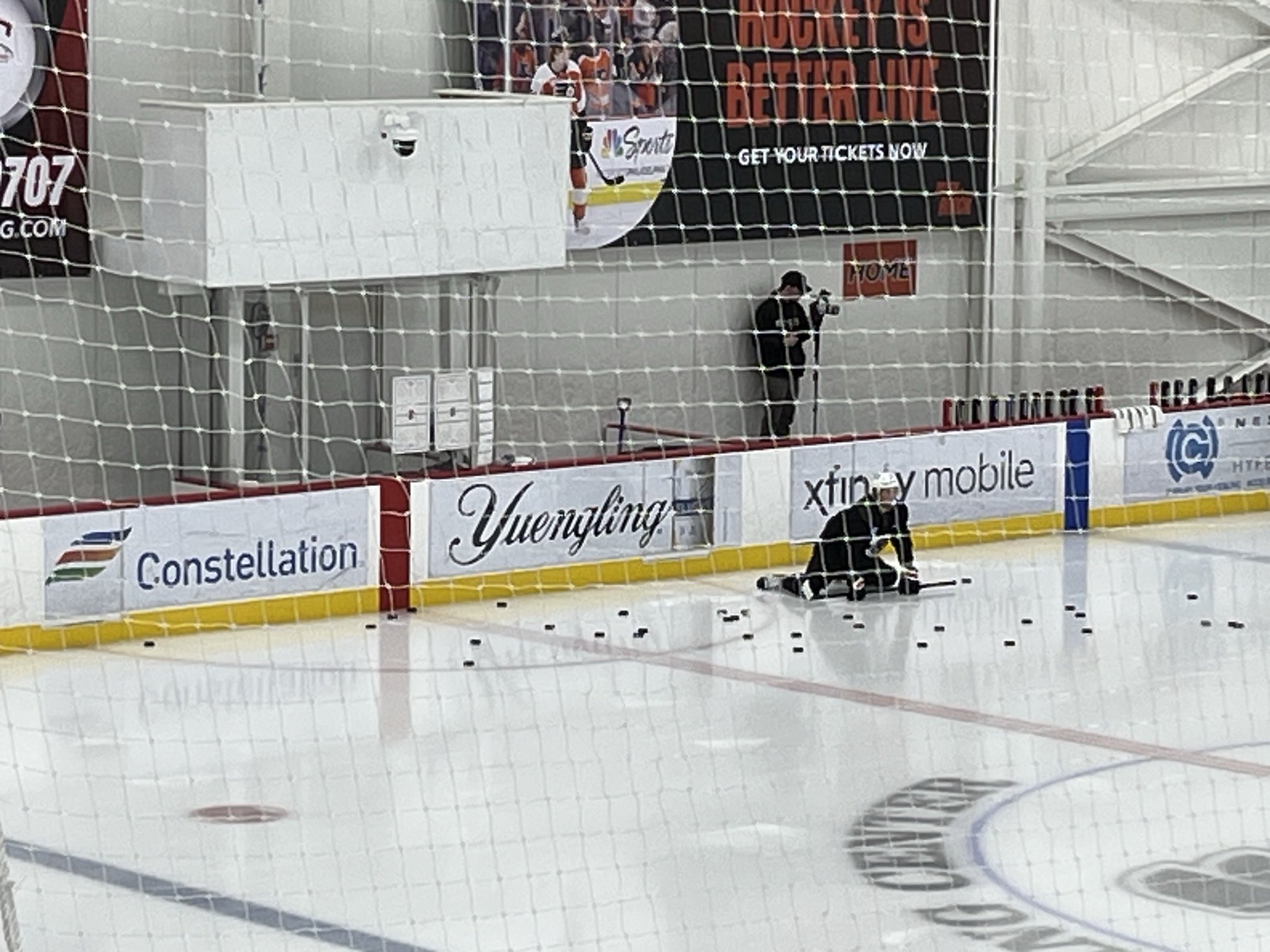
Tyson Foerster is back skating in practices with the Philadelphia Flyers, in a full-contact jersey, which means one thing. He’s close.
After missing time with a lower-body injury, the 23-year-old winger was back skating with the group at practice on Tuesday, signaling he could be activated from injured reserve as early as Wednesday against the Edmonton Oilers.
That’s not just another healthy body returning. It’s a reset point — a chance to see how Rick Tocchet manages a lineup that’s been working surprisingly well without one of its most stabilizing forwards.
The Flyers haven’t unraveled without Foerster, but they’ve looked different. Now, with his return imminent, Tocchet faces a subtle but telling decision — does he restore the chemistry of the Foerster–Cates–Brink line, or does he use Foerster’s return to stretch this lineup even further in a new direction?
With Foerster: Structure, Support, and the Subtle Things That Win Games
The easiest mistake when assessing Foerster is to reduce him to “the shot.” Yes, it’s heavy, and yes, it’s clean — but what makes him valuable isn't just whacking the puck with all his might. It’s the connective tissue of his game.
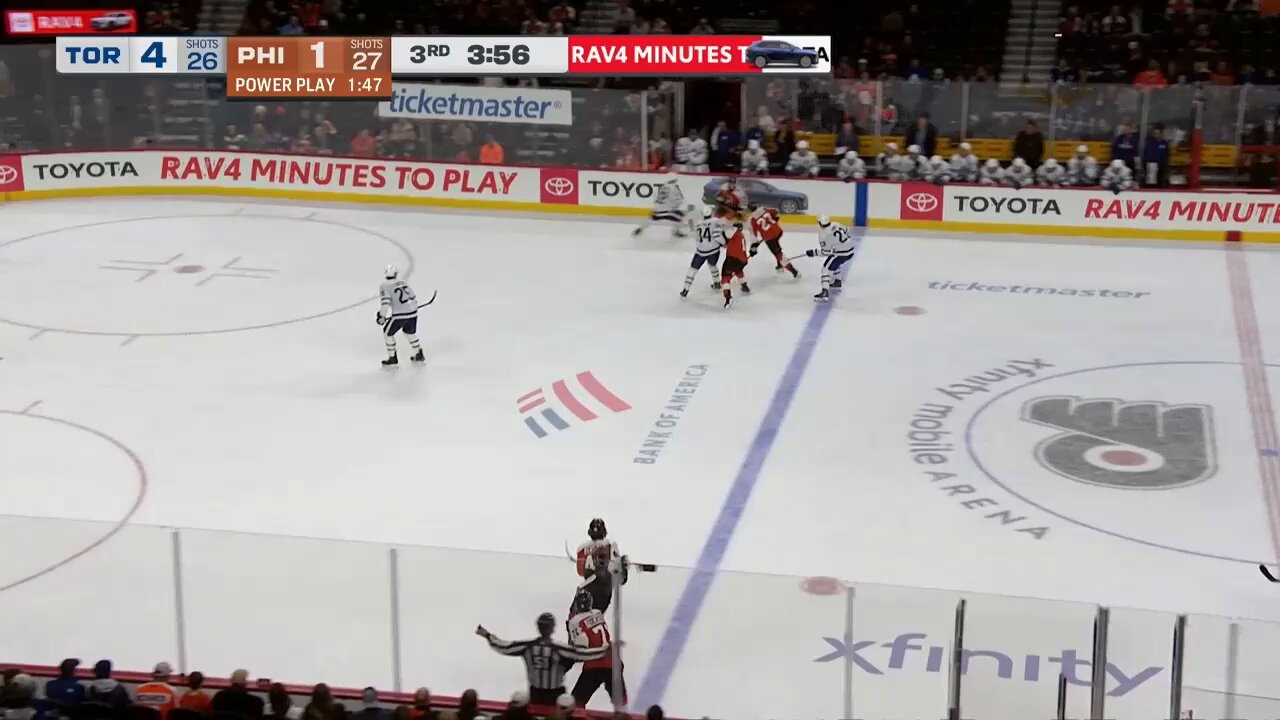
When he’s in the lineup, Philadelphia’s attack looks more cohesive. The puck moves cleaner from retrieval to possession to chance. Foerster doesn't have the straightforward speed of an Owen Tippett (very few players in the NHL do), but he keeps the pace steady. He gives offensive sequences rhythm. He supports his defensemen low in the zone, wins battles, and makes small but smart plays that sustain zone time.
You see it most clearly when he’s paired with Noah Cates and Bobby Brink. Not to beat a dead horse, but that line truly is something special.
They could outchance top opposition by grinding them down — controlling play below the hashmarks, forcing defenders into long, defensive-zone shifts. Foerster’s ability to maintain puck possession through contact let Brink make creative plays, while Cates anchored the trio defensively.
They've been consistently deployed against the top players in the league for a reason, and have endeared themselves to coaches, teammates, and fans alike because of how well they blended together as a line, but also brought out the best in each other individually—and, in turn, had immense positive impacts on the games they featured in.
Without Foerster: Faster, Looser, and a Bit More Chaotic
Tocchet’s line juggling in Foerster’s absence hasn’t been a failure — if anything, it’s shown the adaptability he’s brought to this team.
Tippett was briefly tried out on the left wing with Cates, but the shuffling didn't end there. Brink also saw a stint with Sean Couturier and Matvei Michkov, while Cates spent some minutes anchoring a line between recent AHL call-up Carl Grundstrom and Travis Konecny.
The experimentations were necessary, but also provided an intriguing shift in their offensive personality. Instead of the layered, grinding possessions that wear opponents down, there’s been more one-and-done pressure. Zone time hasn’t been as consistent, and play has tilted toward the perimeter more often. It hasn’t been worse, exactly — just less sustainable over a long stretch.
What’s fascinating is how this version of the Flyers has still found ways to win. They’ve shown they can play multiple styles, and, if nothing else, are stubborn enough to get points at all costs. While it's undoubtedly more nervy to watch them figure out these new lines and adjust to different strategies in real time, it's been both entertaining and educational to see just how many combinations can work for this offense.
Tocchet’s Calculus: Reunite or Reinvent?
Tocchet has been a tad noncommittal about simply plugging Foerster back next to Cates and Brink. He's stated before that he believes in the "Scotty Bowman" style of designing lines, in which a coach focuses more on keeping pairs together with interchangeable thirds rather than full trios, and also kept the door open to keep experimenting with different line combinations, if only briefly.
There’s obviously a case for reunion. The Cates–Brink–Foerster line has the trust of a group that can handle tough matchups, play heavy minutes, and keep the puck in the right end of the ice. With the Flyers starting a stretch of games against offensive teams like Edmonton and Tampa, that stability could be crucial.
But there’s also a case for experimentation. Tocchet could use Foerster as a plug-in for balance rather than restoration. Slotting him next to Matvei Michkov, for example, could give the Flyers a rare blend of precision and creativity on one line — Foerster providing the punch, Michkov the flash. Maybe it’s not something you’d want to try in April, but in November? Hey, why not?
What’s interesting about Tocchet’s handling of this group is how unafraid he is to disrupt comfort. Most coaches default to familiarity when players return. Tocchet seems willing to use these moments to test how adaptable his roster truly is. If he keeps Foerster separated from Cates and Brink, even momentarily, it’s not disruption for disruption's sake—there's clearly purpose behind it. It’s him probing for new chemistry, new looks, new possibilities.
What It All Comes Down To
Foerster’s return is a very welcome event, no matter who he ends up playing with in his first games back. His value has proven to be unmistakable—the kind of player who makes everyone around him more composed, more efficient, more intentional.
The question isn’t just when he’ll be back, but where Tocchet decides to use him. Whether that means revisiting an old formula or writing a new one, it’s the kind of choice that says a lot about Tocchet's confidence in his roster, and what direction he's looking to steer them in as we enter the cold winter months of the season.