




More than half of the 36 players selected in the WNBA draft each year never play more than a single season in the league. There's too much talent with no development league available. Pro women's hockey is about to feel the same crunch.
More than half of the 36 players selected in the WNBA draft each year never play more than a single season in the league. There's too much talent with no development league available. Pro women's hockey is about to feel the same crunch.
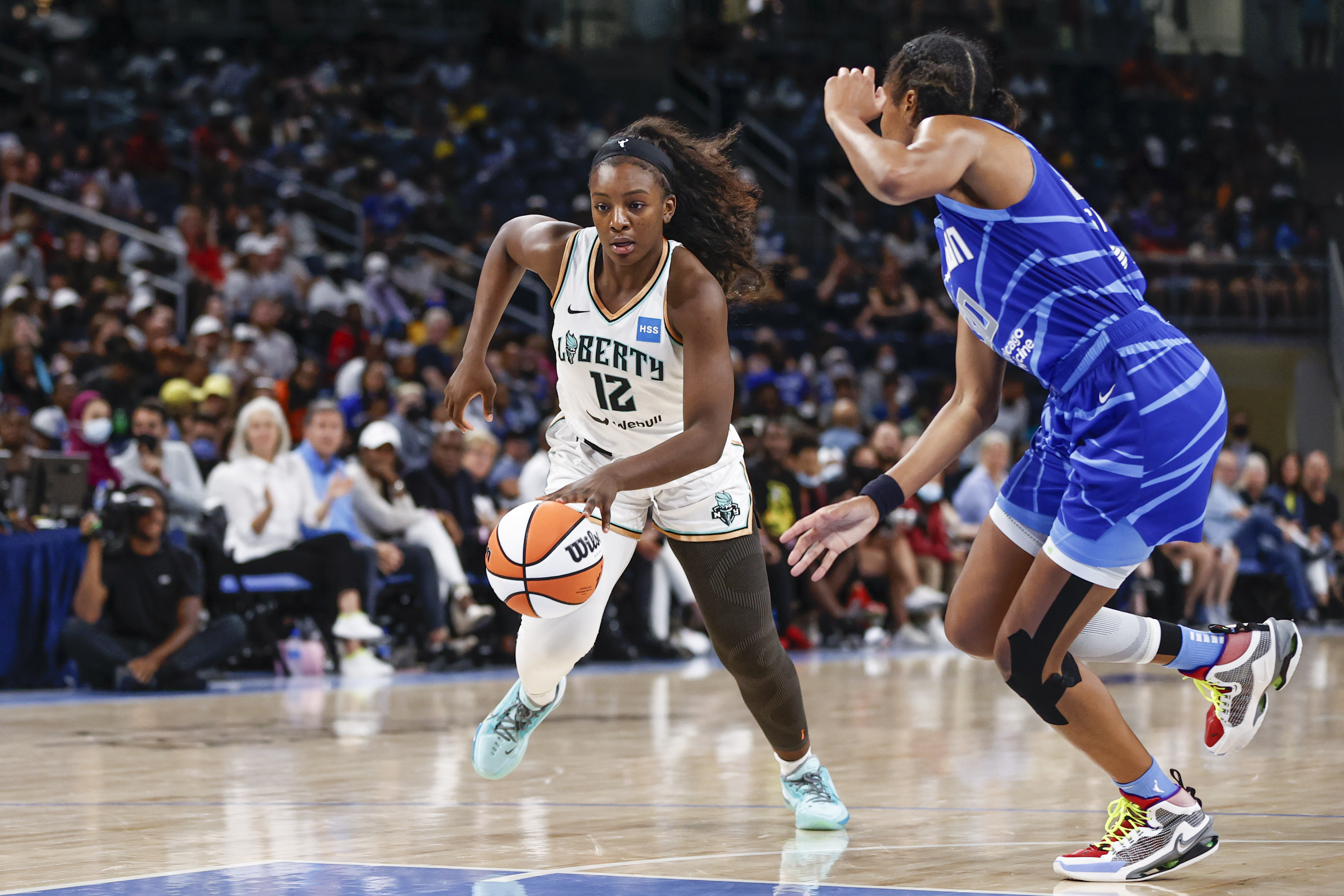 Michaela Onyenwere - © Kamil Krzaczynski-USA TODAY Sports - Women's Hockey Will Face The Same Dilemma As The WNBA
The WNBA, a 12 team professional women's basketball league founded in 1997 has what professional women's hockey is looking for through their new amalgamated league. The league has attendance, it has television contracts, it has wide spanning media coverage, and it also has one dilemma that professional women's hockey is about to face: too much talent.
Currently, the level of play in the WNBA is so high, that many of the league's top draft picks, the best young prospects in the world, can't make the league. Unlike other professional leagues, this isn't a case that they aren't good enough, rather, there simply are not enough teams for the calibre of players being turned away, and there is no direct development league to keep them tied to teams.
It's a cliff professional women's hockey just crossed, and in the case of goaltenders, had already reached in the PHF and PWHPA.
In most men's leagues, including the NBA and NHL, there are development leagues available, on top of European leagues. For women in North America however, this does not exist for basketball or hockey.
In men’s professional hockey, it’s a service provided to the NHL by the American Hockey League and East Coast Hockey League. In the NBA, it’s the G-League. NHL leaders including Leon Draisaitl, David Pastrnak, Mikko Rantanan, and Erik Karlsson all spent time in the AHL. Imagine if any of these players were released with nowhere to go prior to being able to crack the league. It's an issue currently faced in women's professional sport, including the WNBA, and now, hockey.
As pointed out for NBC’s On Her Turf, “Herein lies the sad reality of the WNBA Draft. Each year, 36 players hear their name called out in what is often the culmination of a lifelong goal. But many of these players – whether they know it in that moment or not – still face long odds when it comes to whether they’ll actually play in the WNBA.”
According to On Her Turf, over the last five years, an average of 13 of 36 players selected from each draft are waived prior to the first game of the season, and that number grows in the opening weeks of the year. The article also points to the fact that roughly half of each draft class won't play more than a single season in the WNBA.
In a league selecting only 36 players, these are elite, professional calibre athletes. Considering there are more than 1,100 athletes competing in NCAA Division I basketball, and each year a handful of international players are also drafted, it's such a massive talent pool with minuscule odds to play in the league.
The PHF recently did away with their draft, but was facing a similar issue this year as the talent base rapidly expanded in the league. The PWHPA has stated the new league will hold a draft. With the combined talent of the top half of the PWHPA and PHF in a singular super league, graduating NCAA and USports players, outside of national team calibre players, will soon have no where to go in North America without a development league.
The new six team league professional women's hockey leaguye will have 138 players if each team carries 23 players. In the WNBA, there are a maximum of 144 positions on 12 teams. Originating in 1997, the WNBA started with eight teams, but has only expanded by four teams in 25 years. Similarly, it could take years for expansion to occur in the new professional women's hockey league.
Expansion in hockey would have a larger impact than in basketball given roster sixe differences, but expanding too fast, also risks franchise and financial instability. The PHF chose to hold off on expansion last year, focusing on internal talent growth, and prior to the acquisition, the league was on track to have skilled rosters unlike any the league has seen in their eight year history.
Now, with less roster spots available, even the best NCAA and USports graduates could be left without a place to play. It's the same issue the WNBA faces each year.
As USA Today’s Mike Sykes wrote about the annual shedding of talent from the WNBA, “it’s not that these players are bad or that they don’t have the ability to stick in the WNBA — it’s just that there isn’t enough space for teams to hold on to them.”
Going from two leagues to one next year, more than 100 current professional women's hockey players will be without a place to play. Countless more college and university graduates who would like to continue playing, will also have less options, if any. It's why devising a development system needs to be a focus for the new league. North America currently supports multiple men’s professional hockey leagues featuring more than 100 teams.
A developmental league for women's professional hockey has always been a concern of both groups, and now, with all women in one place, the need has never been higher, and the potential to solve the issue, never better.
This year, hundreds of women will lose their jobs as hockey players. Without a development system, over the coming seasons, hundreds more will never get the opportunity to become pros. It's an issue that already exists in the WNBA, and an issue that will soon plague women's hockey.