



Jan 5, 2026 6:39 AM
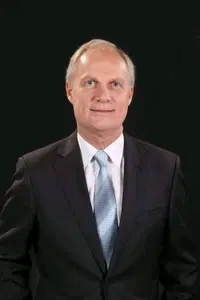
The president of the Swedish Ice Hockey Association talks about the state of the game in his country, the importance of Swedish NHLers coming back home and how hockey has changed since over the past three decades.
The Hockey News' Money & Power 2026 hockey business annual is available at THN.com/free, featuring the annual 100 people of power and influence list.
W. Graeme Roustan, owner and publisher of The Hockey News, sat down with special guests for peer-to-peer conversations also featured in the issue, including the president of the Swedish Ice Hockey Association, Anders Larsson.
Here's their full conversation in The Hockey News' True Hockey Talk:
Read along with an excerpt from their discussion:
W. GRAEME ROUSTAN: We're in the French Riviera at the IIHF Global Hockey Forum, and we're talking about hockey. Doesn't that make all the sense in the world to you?
ANDERS LARSSON: Maybe not, people might think. I got some questions back home in Sweden. "Are you going to the Riviera?" But actually, we're sitting here in Nice, and in 2030, the Winter Olympics are coming here. So, it's actually a hockey place as well.
WGR: Swedish hockey is big. It's big. How important is it for Sweden to have players like Henrik Lundqvist who have played in the NHL and then come back to Sweden and talk to the kids and inspire them to play in the NHL and also for the national teams and so on?
AL: It's so important. Those guys are idols not only for the players and the next generation; they're idols for the fans and for the whole hockey community. Like yesterday here, Lundqvist was in front of the Global Hockey Forum talking about the Swedish hockey community, the way we're working together and our passion for the game, but also how important it has been for him to play for the national team, to play for his country. Of course, it means a lot, and it inspires the next generation.
WGR: What caught my attention from his speech was that when he was growing up, his dream was to play for the national team. It wasn't to play in the NHL. That possibility was out there too, but his dream was to wear his country's jersey. That was his motivation.
AL: Yes, that's true. And it's similar, actually, with his brother, Joel, who I know very well. He's played a lot of games with our national team as well.
WGR: There's something about Swedish players who go back to Sweden after their NHL career. They seem to get reconnected with the Swedish Ice Hockey Association in a deeper way. Why is that?
AL: In one way, we are a big hockey country, but in another way, we are quite a small country. So we know each other, many of us, and the players remember what it meant from the beginning with their first volunteer coach, what happened in the club and the efforts we're doing now to support the clubs and the next generation. So, coming back after many fantastic years in North America, it's coming home for them, coming home where it all started and back to the Swedish hockey family. And for us as a federation, it's important to keep them in the loop. It's important that we as a federation also take on the role of bringing people together. That's our job. But our main job is to create the right environment for the development of youth hockey, both boys and girls at a very young age.
WGR: At its core, is that what your association is all about?
AL: I would say that. That's where it all starts. To make sure that the young boys and girls have a good environment with their clubs. We have about 400 hockey clubs in Sweden So, not that many. It's very important that each club works as well as possible. And most of the clubs are run by volunteers. So we need to give support and inspiration.
With that being said, the Swedish Ice Hockey Association governs all ice hockey in Sweden, including the top men's and women's leagues. We're a unified organization in that way. The leagues are under the federation, which helps us when we talk about the hockey family and working together. When the association looks at making investments in hockey, you're not only looking at the program, but you're also looking at infrastructure and facilities as well.
WGR: Do you agree that team sports and sports in general improve society from a participation and a mental-health point of view, and that people are better citizens when they're involved in sport?
AL: I fully agree, and I can say that sometimes I meet people asking me, "Anders, how can you spend so much time on ice hockey?" It's every day, 24/7, and the media is sometimes after you, and if that's not the case, it's the clubs or whatever; there are discussions all the time. But I can tell you, I love the sport and the speed and everything, but the fact that we're creating a better society, that's the thing making me doing all this.
We talk about health, we talk about kids coming together, learning how it is to win together, how it is to lose together, how to co-operate with others, how to compete and that kind of stuff. That is very important when you come out in society. Some players, and it's very, very few, have become big stars. The other ones are important people in society, healthy, important people. So we're like a big kindergarten from the beginning, and we create a better society.
WGR: I was in Stockholm at the World Championship not too long ago. You were the host of the event. It was a terrific, exciting tournament, a big success. What do you remember about the tournament from a hosting point of view?
AL: We got a (bronze) medal, and you can never say that a medal is bad, but, of course, after the loss in the semifinal against the U.S., it was a bad day for us.
Now, looking back on the tournament as a host, it was very successful. We had almost 300,000 tickets sold. We had a tremendous fan zone. But what's key for me is how much it inspired young boys and girls and new fans, because we could see in the stands the real hardcore fans but also some people watching their first-ever hockey game and thinking that it was fantastic.
WGR: How did you feel about the overall on-ice product?
AL: The game has improved a lot. It's so much faster today. I go back to my first World Championship in 1995. Sweden was hosting. I was the official scorekeeper sitting on the bench. I've seen some videos from that time. It's 30 years ago. Now, being at the World Championship in this role, I could never believe that back in 1995, but it's really a different game, so much faster, and I like it much more. I like the speed.
For more interviews with a deep look into the world of the hockey business, check out The Hockey News' Money & Power 2026 issue, available at THN.com/free.
Comments

Powered by RoundtableBuilt on infrastructure designed for real-time media. Learn more at RTB.io.© Roundtable 2026. By using this site you agree to the Terms of Use and Privacy Policy