



Jan 5, 2026 6:50 AM
The NHL's deputy commissioner discusses this year's Global Series games, the upcoming Olympics, the future of women's hockey and the possibility of returning to Phoenix and Atlanta.
The Hockey News' Money and Power 2026 hockey business annual is available at THN.com/free, featuring the annual 100 people of power and influence list.
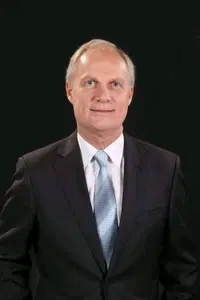
W. Graeme Roustan, owner and publisher of The Hockey News, sat down with special guests for peer-to-peer conversations also featured in the issue, including NHL deputy commissioner Bill Daly.
Here's their full conversation in The Hockey News' True Hockey Talk:
Read along with an excerpt from their discussion:
W. GRAEME ROUSTAN: We just both got in from Stockholm, where we were able to see the Pittsburgh Penguins play the Nashville Predators in two regular-season games. How do you think it went?
BILL DALY: We were very pleased on a host of fronts. I think they were our 46th and 47th regular-season games abroad, and the most in any city is in Stockholm. We enjoy being in Stockholm. I think the fans of Sweden enjoy us being in Stockholm. And I thought this past weekend was terrific. Erik Karlsson for the Penguins and Filip Forsberg for the Nashville Predators really connected with the community. Thirty percent of our players are internationally born and trained, and I think that number is going up, so the future is bright.
WGR: International hockey is the hotbed of growth, with learn-to-skate and grassroots programs all up through their clubs. It's never been stronger than it is today. Is that right?
BD: Yeah, I think that's definitely fair. We have recognized the importance of investing at the grassroots level in those markets. I think it's so critical. Obviously, we've had long-standing support and co-operation agreements, player-transfer agreements, with various hockey countries in Europe, and our owners have supported those agreements to the tune of, in some cases, tens of millions of dollars over the last five years. We do prime the pump to get money into the hockey system internationally. A lot of people don't recognize that, but, more recently, we've been focused on grassroots hockey and connecting with the communities and creating more touch points for the NHL brand and hockey at the highest level in these international communities.
We also had a meeting while we were there with the members of Hockey Europe, which is an affiliation of the various professional ice hockey leagues in Europe. We had participation from five of the six countries that are part of that organization. And the message the commissioner delivered was, "Look, we're not the enemy. We want to grow the sport. We think we can be helpful if we collaborate. A rising tide lifts all boats, and if hockey is bigger in Europe, you guys will be doing better as well as the National Hockey League." That was a message that I think was very well-received.
WGR: It seems to me that makes sense because, like you said, over 30 percent of players in the NHL now come from Europe, and maybe more in the future as the system grows.
BD: We're all in a very competitive environment. That's why I don't think the competition should necessarily be among hockey leagues, right? The competition really should be with other sports and other entertainment offerings. There's so much out there. There's a lot of clutter, and to carve out a niche where you can be relevant and competitive is important in today's world, and we're focused on doing that.
 Bill Daly presented the Clarence S. Campbell Bowl to Connor McDavid for the second straight playoffs last spring. (Jerome Miron-Imagn Images)
WGR: International hockey is big. The Olympics are this year. What are your views on the Olympics and how the NHL players are participating in it? How does the NHL look at it?
BD: We're excited about it. The commissioner was the first to commit NHL players to the Olympics back in 1998 in Nagano…But, for various reasons, we haven't participated in the last two Winter Games, so this will be a return to the Olympics – the first time our players have really been there en masse – in 12 years.
So I think there's a high excitement level, certainly among the players, and we're excited as well. The world is a lot different today than it was 12 years ago in Sochi, Russia. There are a lot more opportunities to connect with our fans and grow new fans. We think the Olympics present a good opportunity to do that. And when you combine that with our agreement with the Players' Association to do a regular World Cup of Hockey tournament, also in the February time period every four years…we think the potential of growing the sport and growing fandom in the sport is enormous from just that.
WGR: I know you're a big fan of women's hockey at every level. The PWHL is growing, and the NHL is very supportive of that. How do you see the women's game growing?
BD: I like to think of everything as an opportunity, and I certainly think that the growth and prevalence of women's hockey is a real opportunity for hockey generally. I think they've done a fantastic job in the very short period of time they've been operating. All signs are pointing up. We don't have a formal support relationship with them, but we try to be there for them when they need us and when they call on us. I can't say that's frequently; they've been doing a pretty good job on their own. Having said that, I think we're there to support them. They know that. And I would like to think the case is the same vice versa.
"The competition really should be with other sports and other entertainment offerings."
WGR: As a fan, what do you think the state of hockey is today versus a decade or a couple of decades ago?
BD: It's a lot bigger. We'll start there. Come January, I'll have been here 29 years. So it's been a long run, and just to see where the sport has come from and gone to during that time period is pretty mind-boggling. It really is. A real credit obviously to the commissioner, Gary Bettman, and his tenure here.
Somebody asked me the other day, "What's the biggest change in the league over that period of time?" Obviously, the skill of the players on the ice is probably at the top of the list. The game's never been more skilled and more competitive – the competitive balance is fantastic.
But I would say the thing that strikes me a lot is how professional the league is and how professionally it's run, not only at the league level but at the club level, compared to when I joined the sport. We certainly had our situations where ownership depth wasn't as strong as it is today and financial situations we had to work our way through and get out of. And luckily, we seem to have brought all the balls down safely, with the possible exception of Arizona. Although, where the Arizona ball fell was pretty good for us. So I'm not going to fall on my sword about that. The league has done really well managing difficult situations in certain cases.
WGR: Could we see Phoenix and Atlanta, previous NHL locations, coming back?
BD: At some point again, with all the stars aligning, yes, I do believe that. I'm very bullish on the success prospects for our sport because I think hockey can survive virtually anywhere. I think the game sells itself to a large extent. It's exciting. It's fast-paced. It's hard-hitting. It's passionate. All the things you look for in a competitive sport, especially at a professional level, our sport brings you.
I do think hockey can be successful. People ask me, "We're at 32 franchises now. No other professional sports league in North America has more franchises than that. Do you think you can really expand by two more?" I may have answered that question differently when I first joined the league in the late '90s in terms of whether the depth of talent was really available to stock major expansions. But I think we're past that point.
We're in a situation now where there's plenty of good players around the league, a lot of good players who would be good NHL players who don't have the opportunity now because there's probably not enough spots. I don't think dilution of talent is a legitimate concern for why you wouldn't want to expand.
Having said that, there is a right number. I don't know what that number is. I don't think the commissioner knows what that number is. I know he's been open to saying that, if the right circumstances came along, he'd have no hesitation in at least bringing it to the board for their consideration for adding a franchise or two.
For more interviews with a deep look into the world of the hockey business, check out The Hockey News' Money and Power 2026 issue, available at THN.com/free.
Comments

Powered by RoundtableBuilt on infrastructure designed for real-time media. Learn more at RTB.io.© Roundtable 2026. By using this site you agree to the Terms of Use and Privacy Policy