



Jan 5, 2026 6:55 AM
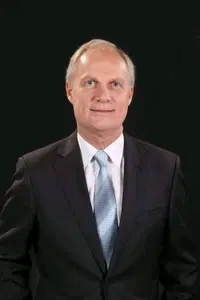
The Toronto Maple Leafs GM chats about the difference between Calgary and Toronto, working with new ownership and the salary cap.
The Hockey News' Money & Power 2026 hockey business annual is available at THN.com/free, featuring the annual 100 people of power and influence list.
W. Graeme Roustan, owner and publisher of The Hockey News, sat down with special guests for peer-to-peer conversations also featured in the issue, including Toronto Maple Leafs GM Brad Treliving.
Here's their full conversation in The Hockey News' True Hockey Talk:
Read along with an excerpt from their discussion:
W. GRAEME ROUSTAN: Before you became the GM of the Toronto Maple Leafs, you were the GM in Calgary. What's the difference in the markets from the point of view of running that team or this team? Is it pretty much the same?
BRAD TRELIVING: There are a lot of similarities, being two Canadian markets. Obviously, the passion in the market. In any Canadian market and NHL team, there's a big following. But I think this market's unique, right? Just the volume. The volume of the coverage; the size of the market. It's a unique market that way.
WGR: When you were there, Murray Edwards, the principal owner in Calgary, is a real hockey guy. He's a passionate hockey owner. And then you come here, and it was a different type of ownership structure. You had Bell at 37.5, you had Rogers at 37.5, and you had (Larry) Tanenbaum at his 25 percent. So you had three owners who were overseeing MLSE. That's changing right now. We're in the middle of this change where Rogers and Edward Rogers have bought out the Bell 37.5, and this summer, he's planning on buying the 25 percent from Larry Tanenbaum.
So it will be a single owner, like Murray Edwards was back in Calgary. Tony Staffieri is CEO, and he's very involved, too, but the focus is going to be on Edward Rogers. The face of the organization is going to be Edward Rogers. Do you see any benefit to having a single owner as the face of a franchise versus a group of owners?
BT: I was fortunate enough to work with Murray. Murray is a great owner, as you said. He is very passionate, and I learned a lot from Murray. Coming here, ownership's been great from the day I got here, regardless of the structure. As a hockey person in charge of the hockey department, your main thing is wanting all the resources available to you to help your team. And that's not just money for players but all the resources available so you can build the best program. And we have that in spades here and have had it since I've been here.
Obviously, ownership is going to transition, and that'll make for a new ownership structure. My dealings with Edward and Tony have been tremendous to this point. Over the course of the last off-season and getting into this year, they were getting more involved. So it's been really interesting for me getting to build those relationships. And I think it's going to be tremendous with them, as you said, sort of leading the charge here as we go forward.
"Having a really good understanding of what's going on in all facets of the business is critical."
WGR: One thing I'd like to talk a little bit about is the salary cap and how you manage that as part of your job. The low end is at $70 million, and the top end right now is at $95 million, and it's going up. How difficult is it managing the salary cap?
BT: It's critical to the operation of the organization. Now, I'm fortunate that I've got some really smart people who work with me, specifically (assistant GM) Brandon Pridham, who oversees all that. But we're in constant communication about it. In a hard-cap system, it's critical in terms of your decision-making, not only for today but for tomorrow.
And I think we're in a really interesting time because the cap was flat for a couple of years during the pandemic and then coming out of it, and now, we're seeing significant growth. And with the projections now three years out, we have a good sense of where the cap's going to be. And I think that gives all the teams a better sense going into the marketplace, dealing with your own players and just knowing what's in front of you. But it's critical in terms of your planning and preparation.
WGR: In the old days, the hockey operations and the business operations were completely separate, and they never crossed paths. The players play the game. The coaches, the GMs and all of that department really stayed away from the business side of operations. That's not the way it is today. There's really a complete everybody-around-the-table type of mentality across the league. I've talked to all the different teams, and they all have this feeling of, "Hey, we're all in this together, and we have to help each other." Have you seen a change over the past decade or so?
BT: You have to know what's going on in your business. I think having a really good understanding of what's going on in all facets of the business is critical, right? We have to generate revenue in order to pay our players and do the things that we want to do on the hockey side. Being well-versed and understanding not only what's going on there but also the challenges and opportunities is important, so we try to participate. Instead of being siloed, you are probably working arm in arm more than you were previously.
For more interviews with a deep look into the world of the hockey business, check out The Hockey News' Money & Power 2026 issue, available at THN.com/free.
Comments

Powered by RoundtableBuilt on infrastructure designed for real-time media. Learn more at RTB.io.© Roundtable 2026. By using this site you agree to the Terms of Use and Privacy Policy