


Connor Somerville-The Hockey News

Jan 5, 2026 6:54 AM
The chairman and CEO of Comcast Spectacor discusses his background, building an organizational philosophy, what his focuses are in the coming years and the 'pressure' of representing the Philadelphia Flyers.
The Hockey News' Money & Power 2026 hockey business annual is available at THN.com/free, featuring the annual 100 people of power and influence list.
W. Graeme Roustan, owner and publisher of The Hockey News, sat down with special guests for peer-to-peer conversations also featured in the issue, including the chairman and CEO of Comcast Spectacor, Daniel Hilferty.
Here's their full conversation in The Hockey News' True Hockey Talk:
Read along with an excerpt from their discussion:
W. GRAEME ROUSTAN: I want to go back in time and talk about your background. You come from the business world. You come from health care. You come from politics. Maybe you can just touch a little bit about what you've done here in the Philadelphia market?
DANIEL HILFERTY: I am a Philadelphian, although I spent most of my childhood at the Jersey Shore. I came back to Philadelphia to attend St. Joseph's College, which is now St. Joseph's University. I was a really good high-school player, a not-so-good college player.
But I always was a fan of all the Philadelphia sports. And I always was very committed to not only the business growth of the region but also the civic and community pride, where Philadelphia is always the underdog. We thought we could achieve, and we found ways to achieve. Not only on the field of sport but also in going after conventions. We hosted the Republican Convention in 2000 and the Democratic Convention in 2016. And we've done well in areas like bringing Pope Francis to Philadelphia.
I've always been fortunate to lead organizations. I was, for 10 years, the CEO of Independence Health Group, the parent company of Independence Blue Cross. We grew that, in a period of time, from about a $12-billion company to a $35-billion national company. And really, everybody knew that it was based here in Philadelphia. So I've always been part of the fabric of Philadelphia. I've been fortunate to lead organizations like the Chamber of Commerce as a chairman for two years. I always have an urge to be part of something that makes this great region even greater and to have it recognized as a true international city, international region and international destination.
The last piece I'll say to that is, I don't know if it's my Jesuit upbringing, but after college, I was fortunate to serve in the Jesuit volunteer corps…in Portland, Oregon. That two-year period of time changed my life. And I realized that not only could you be successful in a business venture or a political venture, you could be successful in bringing communities together and helping lift up a whole area, not just those that were either affluent or connected in some way. And it's been a hallmark of the organizations and the communities that I've been part of. And at the end of the day, it's the thing I'm most proud of.
WGR: I keep hearing from Todd Glickman and others from your organization and outside the organization that you've brought a lot of people together here under one umbrella.
DH: The best organizations that I've ever been part of are the ones that don't lock some doors. And that's what we've built here. It's a metaphor for openness. It's a metaphor for challenging each other in a respectful and dignified way. It's a metaphor for, "Hey, look, it's time to go home and be with your family. Go do it." It's about making sure it's fun. You've seen some of the folks here who are truly enjoying themselves, and that's what I want.
Rick Tocchet is a breath of fresh air, and you talk about somebody who is a first-class leader, a first-class coach, but he's fun. And I think it rubs off, and the puddle begins to grow. You throw the stone, the waves expand and really encompass or engulf everybody who wants to be part of something special.
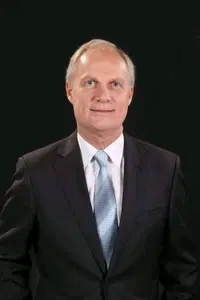
 Hilferty says his primary goal is to help build the Philadelphia Flyers into a perennial contender. (Connor Somerville-The Hockey News)
WGR: What are you focused on right now? Because you've got a new arena coming in 2030. That's phenomenal. It's a big win, not only for the Flyers, and not only for the 76ers, but it's a big win for Philadelphia, right? What are you focused on now and in the next few years?
DH: I tend to put it in pots. I'd say the first thing is, we want to build a contender here. Not a once-and-done contender, but a perennial contender. It's tough, but you've got to figure it out. You've got to make the right picks. You've got to develop these young guys, and we'll potentially get lucky around a free agent. But that's moving well.
The second piece is that we, as Comcast Spectacor, truly are a sports-and-entertainment entity. What I envision is, as we build this Flyers brand and really solidify our partnership with the 76ers…we're going to use that to capitalize on the great reach of the 76ers brand, the Philadelphia Flyers brand, and change communities. Whether it's developing playgrounds where young kids can play hockey or play hoops or programs around education or community building, it's great. The two franchises, led by the ownership groups, they're enthusiastically supportive of and committed to changing the communities we live in and where our fans come from.
WGR: For decades, you've been a champion of making Philadelphia a destination. How does the new arena, the WNBA and all of that fit into you getting more global attention and making Philadelphia a destination for these big events that bring a lot of economic benefits to the community?
DH: Well, sports and entertainment are such a big part of any community…In this age of technology, in this age of kids just on a laptop all day playing games, we've got to create an environment where people want to be together, want to be in the community. What better place than a 19,000-seat arena with first-class acts and entertainment and sporting events to create an environment where people can mingle, where people can get together and have fun.
And then the other thing is, I've been fortunate to be chair of bringing the World Cup to Philadelphia. I co-chair with a colleague, Michelle Singer from Comcast. We're going to have six matches here next summer. The final one will be the Round of 16 on the 4th of July. So we're going to have the world here again. And my vision, my hope, is that will catapult us into seriously thinking about vying for a summer Olympics. Who knows?
WGR: I wanted to ask you about the summer Olympics…is it more than just a hope and a dream, or are you putting some time into that?
DH: I can't say that we're putting dedicated time into it. I firmly believe that if you say it enough, enough people will come to the conclusion that it's worth pursuing. I think that's what happened with the World Cup. That's what happened with the conventions that we've had here. Even the Pope's visit. So I just believe, with the World Cup next summer, let's show not only Philadelphia and the region that we can do something big, but let's show the world that we can do something big. And then after the World Cup, all of a sudden, people are going to say, "What's next? What's next?"
We have the places within an hour (of the city) that can accommodate any Olympic event. And we can do it in a way that people just feel energized and excited – that's right here in Philadelphia.
"The best organizations that I've ever been part of are the ones that don't lock some doors."
WGR: I want to go to your role. You wear a lot of hats in the community, but the hat we're talking about today is governor of the Philadelphia Flyers. It's a pretty special thing. When you wear that hat, when you go in and represent the Philadelphia Flyers, you're not just representing the current team, you're representing the whole history of the organization – Ed Snider and all the way back to Day 1. Do you feel the pressure? Do you feel the weight on your shoulders?
DH: That's a really good question. I would say this. I do not feel the pressure. What I feel is, I'm honored that I'm able to do it for the good of not only the Philadelphia Flyers, not only our parent Comcast, not only the team here at Comcast Spectacor, but also for the community at large.
What happened, I believe, in some interim years post Ed Snider, is that we lost our way. We lost the fact that there was that human touch, that there was that inspiration of our foundational titan, Ed Snider. And what I became energized about, and if I felt a little bit of pressure, was to do two things: to build upon the foundational titan that Ed Snider was and make sure that we connected in the authentic, passionate way that he did, not only with the team that he loved, the community that he served but with the NHL as a whole.
I talk to Gary Bettman whenever I get an opportunity. I so admire what he's done. You just look at the strength of the league. You look at the new collective bargaining agreement. There's predictability. There's a sense of an exciting future for players, owners and fans alike. I just feel really privileged to have the opportunity to represent this Flyers crest, to represent Brian Roberts and Comcast and my colleagues at Comcast Spectacor. So it's more about taking that responsibility seriously than feeling pressure. I enjoy the pressure. If there is pressure, I just see it as an opportunity to not only restore something great but bring it to new heights.
For more interviews with a deep look into the world of the hockey business, check out The Hockey News' Money & Power 2026 issue, available at THN.com/free.
Comments

Powered by RoundtableBuilt on infrastructure designed for real-time media. Learn more at RTB.io.© Roundtable 2026. By using this site you agree to the Terms of Use and Privacy Policy