


Photo by IIHF

Jan 5, 2026 6:33 AM
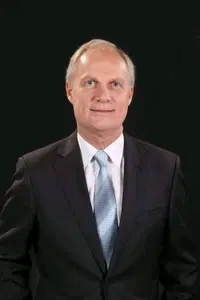
The president of the Hungarian Ice Hockey Federation discusses what it was like to play with boys in youth hockey, the challenges she faces in her country and the efforts to grow the game.
The Hockey News' Money & Power 2026 hockey business annual is available at THN.com/free, featuring the annual 100 people of power and influence list.
W. Graeme Roustan, owner and publisher of The Hockey News, sat down with special guests for peer-to-peer conversations also featured in the issue, including the president of the Hungarian Ice Hockey Federation, Dr. Zsuzsanna Kolbenheyer.
Here's their full conversation in The Hockey News' True Hockey Talk:
Read along with an excerpt from their discussion:
W. GRAEME ROUSTAN: What got you interested in hockey and sports in your country?
ZSUZSANNA KOLBENHEYER: When I started, I was 12 years old, and there were no other female hockey players in Hungary. I was a very tiny little girl, so my father was not really happy about it at first. He used to be a hockey player, so he knew why he didn't want me to become a hockey player. But at the end, he couldn't say no, of course.
WGR: What gave you that passion to do that? What was it that you saw?
ZK: We went to a tournament where my brother played, to Germany, and there were two girls on the German team. The teammates from my brother's team started to ask me, "Why are you not coming to play with us? We saw two girls are playing, so you could come as well." I showed up the next week at the training and, of course, the coaches were nice. "OK, little girl. Yeah, she will come a of couple times, and then she will leave. Of course she can be here."
At first, I basically coached myself because I couldn't even skate. I was using the part of the rink where nobody was. They realized after a couple of months that she doesn't want to go away, so we have to do something with her. That's how it started.
WGR: Did the boys accept you? What was that experience like?
ZK: They had no problems with that at all. I would say they were proud. "We have a girl on our team." When we played games, they protected me. They went after the boys who wanted to hit me. So it was pretty cool.
WGR: You're now the president of the Hungarian Ice Hockey Federation. When you meet today's girls, are they inspired to see that you've done what they did and now you're the president?
ZK: I would say some of them, for sure. We still have players on the national team who I've played with, so they saw me as a teammate, and now they see me as a president and, before that, as a council member. I think it's a nice way also to show them that everything is possible. If you work hard, if you know what you would like to do, you can just do it.
For the young girls now, it's amazing what kind of possibilities they have. They can go to any hockey team, basically wherever they want. Of course, we have lots of things we should do better. You can still sometimes feel that girls don't have the same possibilities as boys, but there is a big difference.
WGR: What's the biggest challenge right now?
ZK: There was a huge development from 2010, after the Vancouver Olympics, to nowadays. And there is now this new professional league, the PWHL, in North America, which is also a very unique and important step in women's hockey. But on some other levels, I would say that the development slowed down a little bit. I think it's normal, but this is a little bit difficult to understand or find the answers.
WGR: Back home in Hungary, how many ice rinks are suitable for playing hockey?
ZK: We have about 40 rinks. It's quite a good number compared to what we had 15 years ago. Hockey is developing in Hungary for sure. Our government is very supportive. Last year, for example, we were lucky to have both senior national teams in the 'A' pool. The men stayed there. The women, unfortunately, went down. But hopefully, this year, they're going to go back up.
WGR: How important is it for you and your federation to grow women's hockey in your country?
ZK: It's important. We had women's hockey before 2011, but when I took over, I really tried to make major changes. Before my time, we had maybe one week of training camp before we went to the World Championship, and, basically, that was it for the season. We only had two clubs at that time, but I wouldn't call it a program. We participated at the World Championship, and that was the program itself.
After 2011, I tried to get in contact with other federations, and one-and-a-half or two years later, we had programs for our senior and under-18 national teams for every IIHF break. That was a huge difference for them. The players could see, "Now the federation is also taking us seriously." At that time, we were on the 27th world ranking spot, and now, we ended up being top 10. I think this was really a fast track.
For that, you need talented players dedicated to hockey. But you also needed those changes from the federation side, like financially. I got the support from the president at that time, personally, which was really important to do all those steps. Now, we also have a U-16 program, a U-14 program, and we're also trying to educate female coaches and more and more female game officials.
You can only do those things step by step, of course. But if you really focus on those things, then you will get the results.
WGR: When you look at your current situation and go back in your mind 10 or 20 years, you must be pretty proud of what you've done.
ZK: I'm proud of some elements.
WGR: You're not satisfied?
ZK: I don't think I'm going to be satisfied any time. I like to do things with 100 percent results, and it's not so easy in sports. You need time with team sports. Maybe in individual sports, it's a little bit easier to identify those talents and focus on them. In team sports, it's also about patience, and sometimes I don't have that. I have to learn to be patient as well.
WGR: You're speaking like a hockey player right now.
ZK: I'm still a hockey player.
For more interviews with a deep look into the world of the hockey business, check out The Hockey News' Money & Power 2026 issue, available at THN.com/free.
Comments

Powered by RoundtableBuilt on infrastructure designed for real-time media. Learn more at RTB.io.© Roundtable 2026. By using this site you agree to the Terms of Use and Privacy Policy