


Connor Somerville-The Hockey News

Jan 5, 2026 6:58 AM
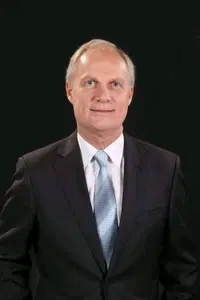
The executive chair of Rogers Communications discusses becoming the majority owner of the Toronto Maple Leafs, if he sees any changes coming to MLSE and the importance of setting the right tone.
The Hockey News' Money & Power 2026 hockey business annual is available at THN.com/free, featuring the annual 100 people of power and influence list.
W. Graeme Roustan, owner and publisher of The Hockey News, sat down with special guests for peer-to-peer conversations also featured in the issue, including the executive chair of Rogers Communications, Edward Rogers, who appeared on the cover of Money & Power 2026.
Here's their full conversation in The Hockey News' True Hockey Talk:
Read along with an excerpt from their discussion:
W. GRAEME ROUSTAN: We got together last year and talked a little bit about hockey here in Toronto. At the time when I was here, Rogers Communications owned 37.5 percent of MLSE, but in this past year, a lot's gone on. You've gone and doubled your stake, haven't you?
EDWARD ROGERS: Yes, we own 75 percent now.
WGR: In the world of owning companies, going from 37.5 percent, where you're maybe a minority investor or just an investor, to going to 75, now you're the majority investor. What's the difference from an operational point of view now that you've gone from an investor to the majority owner?
ER: Well, I'd say all the owners had always been hands-on. In a sense, not much has changed. Larry Tanenbaum and us, we try to work effectively and continue to run the teams as best we can and provide the best results.
WGR: It's no secret that the ownership structure that was in place at MLSE, where 37.5 percent was owned by Rogers Communications, 37.5 percent was owned by Bell and the other 25 percent by Larry Tanenbaum, it worked. It seemed to work for a long time, more than a decade. What was it that made you really want to take this next step?
ER: We've been bullish on sports for a long time. Sports have been a core business for Rogers, and Bell took the decision to exit, and it was an opportunity that we didn't want to pass up. We thought it made a lot of sense for our company, and we'll continue to provide great results.
"It is such an honor to be in a business that brings so much joy to Canadians."
WGR: Operationally, there's really not much change, is there? Because it's been running like a top franchise for a long time. What difference will people see? Or will they see any difference in the product because of the ownership structure changing a little bit?
ER: I don't think they'll see a lot, as I say, because the owners have been aligned and working to the same ends. I think what people want to see are competitive teams that are out there that are able to get into the playoffs and able to stretch and win. That's what our fans want, that's what we want, and that's what we strive for.
WGR: And there's no secret that Rogers Communications will be buying the remaining 25 percent sometime in 2026. Is that the case?
ER: We've communicated that that's our plan, yes.
WGR: So then at that point, Rogers Communications will own 100 percent of MLSE, which is pretty big news. Because when you think about all the assets – Toronto Maple Leafs, of course, but the Raptors and everything that entailed – it will be a real big position in sports that Rogers Communications will have in Canada, wouldn't it?
ER: It would be. It's an iconic set of assets, and the Toronto Blue Jays are part of that as well. And we're in the sports broadcasting business through Sportsnet and are the leading provider of sports in Canada. We partner with many other teams, the Edmonton Oilers, the Calgary Flames, the Vancouver Canucks. So we're very bullish on the future.
 Rogers believes his company's collection of sports assets are iconic, and the Blue Jays are a part of that. (Nick Turchiaro-Imagn Images)
WGR: What is it about sports that is so fascinating and so important for Rogers?
ER: Well, one, I think there's a great growth still in sports. And you see it when we're competitive. The amount of Canadians who rally to teams that are competitive is almost unlike anywhere else. There's a lot of growth worldwide. These leagues are the best leagues in the sports that they're in. If it's the National Hockey League, the NBA, MLB, people all over the world want to see these teams. So there's a huge growth in these brands and how we monetize these brands across the world.
There's a great opportunity, I think, to work with communications, our wireless business, our cable business, and give our customers greater access to teams, to sports, to concerts, and to try to show some synergy between the two. And I tell you, it is such an honor to be in a business that brings so much joy to Canadians and see people celebrate with their families and their friends. And it's a special business. Not many others can do that. And to be part of that is so very special.
WGR: I grew up in Montreal. We had the Expos back in those days when I was younger. They're no longer there, and the Blue Jays have really become Canada's team, even in Quebec. It has a huge following coast to coast. When you were growing up, you were surrounded by sports in this community. How did that impact you from a young man to where you are today as the executive chairman of Rogers Communications?
ER: Well, when I was young, our company was not involved in sports. I played hockey, like most Canadian young boys did. And I enjoyed it thoroughly because my father worked very hard and he loved his kids, but he didn't have as much time, perhaps, that he would have liked. And he took me to hockey games. We went to watch the Leafs on a Saturday night, and those are some of the best memories that I have.
WGR: Thinking about your father, Ted Rogers is so iconic in Canada. If he could look and see what's happened to Rogers Communications and what it is today and what you've done with it to make it Canada's sports hub, what do you think he'd be saying today?
ER: Well, my father was bullish on sports, so I think he'd be thrilled at the progress that the company's made and the steps that we've taken. He always had great ideas of how to improve things, so I'd probably get a memo from him of 58 things that we need to address, but I think he'd be thrilled. He wanted our company to continue after he passed. His dad died in 1938, when my grandfather was only 39. The businesses were sold. So our company is actually named after his father, not my father. And I'm just so appreciative that we're able to continue the company and continue to invest in Canada, to bring innovation to Canada and bring the very best sports.
WGR: When you're talking with your management team, do you understand how big of a deal it is for Rogers Communications to be sitting at the top of this empire?
ER: Well, we realize what a significant responsibility it is to deliver for people who invest in our company and to deliver for our customers. We're the largest wireless and cable company in Canada. Our networks are second to none. We invest more capital in Canada than our competitors, and we're proud of it.
Capital intensity is something that investors want you to lower. And we tend to want to, perhaps, do that when the timing is right, but we're going to continue to invest because we're bullish. And sports, especially. These are national brands. You may own them and steward them, but you don't really own them. Our fans own them. Canadians own them. And our job is to do the very best we can to bring competitive teams, to invest in the experience for fans, and to make it a wonderful thing for Canadians.
WGR: As you go forward and you're able to acquire the remaining 25 percent of the Toronto Maple Leafs, will there be any changes whatsoever in the Toronto Maple Leafs and their organization? Do you see any operational changes for the Toronto Maple Leafs as you acquire the remaining pieces of the puzzle?
ER: I don't, because everything we need to do we're doing now. Keith (Pelley) is leading MLSE and doing a great job. And Brad Treliving is running the team and has a great support network around him. We're trying to make the right steps and the right moves every day to make the team more competitive and more viable, and we'll continue that as we look into the future.
WGR: As you acquire the remaining pieces of the puzzle, after that, will you be bringing in additional partners or, from an ownership point of view, strategic partners?
ER: Our plan, and we've said this publicly, is that we'd like to de-leverage the company. And so there are different ways to bring in equity partners. We're looking at that now, and we will bring in equity to help our balance sheet and probably do that at some point in 2026.
"You may own them and steward them, but you don't really own them. Our fans own them. Canadians own them."
WGR: The Maple Leafs are an iconic brand, but they're not just a Canadian brand; it's a global brand. How important are the Maple Leafs to the entire picture for Rogers Communications?
ER: The Maple Leafs and hockey in general, I'd call it the epicenter of our strategy in sports. If you look at it just by the size of the investment, not only are we owners of the Leafs, but we're invested in sports media. We've renewed with the National Hockey League for another 12 years for all the national rights for the hockey teams in Canada. We have the local rights for the Oilers, the Flames, the Canucks, and half of the Leafs as well. So it's extremely important.
And you mentioned the international recognition. The NHL is where the best of the best play. And so there's a lot of appetite in the rest of the world to consume that content. And I think there's a great opportunity for the NHL and for hockey to continue to broaden that global appeal, to bring in new fans and be able to, over time, monetize that.
WGR: How important is it for you to set the right tone from an organizational point of view for these brands going forward?
ER: It's important for us to let our fans know, and viewers know, that we're going to be as competitive as we can every year. No one expects you to win every year. There are 30 or 32 teams in these leagues, and only one of them can win. But I think people expect us to deliver a product that's competitive and has a chance; at the beginning of the season, they know we have a chance to go all the way and to win it.
WGR: Could you imagine what the parade would be like here in Toronto with the Stanley Cup?
ER: It would be large. We'd have to give everyone a day off. I think it would be a wonderful thing to deliver. And I'm confident that we're going to.
For more interviews with a deep look into the world of the hockey business, check out The Hockey News' Money & Power 2026 issue, available at THN.com/free.
Comments

Powered by RoundtableBuilt on infrastructure designed for real-time media. Learn more at RTB.io.© Roundtable 2026. By using this site you agree to the Terms of Use and Privacy Policy