



Jan 5, 2026 6:34 AM
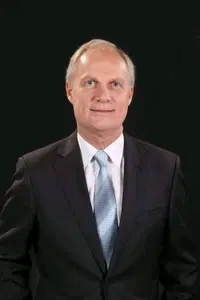
The CEO of Ice Hockey UK discusses his background, the partnership with the NHL and what the future holds for the sport in his country.
The Hockey News' Money & Power 2026 hockey business annual is available at THN.com/free, featuring the annual 100 people of power and influence list.
W. Graeme Roustan, owner and publisher of The Hockey News, sat down with special guests for peer-to-peer conversations also featured in the issue, including the CEO of Ice Hockey UK, Henry Staelens.
Here's their full conversation in The Hockey News' True Hockey Talk:
Read along with an excerpt from their discussion:
W. GRAEME ROUSTAN: How did you work your way through your career and become the CEO of Ice Hockey UK?
HENRY STAELENS: I left school at 16. I worked loads of different jobs in retail, etc. Then I co-founded a media company. I sold that when I was 29, then ended up as a CEO in football, or soccer. I stepped down there after a really good five years and took up the role of trying to transform and elevate G.B. ice hockey.
WGR: What's going on in hockey in the U.K.?
HS: It's the fifth most popular sport in the U.K. now, which a lot of people are surprised to hear. We've got around about 60 rinks. The women's game is growing year on year – I think nearly 20 percent last year, and that's with not a lot of innovation. So the game is growing. Now, it's really on us to try and push it over the hill.
WGR: Where is the hotbed of hockey?
HS: Traditionally, people would talk about Central England – Sheffield, Nottingham, etc. But we're seeing growth everywhere: Scotland, Northern Ireland and Wales in particular.
London's difficult. Lack of rinks. It's expensive to run a pro team there. So that's an area that we need to focus on. When I came into the sport from football, everyone was talking about how inaccessible ice hockey was. It was too expensive. There's not enough rinks. Some people even say it's too hard to learn. We're really trying to knock down those barriers and those perceptions that ice hockey is a niche sport.
Recently, we've announced a partnership with the NHL to deliver the NHL Street program. We'll see 30,000 kids a year trying the sport, and those kids are not going to be from typical hockey families. They're going to see the NHL banner. They're going to see the G.B. banner. It's going to be in their school. It gets them active, and if they fall in love with the sport, then hopefully in 20 years, we've got an NHL draft pick.
WGR: Do you see that there's a problem with a barrier to entry that a lot of countries are having, which is the cost of playing the game – equipment, ice time and so forth?
HS: That's really what we're trying to address. If you enjoy the sport and you're good enough, you should be able to stay in it. I think there's a space to be filled with synthetic ice in local warehouses. The cost of running a warehouse with synthetic ice is probably tiny compared to an ice rink.
WGR: Are you doing anything outside of the traditional leagues to generate revenue?
HS: We've got a quite ambitious six-year plan that we presented to UK Sport and our stakeholders, which includes a major-event series. We hope that culminates in hosting world championships. And in that time, we also want to play some really compelling teams on home ice because we know that the U.K. fan base will fill out the arenas.
It's not just about playing a Canada or a USA or a Czech. We have to then have a street-hockey festival, a coaching symposium. We have to leave a footprint on that town where these superstars come and play.
Out of our income, I think 90 percent of it is generated from organic income, and 10 percent is public funding. We're fairly lowly funded compared to other sports in the U.K., so we're lucky that we've got a very passionate and loyal fan base who help us bridge the gap.
We want to host the senior men's World Championship. We want our women to be in the top division as well. We want to host that. Even on the para side, we've got conversations ongoing about bringing world-class para tournaments to the U.K.
If we can have a six-year plan of bringing compelling major events to the U.K. between 2026 and 2032, I think that will generate the revenue and the interest and the growth for the sport to make us competitive at the Olympics in the 2030s.
WGR: How many boys and girls, maybe even seniors, are in the U.K. program?
HS: There's 14,000 players in total, which puts us about 11th or 12th in the world in terms of registered members. I would guess about 20 percent of those are junior.
WGR: Where do you see yourself and the organization in five or ten years from now?
HS: We've very much focused on year-to-year world championships, budgeting year-to-year, planning year-to-year. We need to be planning in four and eight-year cycles, both financially and in terms of player development, team cohesion, that kind of stuff. So that's part No. 1: becoming competitive at the Olympics in men, women and para, which means that anything we do, any budget that we have, any investment or any innovation needs to benefit that.
The other part, which sits behind it and is more of a long-term play, is developing elite athletes. We've got some brilliant players in men's and women's who are playing professionally and semi-professionally, but I think we can do more. We need to do more to give those kids a chance, if they're talented and ambitious enough, to grab the brass ring effectively.
WGR: What are the fundamental things that you want to convey as to who you are and what you're doing?
HS: Ice hockey in the U.K. has been going for over 100 years, but I was their first CEO in 2023. They hadn't had executive leadership to that point. We've got the ingredients of a business that's been going 100 years, but we've also got the enthusiasm of a startup. We're in a really good place in that sense.
Now, we're going through an element of transformation. We're merging the governing bodies into one, which gives us complete access and sight from grassroots all the way through to elite, rather than different governing bodies doing different pieces. We're going after a record in public investment and a record commercial investment. Then, we've got to do something with it. That's why I talk very clearly about Olympic competitiveness and developing elite athletes.
For more interviews with a deep look into the world of the hockey business, check out The Hockey News' Money & Power 2026 issue, available at THN.com/free.
Comments

Powered by RoundtableBuilt on infrastructure designed for real-time media. Learn more at RTB.io.© Roundtable 2026. By using this site you agree to the Terms of Use and Privacy Policy