



Jan 5, 2026 6:42 AM
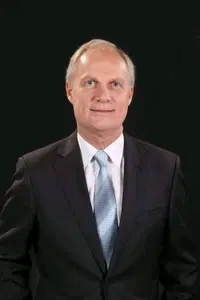
The chair of Hockey Canada's board of directors chats about the growth within the country, dealing with provincial bodies and working with Katherine Henderson.
The Hockey News' Money & Power 2026 hockey business annual is available at THN.com/free, featuring the annual 100 people of power and influence list.
W. Graeme Roustan, owner and publisher of The Hockey News, sat down with special guests for peer-to-peer conversations also featured in the issue, including the chair of Hockey Canada's board of directors, Jonathan Goldbloom.
Here's their full conversation in The Hockey News' True Hockey Talk:
Read along with an excerpt from their discussion:
W. GRAEME ROUSTAN: What's it like to be the chairman of the board of Hockey Canada?
JONATHAN GOLDBLOOM: It's fun because hockey matters. Helping Hockey Canada emerge and rebuild the brand over the last three years has been a challenge. It's been fun, and we're succeeding. We're in great shape as we move forward.
WGR: The new immigration patterns that we see today, the parents of these young kids haven't played the game of hockey. So their first introduction is from Hockey Canada or the provincial bodies?
JG: That's absolutely true. The good news is our game is growing, the women's game in particular. We have about 115,000 women and girls playing hockey this year. We hope to get to 170,000 by 2030. But the boys' and men's game is growing about three percent a year as well. That's attributable to the success of the professional players and them being role models, particularly on the women's side. But it's also the efforts we're making to reach out to new Canadians and new markets to get people to play and make them feel that hockey is an inclusive, welcoming place for them.
WGR: A lot of people don't know how Hockey Canada works with the provincial organizations.
JG: The provincial organizations are our members. They are the ones who elect the Hockey Canada board of directors. Then, the Hockey Canada board of directors is responsible for the strategy for hockey moving forward. We're also responsible for the reputation of the organization. The members are the ones we report to. They elect our board. We have quarterly meetings with them where we go over major issues and major topics. We can't do anything without them. They're basically the lifeblood of hockey in Canada.
WGR: Let's talk about the future. Hockey Canada has a tremendous historical record. Really, unmatched in hockey, but the competition is getting stiffer.
JG: Yes, and it's not only the United States. There are other countries – Sweden, Finland, Czechia. They're strong players. We can't underestimate that, but we're determined to remain on top, and we're doing that in a number of ways. We're focusing on high-performance hockey. When I was on the transition board three years ago, there was never once an item on the board agenda about our international performance. We had other priorities at the time. When I became chair, at my first board meeting, I asked for a presentation on high performance, and now, it's a standard item on our agenda.
We've conducted a review of how we're doing and how we're preparing for the Olympics. We have strengthened our management team. We've changed our approach to the juniors, and we're really preparing for December in Minneapolis to be top-notch. We're confident that we'll be back on the podium. On the other three teams – the men, the women and the para – we're confident we're going to win gold.
For the first time, we brought all three teams together to Calgary for orientation and preparation for the Olympics. I had to speak to the group, and I was the opening speaker. It's a little daunting, right? You've got Crosby, you've got McDavid, you've got Marie-Philip Poulin, you've got all these stars in the room. I was wondering, "What do you say if it was my high school hockey team?" You wouldn't say, "We expect you to win gold," right? But when you're speaking to these people, they expect to win gold, and they're there to win gold. Saying to them, "We expect you to win gold," is not adding any pressure. And yes, we do expect to win gold in Milan in February on all three podiums.
WGR: I want to talk about somebody that we both admire, Katherine Henderson. She's come on at a very difficult time in Hockey Canada's history, and she's restored faith. How important is it to have a CEO who's running the business really set the tone for the organization?
JG: It's critical. She really is the person who personifies hockey and is leading the organization in setting the tone, the priorities and the strategies. We are very fortunate that she agreed to come on. I was actually the head of the selection committee. Kathy stood out for three reasons. One was her track record of growing the women's game in curling. When she started, the Brier was much more popular and more profitable than the Scotties. By the time she left, everything was equal. So she had the experience to know how to grow the women's game, and that's what we need to do in hockey.
The other thing that she talked to us about was how she brought new Canadians into the game, working with curling rinks across the country to get across that first barrier, which is just getting people into the rink.
The third thing was her understanding of the sports community. She had that network of the sports community that was known to her, and she was a respected person.
We're still concerned about the treatment issues. We publish a report on maltreatment now, every year, so that we're on the record and dealing with those things through third parties. We have our Beyond the Boards conference, which focuses on anything from racism to homophobia.
How do we get financial viability? We're back in a strong financial position. All our sponsors are back, and we're growing. We're looking at how to build revenue. The world juniors are important, but now we're going to build the women's worlds, we hope, to be an equivalent of the world juniors.
If we want to stay on top, we have to get more Canadians playing, because we're different than the Americans. The Americans are investing in the players that they think are top talent, and it's a limited field. Our goal is to have as many Canadians play and have the best players rise to the top.
For more interviews with a deep look into the world of the hockey business, check out The Hockey News' Money & Power 2026 issue, available at THN.com/free.
Comments

Powered by RoundtableBuilt on infrastructure designed for real-time media. Learn more at RTB.io.© Roundtable 2026. By using this site you agree to the Terms of Use and Privacy Policy