



Jan 5, 2026 6:56 AM
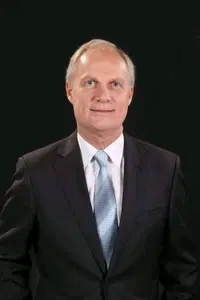
The president and CEO of MLSE discusses the differences between ownerships, what success looks like for him, his desire for the Maple Leafs to win the Cup, the collection of teams at MLSE and more.
The Hockey News' Money & Power 2026 hockey business annual is available at THN.com/free, featuring the annual 100 people of power and influence list.
W. Graeme Roustan, owner and publisher of The Hockey News, sat down with special guests for peer-to-peer conversations also featured in the issue, including the president and CEO of Maple Leaf Sports & Entertainment, Keith Pelley.
Here's their full conversation in The Hockey News' True Hockey Talk:
Read along with an excerpt from their discussion:
W. GRAEME ROUSTAN: In the past year, Rogers Communications purchased the 37.5 percent of MLSE that Bell owned. So now, Rogers owns 75 percent of the business.
KEITH PELLEY: Correct.
WGR: And when I interviewed Edward Rogers, we talked about how, sometime in 2026, the discussion is that the remaining 25 percent that's held by Larry Tanenbaum will be purchased by Rogers Communications. Then Rogers would own 100 percent.
KP: Right.
WGR: You've been around this industry for a long time. What's the difference between a company that owns 100 percent of a business versus 37.5 percent of the business?
KP: If you own 100 percent of something, I think you're a little bit more engaged. And you've seen that this year with how engaged Edward and Tony Staffieri were with the Blue Jays and how influential they were. They were involved in the press conference with Vladimir Guerrero Jr. They were there at every single game, and Edward accepted the championship trophy for the American League. You're inclined to spend more time at it and more committed to all facets of its business, learning and being part of it. And that's exciting, and that's exactly what Edward and Tony are involved in now.
WGR: You came into this role at MLSE with multiple owners. Did you think back then that having one owner versus multiple owners would make this more successful for you?
KP: I don't think it has changed it dramatically in terms of what my definition of success is. The definition of success for me, regardless of who the ownership is or what the percentage of ownership is, is winning championships. It's contending on an annual basis. It's having a culture and a chemistry that defines what the community wants in its teams. And again, we saw the euphoria with the Blue Jays, and I wasn't here in 2019 and didn't experience the euphoria of the Raptors and their championship, but I certainly want to experience it now. Regardless of ownership changes, my pure goal and aspiration won't change, and that is to, from a hockey perspective, bring a Stanley Cup to the city for the first time since 1967.
WGR: I remember 1967. I remember when the Maple Leafs won the Cup, but that was a while ago. I know if they win the Stanley Cup, though, the market will go crazy.
KP: We talked about that extensively over the Blue Jays' run. It must have been every day that 100 people were saying to me, "Oh, can you imagine if this was the Leafs? Can you imagine it?" And the reality is, you have to imagine it, and you have to think about it. Every time I came home from a Blue Jays game during the World Series run, that's what I was thinking about – and trying to galvanize a city and, even with the Maple Leafs, galvanize a country. And I think any Canadian team right now, winning for the first time since 1993, will galvanize a country. The Oilers had that euphoria last year. We were all cheering for Edmonton here. So I just can't imagine it, but I have to, because if you don't, then there's no way that it'll ever happen.
WGR: I want to talk about all these different teams. When Rogers Communications buys out Tanenbaum's share, it will have NHL, NBA, MLB, MLS and CFL franchises and more. This Rogers Communications collection of assets is unmatched.
KP: Edward Rogers is a visionary, so he sees this. There's no question. But to have the only MLB and NBA teams in Canada; to be the majority owner of the largest hockey team in the world; (to be an owner of a team in) an incredibly fast-growing sport in Canada in soccer…and you also have a franchise that's over 100 years old in the Argonauts – if you horizontally integrate those brands, the power that you can communicate to the community is unrivalled anywhere. But at the same time, it comes with a massive responsibility, because, once again, sport creates a sense of belonging, and it also creates a sense of community. If the teams do well, then it is euphoric and phenomenal. And that's the responsibility that we all have: how can we touch and influence the community, and how can Rogers do that moving forward.
"It must have been every day that 100 people were saying to me, 'Oh, can you imagine if this was the Leafs? Can you imagine it?' "
WGR: When you look back at yourself when you were at Ryerson, now Toronto Metropolitan University, could you imagine that you would one day be the president and CEO of MLSE and have all these phenomenal assets under your stewardship?
KP: I don't know if you think about it at that particular time. I thought I wanted to be an on-air broadcaster. Then I did that very briefly at CFMT Channel 47 in Toronto, and I realized how horrific I was. I hosted a show called the MTHL Show, which is a minor-hockey show. John Gardner was the president of the MTHL at the time, and there are some really, really bad archives, but I wasn't very good. And then I was fortunate enough to get behind the camera, and I really enjoyed it. I love sports, and I've just been in the right place at the right time, working with some phenomenal people. Now, the opportunity to work with Rogers and grow the sports portfolio is something that I'm looking forward to being a part of.
For more interviews with a deep look into the world of the hockey business, check out The Hockey News' Money & Power 2026 issue, available at THN.com/free.
Comments

Powered by RoundtableBuilt on infrastructure designed for real-time media. Learn more at RTB.io.© Roundtable 2026. By using this site you agree to the Terms of Use and Privacy Policy