



Jan 5, 2026 6:59 AM
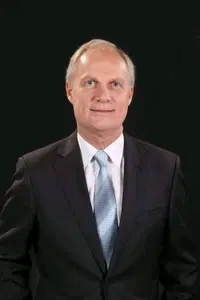
The president of the International Ice Hockey Federation discusses his organization's approach at the grassroots level, the working relationship with the NHL, the war in Ukraine and how long he plans to remain in his current role.
The Hockey News' Money & Power 2026 hockey business annual is available at THN.com/free, featuring the annual 100 people of power and influence list.
W. Graeme Roustan, owner and publisher of The Hockey News, sat down with special guests for peer-to-peer conversations also featured in the issue, including IIHF president Luc Tardif.
Here's their full conversation in The Hockey News' True Hockey Talk:
Read along with an excerpt from their discussion:
W. GRAEME ROUSTAN: I'm here with a buddy of mine, Luc Tardif, the president of the International Ice Hockey Federation, at the IIHF Global Hockey Forum in the French Riviera. How important is this type of event, where there's a transfer of knowledge between different countries' national programs and the teaching by more established programs to the younger programs?
LUC TARDIF: For me, the top-level countries should be kind of an ambassador. So I'm happy the big hockey countries are happy to give back. Some of the other countries, they need a guide sometimes. They need some information on how to do better. That's what we're trying to do. And to be here, physically, it brings the worldwide hockey community closer together.
WGR: Henrik Lundqvist and Cassie Campbell both spoke at the IIHF Global Hockey Forum. How important is it for retired NHLers and top women's players to give back to the game?
LT: First, for all the young kids who see that, they say, "Oh, that's possible. It's possible. Someone made it." What they're doing is transferring their experience to the younger generation. And it's very similar to what's going on here. The big programs are transferring their knowledge and information to the smaller member countries. Really, the work of the IIHF is at the grassroots, at development, it's really to get the kids out on the ice.
WGR: How much of that is the fundamental nature of the IIHF, the development of the programs across all of your member countries?
LT: We're in a time that's really important. All the people understand what we're doing. Just like in the international business world, there are more and more private companies, private leagues who are coming on the market of international competition. We found a way to work together to bring the NHL to the Olympics. So it's really important that we keep those relationships and understand each other. At the moment, we had success with the NHL and the Olympics.
You understand that they want to organize a World Cup before a World Championship. We're not against that, because when you have the best players, our job is to try to organize international competition with best-on-best. We consider that to be our job, international hockey, but if the NHL wants to help, that's a great thing, like they're doing for the Olympics.
In our discussions with the NHL, sometimes it's not easy, but we talk together. We discuss. And we cross our fingers for the result at the end. All of us want to grow this game, and sometimes, it's in different ways.
WGR: Today, 40 percent of the players in the NHL are from overseas. They're coming from Europe; they're coming from all over the place. With the development system of the IIHF and the member countries, it's the IIHF and the member countries that do all the work of getting the kids prepared for the NHL. So I have to believe the NHL sees that and understands that and the partnership you have with the NHL is more of a win-win going forward.
LT: Yes, but for a long time, the NHL and the IIHF were sort of parallel, not really knowing each other. So now, a little bit more. Sometimes you need that time to discuss and understand each other.
"We found a way to work together to bring the NHL to the Olympics."
WGR: How is the relationship between the IIHF and the NHL today? What is different under your leadership?
LT: We've got direct contact, so that means we've always got open-minded communication. We explain exactly what we want to each other. And I think the NHL knows much more about what we're doing. And we also know much more about what they want on their side. That's the business also. We have to understand that. The way we discussed the Olympics for the past two years, it gave us a way to work together. And that's where we are at the moment with the World Cup. But we didn't break the communication. So when you don't break the communication, everything can happen.
Internationally, sport is for the benefit and the value of everybody. And if you keep it in your little garden, you will always be in your little garden. That means I think we can help the NHL with the World Cup because we've got the experience and understand how to organize a competition like the World Championship with 16 teams in 14 days. And how to bring in the fans, and how to please our fans. We know our fans. And I think if we find a way and we understand each other, we can do something at the level of a World Cup. That's our goal.
WGR: Well, personally, I think the reason the relationship between the IIHF and NHL is better now than ever before is because somebody from Quebec figured out how to work with the NHL. You were born in Quebec and played hockey there and grew up there, and I think that has a lot to do with it.
LT: Yes, but you know, I've been living in Europe for 50 years.
WGR: But you still understand a little bit more about what's going on in North America. Let's talk about North America for a moment. What role does the IIHF play with Hockey Canada and USA Hockey?
LT: The IIHF tries to co-ordinate all the competitions around the world. So with the Olympics, we have to look at when the NHL can stop their season. And we've got European leagues, so we've got some rules about the transfer of players. If we're not there, who's going to do that? That's not an easy job, and nobody sees what we're doing with that except when there's a problem about a contract transfer. Everybody has to understand that it's important to have an institution who can handle the administration side of things.
But talking about North America, we've had a good partnership for a long time with Hockey Canada. It started with the world juniors and now with the women's game, and the staff of the IIHF and the staff of Hockey Canada, they work together. The most important thing is that it works. And with the success of the under-20 world juniors, we're trying with USA Hockey and the NHL to promote the under-18 worlds so that it's at the level of the under-20 if it's possible.
"I'm proud of what our members did to accommodate and financially help Ukraine's preparation for the World Championship."
WGR: In your role with the IIHF, you oversee 85 member countries. How is it possible to co-ordinate 85 countries and get everybody on the same page?
LT: It's interesting because you have to understand the different ways of life, different religions. You have to understand that. People are really different. But the fever for hockey is the same. Sometimes you don't speak the same language, but you can communicate about ice hockey, referees and all those things. That's the common denominator. You go into a meeting and the common thing that everybody has is their love of the game of hockey, and that's why they're there. And that's the thing you start with.
After that, the most difficult thing for us at the moment is the geopolitical situation. We can do a lot of things, but we cannot stop the war. And so we're in the middle. We try to take the same line as the International Olympic Committee. We hope the whole hockey family will be together as soon as possible because it will be better for the world. And I hope I'm still going to be there when we bring the family back together.
WGR: Let's talk about Ukraine. The Ukraine Ice Hockey Federation is in real disarray. It's gone through three years of being torn apart. As you know, I've visited bombed-out ice rinks across Ukraine, and they're demolished. Missiles had hit them, and they're gone. Half of the country's registered players stopped playing, and the other half left to play in other countries. What's the current status of Ukraine with the IIHF?
LT: I'm proud of what our members did to accommodate and financially help Ukraine's preparation for the World Championship. They're coming at the last moment, they compete, they still want to play for their country. They're still there, and we have to help them. They're playing for their country. That's their motivation. I mean, they're hockey players. They want to play the game. But they're also playing for something bigger than just the game of hockey. And you know, even if you're neutral, the way they fight for their country, that's unbelievable. It's very impressive to see that.
WGR: I'd like to ask you about your future. When I talk to people, member countries, I talk to everybody, your leadership has been inspirational for the IIHF. It's taken the organization to a new level. It's a constant job. It's 24/7, 365. There's no day off. You're young and energetic, but how many more years do you want to stay in this job?
LT: You know, this kind of job, I always say at the beginning that I never dreamed I'd be president of the IIHF. I was the treasurer, and for me, I used to say I was a good player on the second line. For me, it was kind of the situation that pushed me to my present role.
When I took over as president, I had so many things to solve at the same time. The COVID pandemic, the Olympics in Beijing, there was always something on the bubble. The war in Ukraine, the war in Israel. And also the economic situation almost everywhere. And everything makes an impact. Everything costs more. And there's always challenges about protecting our competition. So I'm focused on that.
And I always said right at the beginning, I'll see at the end of 2025, the beginning of 2026, how I'm going to be in shape for the next four years. Because you said I'm young, but I'm 73. And this job takes huge energy. And sometimes when you focus too much on being re-elected, you don't make some of the unpopular decisions that are necessary for your federation.
There have been hard times, but I love it. Those kinds of challenges are really exciting. So I don't want to think about it. But there's also the question of stability, to be clear with all our members, so I always said by the end of 2025, beginning of 2026, I'll say if I'm running for another mandate.
WGR: The IIHF has never been in better condition than it is today. That's the sign of a good leader, that you leave the organization in better condition than when you inherited it.
LT: The times are a little bit different, but I think our former president (Rene Fasel) did a lot also. He did it for 27 years, and he did a lot. What I like about the IIHF is the spirit and how we put all our energy and our finances into the sport.
As a treasurer, I know that some federations are happy to sit down with $200 million in the bank. That's not the case with the IIHF. We always give back to the member countries. All the presidents in the federation are in the same position, just like the leaders of a company and political leaders, everybody tried to face COVID and those things and do their best in that situation. So that was my job. I didn't expect that. We made a strategic plan. And I will be happy tomorrow to show where we are. And I'm proud. I didn't do it alone, because we share the job. I'm really proud of the council we have, because it's a team effort.
For more interviews with a deep look into the world of the hockey business, check out The Hockey News' Money & Power 2026 issue, available at THN.com/free.
Comments

Powered by RoundtableBuilt on infrastructure designed for real-time media. Learn more at RTB.io.© Roundtable 2026. By using this site you agree to the Terms of Use and Privacy Policy