



Jan 5, 2026 6:41 AM
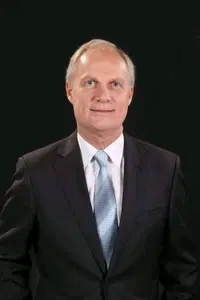
The president of USA Hockey talks about the continued growth of the game in his country, the rise of women's hockey and what the future holds for the NCAA and CHL.
The Hockey News' Money & Power 2026 hockey business annual is available at THN.com/free, featuring the annual 100 people of power and influence list.
W. Graeme Roustan, owner and publisher of The Hockey News, sat down with special guests for peer-to-peer conversations also featured in the issue, including the president of USA Hockey, Mike Trimboli.
Here's their full conversation in The Hockey News' True Hockey Talk:
Read along with an excerpt from their discussion:
W. GRAEME ROUSTAN: Tell us about what's going on with USA Hockey and the main things that you want to share with the other national associations.
MIKE TRIMBOLI: We've had some great success with the American Development Model, with the growth and development of youth hockey from the grassroots on up and what we've been able to accomplish in long-term athlete development and being able to segment the learning phases for those young athletes.
You can't have success at the highest levels of hockey if you weren't fostered along in the lowest levels of hockey. Because if you weren't brought along and engaged in that retention, making it fun, making you want to come back, giving you that incentive to be better, then you're not going to come back. So the engagement of youth hockey, retaining your young athletes, year over year over year, and they may not all make it to the highest level of hockey, but for some, that highest level of hockey is adult hockey and playing for life, and that's what we push toward. And as a byproduct of that, you have your higher-end players that end up making it to the NHL or playing for their country.
WGR: USA Hockey has well over half a million kids in the program, correct?
MT: Yes, we're close to 600,000. We're at about 578,000, and 396,000 of those are youth players. We're a little over 98,000 female players and looking to eclipse that 100,000 mark, hopefully this season. And along with the players, we have 63,000 coaches and 31,000 officials, and those are integral parts of the game. And the coaching-education program, officiating-education program, making those entities better makes the game better in the long run. The vast majority of participants in USA Hockey, the players, they're there to learn the skills of the game and enjoy the game and just develop. It's about the game.
WGR: On the women's side, USA Hockey has been doing a good job of getting women into hockey programs. How has that come about?
MT: Well, it's an important part of our game. You look at some of our leaders, and you can go back to the Cammi Granatos and some of the other leaders of our 1998 Olympic gold-medal team that just skyrocketed the participation of women in the sport up through the present day and the successes that we've seen with all of our players in the national-team program. And now, they have something more to aspire to with the PWHL. And what a great job that organization has done to have a professional league for women players.
WGR: What's the secret sauce to USA Hockey's success?
MT: That sense of country, I think, is a lot of it. Seeing the players really have that sense of country and the sense of success for American hockey and knowing that everything can be built off their successes. The internal drive of these players is just unbelievable at that level. And we've had men's worlds gold, women's worlds gold, back-to-back world juniors, sled men's gold and then the inaugural sled women's team winning gold. And that's just incredible.
WGR: Let's go back in time a little bit. What was your first experience with hockey when you were growing up?
MT: I grew up in the small, industrial, blue-collar town of Massena, N.Y. I started playing on outdoor rinks before we had an enclosed building, and it was just a love for the game. My dad never played, I didn't have any family that ever played, but my friends played, and I was fortunate enough that my parents got me involved in the game, and we went to the outdoor rinks until we had an indoor facility. It was fun. And that's what I bring is that enjoyment of the game and always wanting to come back year over year and making the game fun. It was challenging, but it wasn't as much pressure to play the game as to just have fun with it.
WGR: Let's talk about USA Hockey's registrations and participation. For the longest time, Hockey Canada was the leader in participation. They've continued to grow, but USA Hockey has grown at a faster rate. What is it that's really fuelling the growth of USA Hockey?
MT: I'd have to say, we've been successful, and we have great partners in the NHL. They have a lot of interaction with their Learn To Play programs in their markets and assisting us in different ventures. And when they have a Stanley Cup win in their markets, the registrations tend to grow in those markets. We've had some successes on the international stage over a protracted period of time, and we've done a really good job at making the game more inclusive and fun for everybody.
WGR: Maybe there's a lesson here that a Canadian NHL team needs to win the Stanley Cup to help Hockey Canada's numbers. The last Canadian team to win the Cup was Montreal in 1993. Maybe you're saying if Canada wants to grow its registration base that a Canadian NHL team needs to win the Cup once in a while. Is that what you mean?
MT: Well, I'm OK with the way we're going right now.
WGR: Yes, I would imagine you are. One last thing I wanted to ask you about is this new era that we're entering with the CHL and the NCAA and the new rules. How does USA Hockey look at that?
MT: Well, it's an NCAA rule. So we control what we can control. And our top-tier junior league, the USHL, has done a phenomenal job over a protracted period of time. And the North American League in the tier-three spectrum has done a great job. We talk about that progression and growth of players, and we get players up through the USHL and the NAHL and foster them on to college careers and potentially professional careers. And that's our pathway, and it will continue.
I mean, players will come and go. There's going to be a lot of fluctuation of up and down for lack of a better term. But it'll reach an equilibrium at some point in time, and you'll see things all work out. But we'll continue to do the things that we do with our top programs. We'll continue to push players toward NCAA careers and U.S. college hockey.
For more interviews with a deep look into the world of the hockey business, check out The Hockey News' Money & Power 2026 issue, available at THN.com/free.
Comments

Powered by RoundtableBuilt on infrastructure designed for real-time media. Learn more at RTB.io.© Roundtable 2026. By using this site you agree to the Terms of Use and Privacy Policy