



Jan 5, 2026 6:36 AM
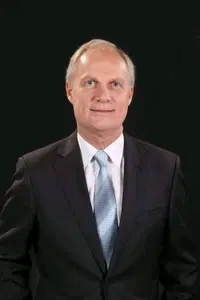
The president of the German Ice Hockey Federation talks about going from the hammer throw to hockey, the role of sports in the reunification of his country and his 10-year plan.
The Hockey News' Money & Power 2026 hockey business annual is available at THN.com/free, featuring the annual 100 people of power and influence list.
W. Graeme Roustan, owner and publisher of The Hockey News, sat down with special guests for peer-to-peer conversations also featured in the issue, including the president of the German Ice Hockey Federation, Peter Merten.
Here's their full conversation in The Hockey News' True Hockey Talk:
Read along with an excerpt from their discussion:
W. GRAEME ROUSTAN: You didn't just walk in the door and become president of German hockey. There's a story here. When you were growing up in Germany, what was your sport?
PETER MERTEN: Of course, you start with soccer. And I played handball as a goalie, and then I did athletics. I started in the decathlon and finally specialized in throwing the hammer. I played some hockey, but only on frozen lakes. I never had the chance to really get into ice hockey.
WGR: Yes, but you went to the Olympics. You were an Olympic athlete. Not too many people in the world can say that. What was that like?
PM: Yes, I developed quite well. I was No. 2 in Germany in throwing the hammer, and at 18, I qualified for the Olympic Youth Camp. There were over 5,000 young people visiting the Games, and we were there nearly four weeks before and after. It was very good. That was the dream.
But you have to give something back. And after a long career in business, the point came where I thought it would be good to give something to sports. We decided as a company, Rheinmetall, to sponsor women's handball and ice hockey. It was a second-league club in Mannheim. And then I was very quickly elected as president of the second league, and that's how it started.
WGR: In your position, how important is it to have both the on-ice experience, or the athlete experience, as well as a business background?
PM: It's very important that you have both views. I have to say, it was not possible for me to cover all the areas. So when I took over as president, one condition was that I could bring in a team. I took one of our national players, Andy Niederberger, who himself is running a business, because I wanted to have people who knew ice hockey and business. And I had another one, he's running one of the DEL clubs, he's a finance specialist. And the other one was a marketing specialist.
So the four of us took over the German federation in 2022, and we had a lot of work, let's say, structural work. We made the promise to change the federation from a club structure to a company structure. We completed that this year after more than three years, and now, we have an advisory board that I'm the head of and a management board that runs the show.
WGR: Not too long ago, there was East Germany and West Germany. And the East German hockey programs were completely different than the West German programs. Completely different games, and the players were growing up in different systems. And now, with Germany together, there have been lots of challenges across all of society in Germany. But how did German hockey come together from the old ways of the East and the West?
PM: It was a long process, and I remember that we integrated some of the people from the staff and the organization of East Germany into our organization. It was not easy, but it helped to integrate.
WGR: Sports bring everybody together, no matter your political views or your societal views. When it comes to hockey, it seems to be an equalizer. Did you find that the game of hockey, and sports in general, helped Germany come together during the reconciliation in the 1980s and '90s?
PM: In general, yes, because there were some very fast and good successes. But, of course, we tried to live to some values. And the values of the East and West were different in many areas, and we had to put them together. And with that, there was a phase where the medals went down. And now, we're in a process to improve that again. So there was a starting push from two strong Germanys, and then to unite that, there were some losses. And now, I think we're on a good track.
WGR: As the president of the German Ice Hockey Federation, especially with your background in business, what is your three- or five- or 10-year plan?
PM: Yes, it is indeed a 10-year plan, where we want to further develop German ice hockey. And it's based on an old concept, which we call the Five Stars Program, where every club is evaluated according to defined criteria. And if a club fulfills the criteria, it gets five stars. That means it's very good in the education of young players and training them up to the top level.
Every league has one person just focusing on evaluating the clubs. And nowadays, we have more and more clubs with five stars. The incentive to get the five stars is that if you don't have it, you have to pay into a fund that's allocated to the clubs that do the best. So there's some money in the pot, and it's allocated by the federation according to set rules. So everybody knows it, and it's very transparent. And this helped to be the basis.
And now our new targets are, for example, the arenas. We have roughly 220 arenas in Germany, but no ice in the summer. So we want to have ice all year. In the next 10 years, the target is to have 25 new arenas, which means 10-percent growth, with the target clearly to have the arenas for everyone, the youngsters, the women and the men. Because at the moment, for the women, sometimes there's no ice time. For the youngsters, sometimes there's no ice time. After the Olympic silver medal in 2018, we had more boys and girls going to the ice rinks than we could manage.
WGR: Women's hockey is the No. 1 growth area in participation, and it presents a huge opportunity to get more young kids in the game. What are you doing to grow the women's game?
PM: Nowadays, we get big support from the German government for women's hockey. Our national players are in the German army. They have contracts there, and they work there part time, but they're close together, and they have training. So that's the center of the team, and it has improved the team a lot over the past few years.
WGR: Finally, we're here in the French Riviera at the IIHF Global Hockey Forum. There are 71 out of 85 member countries here. What does it mean to you to be able to come here and share information and ideas with other leaders running other countries' programs?
PM: It's very important, and everybody has different ideas, but you also can discuss the women's topic, for example. There are ideas exchanged, and there are discussions with the IIHF on some of the new rules that impact, for example, our 2027 World Championship in Germany. And that's important. But what's most important for me is this community of people who want to do something great together. In industry, sometimes, it's more of a fight because you want to be first. And, of course, every nation wants to be first. But everybody knows if we help each other, we'll be better together.
For more interviews with a deep look into the world of the hockey business, check out The Hockey News' Money & Power 2026 issue, available at THN.com/free.
Comments

Powered by RoundtableBuilt on infrastructure designed for real-time media. Learn more at RTB.io.© Roundtable 2026. By using this site you agree to the Terms of Use and Privacy Policy