



Jan 5, 2026 6:37 AM
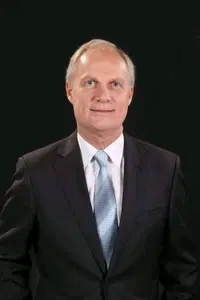
The vice-president of the Czech Ice Hockey Association chats about getting his start in street hockey, the importance of the game in his country and the challenges facing the IIHF.
The Hockey News' Money & Power 2026 hockey business annual is available at THN.com/free, featuring the annual 100 people of power and influence list.
W. Graeme Roustan, owner and publisher of The Hockey News, sat down with special guests for peer-to-peer conversations also featured in the issue, including the vice-president of the Czech Ice Hockey Association, Petr Briza.
Here's their full conversation in The Hockey News' True Hockey Talk:
Read along with an excerpt from their discussion:
W. GRAEME ROUSTAN: Welcome to Petr Briza, the senior vice-president of the IIHF Council as well as the vice-president of the Czech Ice Hockey Association. So you wear two hats, is that right?
PETR BRIZA: Actually, like many council members, we have two hats because there's the national role and the international role. Sometimes, of course, it's a bit challenging because when we talk with each other, it affects the national interest. But I think everybody can deal with that, not only with the formal conflict of interest, but we understand that everybody wants to grow and develop the international ice hockey family. So you've got to take care of your own country, but you also have to think about the bigger game of hockey.
WGR: I want go back to when you were a kid. When did you first play the game? When did you first fall in love with hockey?
PB: I played a lot of street hockey in Czechoslovakia at the beginning of the 1970s. There was not much equipment. I had a brother, he's three years older, he always took me along, and they put me in net. We would play ball hockey, and I still remember the wet balls, boom, coming at me. I dreamed to play in net. What I also remember is the game between Czechoslovakia and Soviet Union in Prague in 1972 when we won 3-2. Vladislav Tretiak was in net for them, Jiri Holecek was in our net. And I wanted to be Jiri Holecek and be the hero because everybody jumped on him. So that's the moment, and I started to play hockey.
WGR: How did you go from being a player to the business side of hockey? How did you end up with the IIHF?
PB: It was actually very quick at the end of my career because I was kind of involved as a player. I had some business activities, and I always wanted to discuss systems and structures. I played for Sparta in Prague, and we were having problems, and the German manager was fired, and I got an offer in November, "What do you want to do after the season?" I said, "I want to quit. I'm tired. I think it's enough. I'm 41." And they said, "What if you're the GM?" And I responded, "Are you kidding me?"
The president of the team, he was a business guy. He had a chain of hotels. And we were friends and had a really good relationship. And he said, "I'll teach you. We'll go together. I'm the president; you're the GM. We'll work together."
And what was funny was that after that offer, we started to climb up the standings. And finally, we won the title that season. We won the championship on a Friday, and I started on Monday as the GM. And it was very challenging. I made many mistakes, and I learned. And the biggest challenge for me was to change my mindset from being a player to the business side, to the organizational side.
WGR: And now you've got all this experience. You're not only at the national level running the Czech federation, but also at the IIHF Council level. Your country has produced some of the greatest players in the NHL and KHL, and Czechia is always in contention in international competition. Why is that the case? Is it because of the training and youth-hockey programs?
PB: First of all, I would say ice hockey is the most popular sport in Czechia. And in the past, hockey has been part of some historical moments.
Everybody remembers there was always a big competition with the Soviet Union team, which started after (the Soviet) invasion (of Czechoslovakia) in 1968. I don't want to use the word "war," but we could lose against Sweden and Finland, but we had to beat the Soviets. And when we won against the Soviets, everybody was happy, and it was such positive emotion.
So a lot of Czech boys wanted to play hockey and be the stars, be the examples. Every time we have success at the international level, the kids come, and we see that in the numbers that they want to be the big stars. I think it's the same in Canada and the U.S., everywhere. But somehow, because we're a small country and hockey is a national sport, it gives motivation.
WGR: I'd like to talk to you about the other hat that you wear, which is at the IIHF Council level and how you're involved in growing the game across all member countries. You're not only a leader in your own country, but you're a leader in international hockey. How important is it for the IIHF member countries to come together and share information and work together?
PB: The IIHF Global Hockey Forum is a great event to get together and share knowledge and discuss the very different levels of hockey. We have Hockey Canada and we have Malaysia, so we have somebody who has 60 players and somebody who has thousands of players. So we need to discuss how our development programs can be adjusted and how each country can use them.
It's a great idea to bring everybody together. We have to develop our national federations and on the international level, and then we can focus more on the players and be more successful with the players. Yes, we're competing against each other, but we're also competing against other sports. We want the kids to not go to basketball or baseball. We need to do hockey much better as a sport.
WGR: The big responsibility that the IIHF has is the Olympics and working with the IOC. How do you feel about the preparedness of the IIHF and the member countries going into the Olympics?
PB: First of all, I'm very excited that NHL players will be there and that it's best-on-best. I was fortunate in my career to play in the Olympics three times. And I also have one more hat, I'm the treasurer of the IIHF. So I look at the finances, and we need to work together with all stakeholders, with the NHL, the NHLPA, and that's what it's about, a lot of communication and understanding that we survive together and we grow hockey in the world together. And for the IIHF, the World Championship is crucial because 75 percent of all our revenues are connected to the World Championship.
For more interviews with a deep look into the world of the hockey business, check out The Hockey News' Money & Power 2026 issue, available at THN.com/free.
Comments

Powered by RoundtableBuilt on infrastructure designed for real-time media. Learn more at RTB.io.© Roundtable 2026. By using this site you agree to the Terms of Use and Privacy Policy