


Connor Somerville-The Hockey News

Jan 5, 2026 6:48 AM
The NHL's chief operating officer discusses the goals of NHL Enterprises, the difference between national and local business and how revenues factor into player salaries.
The Hockey News' Money & Power 2026 hockey business annual is available at THN.com/free, featuring the annual 100 people of power and influence list.
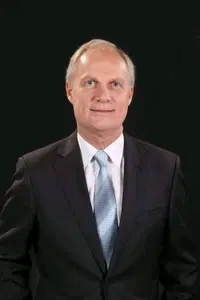
W. Graeme Roustan, owner and publisher of The Hockey News, sat down with special guests for peer-to-peer conversations also featured in the issue, including the NHL's chief operating officer, Stephen McArdle.
Here's their full conversation in The Hockey News' True Hockey Talk:
Read along with an excerpt from their discussion:
W. GRAEME ROUSTAN: Can you let us know what NHL Enterprises is all about?
STEPHEN McARDLE: NHL Enterprises is the home for the national business that the league office helps to co-ordinate. The revenues that are generated on a national basis – whether it's the U.S., Canada or international – this is the entity where the strategy and the execution for those businesses happen.
Think of things like consumer products, which are the jerseys that fans can purchase, the headwear, all the apparel that's available for sale. That's co-ordinated through Enterprises. It's the home to our national and international sponsorship business. All the rights deals that make someone the official partner of the NHL. We do content syndication through Enterprises, to the extent that third-party partners have the ability to put our game highlights and our game recaps on their platforms.
Think of Enterprises as the of the national business operation that allows for the monetization of the rights that we collectively operate on behalf of the 32 member clubs.
WGR: You do that at the league level. The 32 clubs have their own local businesses.
SM: The clubs have the ability to monetize a similar set of rights in their local territories. They have their local television deals. They have local merchandising capabilities.
We have the ability to not only operate inside those territories on behalf of the 32 clubs but also outside the territories, filling in the white space where club territories don't necessarily exist.
WGR: NHL Enterprises generates revenues at a league level. How does that filter down into hockey-related revenue, and how does it fit into the big picture?
SM: We operate a profit-generating entity that aims to drive revenue. We have national revenue, take out the costs of generating those revenues, the costs of operating the league – even the parts of the league office that are not revenue-generating. The video review room isn't necessarily a revenue generator, but it's a critical piece of infrastructure for our game.
We'll deduct the cost of operations off of those national revenues, and we're left with a profit that's distributed equally to each of the 32 clubs.
WGR: All this revenue from Enterprises flows to the 32 clubs, and it goes into the calculation of player salaries because of the relationship between the NHLPA and the league. So the more revenue and profitability that Enterprises generates, that feeds down to the teams. The players participate in that, don't they?
SM: Based on the economics of our system, we share revenue 50-50 with the players. For us, from a national level, we'll take our costs out of it and then share with the clubs.
WGR: So if you're a fan in Pittsburgh and you see the players are earning more this year than they did last year, it's not necessarily from ticket revenues. It's perhaps from revenues that are coming from the league.
SM: It could be national broadcast deals contributing to that, or it could be increased jersey sales that could be contributing to that. There's a whole host of ways.
Ticket revenue is a very important thing for us. With the amount of games that we play over the course of the season, ticketing will obviously drive a very large percentage of our revenue, but it's less than 50 percent. The rest of it will come from local media or local sponsorship. A lot of it, increasingly, is coming from the national side.
WGR: Where do you see things in five years for NHL Enterprises?
SM: More and more of our business, more and more of our content generation, will be focused on international audiences and making sure we're serving those fans. We know we have very hockey-focused and hockey-hungry fans in these markets – primarily in Europe but throughout the world. Australia is important and a large consumer of hockey content. There's some Asian countries that are very high consumers of our streaming content.
So, we're making sure that we're serving the fans in a bigger way – whether it's content or whether it's specific programming for those markets. I think international will continue to be a bigger and bigger part of our overall Enterprises operations.
For more interviews with a deep look into the world of the hockey business, check out The Hockey News' Money & Power 2026 issue, available at THN.com/free.
Comments

Powered by RoundtableBuilt on infrastructure designed for real-time media. Learn more at RTB.io.© Roundtable 2026. By using this site you agree to the Terms of Use and Privacy Policy