



Jan 5, 2026 6:35 AM
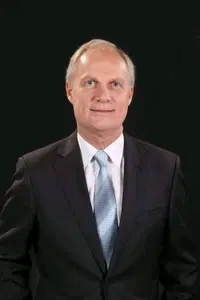
The president of Norwegian Hockey talks about the need for more rinks in his country and whether Russia and Belarus should be allowed back into the Olympics.
The Hockey News' Money & Power 2026 hockey business annual is available at THN.com/free, featuring the annual 100 people of power and influence list.
W. Graeme Roustan, owner and publisher of The Hockey News, sat down with special guests for peer-to-peer conversations also featured in the issue, including the president of Norwegian Hockey, Tage Pettersen.
Here's their full conversation in The Hockey News' True Hockey Talk:
Read along with an excerpt from their discussion:
W. GRAEME ROUSTAN: Let's start with the NHL if you don't mind. Mats Zuccarello is from Norway, and he's in the NHL. How important is it to have an NHL player as an ambassador for hockey in your country?
TAGE PETTERSEN: It's very important, of course, because he's a big role model for young Norwegian boys and girls. Hockey is growing in Norway, and we have young players all over, and I hope a few of them are playing in the NHL this season. It's important to have that role model that Zuccarello has been for many years now. He comes home every summer and gets involved in youth hockey programs, and he's always out there talking with people and spreading the word. It's inspirational for the grassroots.
WGR: How important are the grassroots programs to get the kids away from their laptops and iPads and into athletics? How are the grassroots programs working in your country?
TP: At our hockey rinks, all the adults are volunteers who are helping out on their time off. It's the moms and dads who are in the ice rinks. Without the volunteers, we wouldn't be able to do all the activities and produce all the good athletes. The parents and volunteers don't get a lot of credit, but they show up at five in the morning with the kids, they dress the kids, they get them out on the ice, and that's really the foundation of grassroots sports.
It's really important because it's quite expensive to do sports activities in Norway. Norway is a high-cost country like the U.S., but especially for hockey, as we have a lot of travelling because in all of Norway, which is quite a long country, there are 54 ice rinks.
WGR: That infrastructure and those arenas cost money to build, cost money to operate. And in today's world, all countries have budgetary constraints. There are choices that have to be made. How important is it to have the infrastructure there for the young girls and boys who want to have sports in their life?
TP: To build an ice rink is quite more expensive than building a field for football or something else. And that's why the Norwegian Ice Hockey Association made a concept that we call the "polar bear arena" where everything, all the drawings, everything is ready for the municipality. If they have the land and have done the groundwork, the cost to build this kind of arena is around five million Euros. You standardize to save cost, you standardize the design of a building and you're basically saying to communities that if they have the land and do the roads and the different systems, then here is the design that they can build and it's already been figured out. So you have that plan in place.
WGR: You said that Norway has 54 rinks. Is that an appropriate number of arenas for your country?
TP: No, no, we should have at least double. And the "polar bear arena" is one way to reach that goal. We're doing a lot of travelling around the country talking about this. But it's important that the idea come from the grassroots in the local communities.
It's often a discussion about, in Norway, we call it the chicken or the egg. We need a club or members of the community who want to invest in an ice rink. When someone invests in an ice rink, after only one year, you have hundreds of members in that club. But without that local engagement, you can't get the municipality to say yes to investing so much money.
WGR: You're on a quest to build more arenas and get more youth participation. In the past 10 years, there has been an explosion percentage-wise of young girls playing the game. How have you seen girls' participation in the last 10 years in your country?
TP: Since 2017, the number of girls playing hockey in Norway has risen by 85 percent. Eighty-five percent. That's quite impressive. And for the first time this season, we have games for all girls' age groups, including under-18. And also this season, we're one of the first countries in the world, after Sweden, to allow bodychecking for girls, which includes under-14 girls.
WGR: This explosive percentage-wise rise of women playing hockey must be good for your women's national team.
TP: The grassroots is working. It's showing results at the highest levels of the game. But it takes time, and you have to wait years to get there.
WGR: When you have a national team, men's or women's, that is playing at a high level, what does it do for the fabric of the country? What does it do for the average citizen?
TP: Hockey in Norway is the second-largest spectator sport. But that's because we're playing a lot of games during the year. Hockey is still quite a small sport in Norway. Norwegians watch football, cross-country skiing, other ski activities and handball. But when the World Championship is going on, a lot of Norwegians are watching, either travelling to the games or watching on the telly. So it's quite a popular sport.
WGR: We've talked about how Norway supports athletes and how it's growing the game. You're also part of a bigger organization, the International Ice Hockey Federation. And of course, a big topic out there right now is Olympic participation for Russia and Belarus and whether they're going to be admitted again. What is the position of the Norwegian Ice Hockey Association?
TP: Today I would say I'm proud of the IIHF's position on this question. But it's a discussion in every international association. I think most of the sports federations in Norway agree with me. It's too early to let Russia and Belarus back into international sport activity. I think most of us can accept that players can be a part of the Olympics without the flag. Not the team, but the single athletes.
WGR: Finally, we're all here in the French Riviera to talk hockey at the IIHF Global Hockey Forum. What do you want to take from here?
TP: I want to follow the sessions on the women's game because we're working quite well with that back in Norway. So I hope we can share something with the other countries, but we have still a lot more to learn. So that's my goal.
For more interviews with a deep look into the world of the hockey business, check out The Hockey News' Money & Power 2026 issue, available at THN.com/free.
Comments

Powered by RoundtableBuilt on infrastructure designed for real-time media. Learn more at RTB.io.© Roundtable 2026. By using this site you agree to the Terms of Use and Privacy Policy