


May 14, 2025 9:57 PM
Updated May 15, 2025 4:34 AM
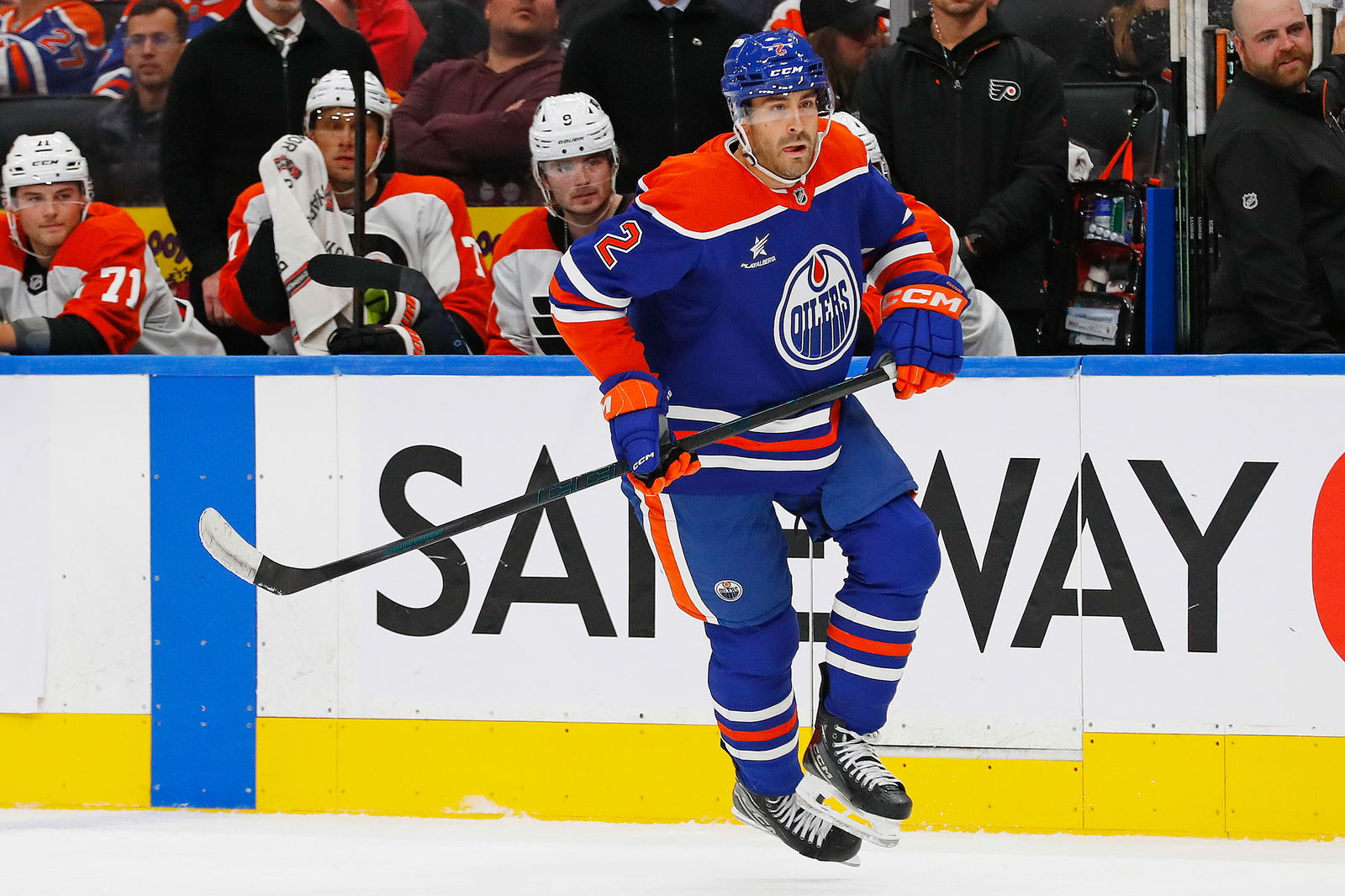 Evan Bouchard (Perry Nelson-Imagn Images)
The NHL's offer sheet business is tricky, to say the least.
The information that governs a team’s ability to go out and sign another team’s player(s) is not straightforward.
This year’s offer sheet compensation tiers were reported, making it clearer which teams could have the wherewithal to try and poach assets from opponents.
But although we shouldn’t expect teams to make bombshell potential acquisitions via offer sheets, the idea that no teams will offer-sheet players probably isn’t accurate.
As the St. Louis Blues proved last summer when they landed defenseman Philip Broberg and Dylan Holloway from the Edmonton Oilers, it is possible for teams to target RFA players and give them the right kind of contracts that result in their team allowing them to depart.
But there’s a reason why few high-end RFAs never wind up getting offer-sheeted. It’s because the players involved are crucial to their team’s future, and opposing teams don’t often have the combination of salary cap space and draft picks that are necessary to complete the offer sheet process.
That’s why it’s unlikely that RFA Oilers defenseman Evan Bouchard and Toronto Maple Leafs left winger Matthew Knies will be targeted. The amount of money required to make them even consider leaving their team carries with it asset payouts that few teams have.
For example, under the newly released offer sheet terms, a team that offers Knies or Bouchard an average annual salary of between $9.36 million and $11.7 million would have to surrender two first-round draft picks, one second-rounder and one third-rounder. Even teams offering between about $7 million and $9.36 million would have to give a first-, second- and third-rounder.
The other factor to consider is that for any RFA who signs an offer sheet with a term that's longer than five years, the total value must still be divided by five years to determine the average annual value for the associated compensation. So the AAV could be even higher than the actual cap hit of the player.

Given the reality that many teams have traded away some of their first-rounders, that removes them from the upper-tier offer sheet conversation.
But as we saw with Broberg and Holloway, the class of mid-tier players is much more likely to be given an offer sheet.
Broberg’s contract with St. Louis last summer caused the Blues to give Edmonton a 2025 second-rounder, while Holloway’s contract caused St. Louis to give the Oilers a 2025 third-rounder. Those are far easier assets to give up than two first-rounders or more.
So, while there are a handful of teams out there that are positioned to make some sort of offer-sheet-related splash, it’s likely those teams will be targeting players who aren’t household names.
For example, Columbus Blue Jackets left winger Dmitri Voronkov is scheduled to be an RFA this summer, but he isn’t the type of high-end asset who will break the bank in an offer sheet scenario.
Now, Voronkov did post 23 goals and 47 points this season, so the 24-year-old is likely to have interest in his services from more than one team. But even then, the Jackets won’t easily part with a youngster whose best years are ahead. Even if a team does offer-sheet Voronkov, it’s much more likely the Jackets will match it and keep him in Columbus.
But back to an earlier point: can you imagine the outcry in Edmonton or Toronto if Bouchard or Knies were allowed to leave via offer sheets? The Oilers and Maple Leafs fan bases would rightfully be incensed that key players would depart in this manner. That’s why a mid- to lower-tier RFA is far likelier to sign an offer sheet than an upper-tier RFA.
Obviously, teams are willing to consider taking the compensatory draft picks if the players involved in an offer sheet aren’t needle-movers.
So don’t hold your breath that your favorite team will poach a budding star via an offer sheet. It’s a rare mechanism indeed, and those who expect their team to acquire elite players in this manner are setting themselves up for disappointment.
Get the latest news and trending stories by following The Hockey News on Google News and by subscribing to The Hockey News newsletter here. And share your thoughts by commenting below the article on THN.com.
5
Comments

Powered by RoundtableBuilt on infrastructure designed for real-time media. Learn more at RTB.io.© Roundtable 2026. By using this site you agree to the Terms of Use and Privacy Policy