


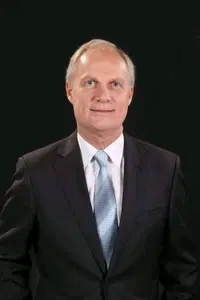

The QMJHL’s commissioner discusses his beginnings in the sports industry and finding a balance between serving the owners and the players.
The Hockey News' Money and Power 2025 hockey business annual is available at THN.com/free, featuring the annual 100 people of power and influence list.
W. Graeme Roustan, owner and publisher of The Hockey News, sat down with special guests for peer-to-peer conversations also featured in the issue, including QMJHL commissioner Mario Cecchini.
Here's their full conversation in The Graeme Roustan Show:
Read along with an excerpt from their discussion:
W. GRAEME ROUSTAN: You’ve got an interesting background. You didn’t just walk in the door and become the commissioner. Why don’t you tell us a little bit about your background?
MARIO CECCHINI: I went to school in Ottawa and started right off the bat. I was very lucky. I got offered a job at 20 years old at CKAC. It started in 1922, so it is very prestigious. The company was called Telemedia at the time and had the play-by-play of the Expos. Right away, in my young career in radio, I was really hooked on sports. My first job directly connected with sports was producing ‘Les Amateurs de sports’ in the fall of 1992, which I still think it’s because I produced it that the Canadiens won that Cup that year. It happens to be the last. I’m just saying. In 2000, the company expanded to Toronto. I was an executive there and came to live here in Toronto. The Fan 590 was the only sports radio station in the country at the time.
I was semi-retired in 2018 when I got the offer to be team president for the Montreal Alouettes of the CFL, so I had the experience with a team. In 2020, we went through COVID. That was a hell of an experience. Then, in January 2023, I started talks with the QMJHL. Gilles Courteau, the former commissioner, had announced that he was leaving, and I got seduced by the role of taking care of young men’s dreams, their well-being and their potential schooling careers. My daughter looked at me after I hung up the first call and said, “That’s what you always wanted to do.”
WGR: Clearly, you’re passionate about organizations, kids and development. You have to be a champion of youth to be the commissioner of a junior hockey league.
MC: Yeah, everything you said is absolutely bang-on. It’s exactly that. You have to be able to see the good that we do, because sometimes it’s very challenging at that age and they face adversity. It’s not always easy, but at the same time, it’s getting everybody on the same page about how important hockey is to them and reminding them that only five to 10 percent will make it upstairs or be pro and have a great career. Then there’s 90 percent who will be firemen, lawyers, accountants, journalists and, hopefully, referees, because we need those. Those are also the kids.
 W. Graeme Roustan and Mario Cecchini
WGR: In the past, leagues and commissioners were focused on the owners’ needs, which was to make money. It was more that and less about the players. The commissioners were really the owners’ representatives. That’s who their boss was and where their loyalty was. Today is different. Now, the commissioners have a responsibility to the players, the community and to the owners. You work for everybody, don’t you?
MC: You work for and with multiple stakeholders. I remember when I was in broadcast, for example, the key stakeholders were the board but also the audience, the CRTC, which was the regulatory body, the community and the investors. Those multiple stakeholders have been a way of life for me, as far as I’m concerned. Usually, if you take care of the audience and produce ratings, the rest will take care of itself. If we are successful today, we take care of the kids and give them a great environment to play and study in and they’re happy, everything goes much smoother because that’s where it starts. It gives you a good product and gives you better attraction in the stands.
We share a lot right now on a weekly basis. They learn a lot from one another’s experience. They compete on the ice, but they collaborate off the ice. It’s not always easy when you’re a born competitor and you have to talk to the guy who maybe just eliminated you. That’s always a challenge, but it’s always done in a very good fashion with one objective, to move forward together, which, like the rest of the business world, has just evolved that way. People now realize that joint ventures and strategic alliances are a good way to go. They realize they’re not competitors in their own market. That’s very beneficial. Crowds went up last year, and, as we speak today, crowds are up again five percent on last year. That means we’re also up compared to 2019, and I say that significantly because it’s pre-COVID. We know selling a ticket today is much harder than before. All of these things, you put them together and you do the right things with the kids, it’s going to develop into something great.
For this and more interviews with a deep look into the world of the hockey business, check out The Hockey News' Money and Power 2025 issue, available at THN.com/free.
