


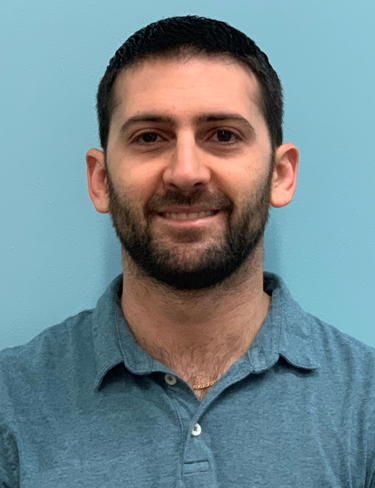

Panthers GM Bill Zito sits down for exclusive chat with THN
The Florida Panthers were the only team in the NHL not to make a move at the 2023 Trade Deadline.
In a year where the annual swap meet seemed to stretch from the usual one day of craziness to well beyond a week of big trade after big trade, it begs the question of why Florida, a team amongst the several that are fighting for one or two playoff spots, didn’t get in on the fun.
“It was a couple of factors,” Panthers General Manager Bill Zito told The Hockey News. “We had the cap, we had our assets, and then most important thing was not making a mistake and not executing a trade just for the sake of executing.
“We had (Anthony Duclair) coming back,” Zito continued. “We knew that, so that’s kind of like our add now. We add a 30-goal scorer who had been absent all year long, not to mention his speed and what he brings. He can play on almost any line.”
It’s no secret Zito fielded calls for several of his players ahead of the deadline, whether they were for a reliable veteran defenseman on an expiring contract or a high-end forward with reasonable money and term left on his deal, there were certainly potential deals to be made.
At the end of the day, for both this season and beyond, what Zito viewed as best for the Panthers was keeping the band together.
“We listened,” Zito said. “We talked to everybody. But at the end of the day, we knew that our capital, if you will, was diminished. We knew that for the right move to help us now and in the future, of course we're going to do it, but it doesn't come to fruition so easily, particularly when you have so many of our players who are outperforming the value number on their contracts.”
Whether or not, in saying that, he intended to give himself a little fist-bump, having so many players on team-friendly deals who also impact the team in extremely positive ways is absolutely a reflection of the work put in by Zito and his front office staff for identifying players that would fit a certain system and making a financial commitment that they felt would ultimately prove to be a sound investment (names like Duclair, Gus Forsling, Carter Verhaeghe and Brandon Montour come to mind).
There is also another factor to consider in regard to Florida’s Deadline decision making, and that’s the human side.
While known around the hockey world as one of the toughest negotiators in the business, Zito has also earned a reputation as a player-friendly GM, and for good reason.
He’ll go the extra mile to do right by a player where perhaps other general managers wouldn’t, whether it be moving a guy he knows will have better opportunities elsewhere or trying to find a friendly landing spot for a player already on his way out.
A good example of this came back in 2021 when it wasn’t quite working out in Florida with free agent signing Vinnie Hinostroza, who was constantly a healthy scratch. Zito was able to trade Hinostroza to Chicago, his hometown, and a team where he was able to find an everyday role.
Did Zito have to make the move? No. There was zero benefit to Florida’s roster (you could make the argument it actually hurt the team’s depth) and saving $1 million under the salary cap wasn’t nearly as big of a deal back then as it would be now.
In a world where it’s become morally acceptable to step all over anyone and everyone in your way in order to achieve your goals, decency recognizes decency.
In addition to Florida featuring a great collection of talent, Zito has built a locker room of genuinely good people, and that was absolutely by design.
The team has been putting in the work all season, attempting to overcome great odds and challenging obstacles without wavering in belief that things will work out if they just keep pushing forward.
To that point, Zito felt it was only right to let them finish what they started.
“This group has earned the right to see this thing to fruition,” Zito said.
Earlier this week, Zito sat down for a candid chat with The Hockey News about this season, the offseason, his view of the job Head Coach Paul Maurice is doing and his ultimate view of success.
THN: In terms of the offseason, are you able to look that far ahead with the season still going on and your team in a playoff race?
BZ: Yes and no. In a 30,000-foot view, you're always looking, right? You're constantly thinking about two, three years from now, but then in the short term, you're saying, ‘No, I'm going to worry about tomorrow nights game.’ Now that's the job of the players and coaches, right? But you have to balance it. There's any number of things that would come across your plate, but it's like everything you do, you have to think about what the consequences are moving forward. Then okay, now in the summertime, what's going to be happening here? A lot of the story from this season has yet to be written.
THN: Looking at this season and the way the numbers have stacked up, the Panthers have been a very unlucky team in terms of how successful they should be and how successful they’ve actually been, but that being the case, there’s no reason to think you guys can’t reach the playoffs and make some noise once there.
BZ: Exactly. As a manager, you don't have the luxury of being able to say, ‘I'm lucky,’ right? I'm accountable. That's my job. But let's just say there's chapters that have not yet been written.
THN: Looking forward to the offseason, it must be nice knowing that you’ll have some financial flexibility and ability to spend after being so restrained, for lack of a better term, this past season.
BZ: Well, we knew…for example, last year was 122 points. Was that a little bit of an aberration? How many were overtime points, right? And then you had a bifurcated conference where you had the top eight and the bottom eight relatively early, like Christmas time. We knew coming in we had the $8 million in dead money, so you're stuck with it. But we still think, as you pointed out, do we have as many points as we probably should have? No. So we have to fix this, we have to continue to build, and I look at it like the stock market. Does it go straight up? You’re going to go through ups and downs, and we have to get through times of adversity, we have to get through times of bad luck, we have to get through times of bad play, and it's part of the process.
THN: At the NHL Draft, you guys have no first round pick at the moment. In terms of strategy, does the thought process change based off what picks you may or may not have? It seems you’d have to prepare for anything because you never know what kind of offer may find its way to your table.
BZ: You never know, right? We could show up on the Wednesday, someone calls and says, ‘Do you want this for this guy?’ Okay. So yeah, you have to prepare. It's a tough one for the scouts.
THN: Do you like to go into the draft thinking, ‘We want to target centers,’ or, ‘We need to pick up a left-shooting defenseman?’ Do you like to go with the best player available or is it really just case-by-case?
BZ: First they’ll pull out the goalies and then plug them in where we think we can get them. So you'll have the scouting directors and the staff, as it is pretty much across the league, you're going to rate your selections 1 through 300 or however many. And then when it starts, it’s like, ‘oh Dwork got taken? He’s off. Zito was taken? He’s off. Hornqvist is still there. Oh its our pick? Top of the list. Hornqvist.’ The goalies kind of sit over here and then you plug them in like, ‘oh Edmonton needs a goalie. I don't think this guy's a first-round talent, but they'll take him in the third.’ So we might play it, if we want him, we may have to use our second, so there's a little bit of that. But for the most part, you rate the players, and positionally, I don't think you would take all centers, even if you're really weak down the middle, because you're looking five years out. So I think you sprinkle it, and you know, you take the best player. Then if there's time, if it's just so close, maybe you say, ‘well, we don't have this, we do have this. These guys are common.’ So there's a little strategic selection by position, but not as much as you think.
THN: As a fellow hockey nerd and lover of the sport, is it fun to do the draft and free agency from that perspective, just knowing it's so fluid and you're doing something that, you know, people do fantasy sports for fun? I get that there's a lot of weight that comes with it, so maybe fun isn't the right term, but I mean, you’ve got to enjoy what you do as well, right?
BZ: I’m so lucky. Like last night (at the GM meetings in Manalapan, Florida) I sat with Jimmy Nill and Kent Hughes, and Lou (Lamoriello) and David (Poile) are telling stories, and this is 100 percent a true story, we just look at each other like, ‘we're the luckiest guys on Earth that we get to do this shit.’ So yeah, it's tremendous, the whole job is a lot of fun, and there's a lot of stress. I think the draft and the free agency, it's work and it's serious and you're making significant decisions about bringing players in and it's really, it's a very thorough, very, very difficult, particularly at the draft. So I don't know if fun is the word. It's more. It's work. It's not unenjoyable.
THN: It’s not like going to Disneyland where it’s a happy ending no matter what.
BZ: No, on the contrary. If you get two out of seven, you're a pretty good drafting staff. You get three out of seven, you're among the best in the league, right? Wrong. You failed. You didn't even get didn't get 50 percent right. So that's how hard it is.
THN: I’d like to ask you about Paul Maurice. You said after the Trade Deadline that you’re happy with his performance to this point and I’m curious what specifically you’ve liked that he’s done so far.
BZ: Two things. He's trying to modify and change the way we play without eradicating all the good, and instilling a little more structure, a little more defensive awareness and a little more habitual defense. Where we play this way, we're mindful of this in our end, but at the same time, not frustrate. Let the horses go, right? So his ability as a hockey intellect to implement the right systems, and as a human to get the guys 1- to understand, 2- to embrace it, and 3- to enjoy it. It's hard to do. So that combination, I said this before, IQ and EQ. He possesses the skillset, the experience and the awareness to implement strategically what needs to be done, and he has the emotional empathy, understanding, high-end EQ, to understand the players and to teach, to communicate. Communication is a significant part of success.
THN: And season over season, you’re seeing a lot of those positive differences play out in ways that maybe John Q. Hockey Fan isn’t going to notice?
BZ: Probably, but then not everybody has the luxury of the myriad of conversations every day and the back and forth, so a lot of it doesn't resonate in the public eye. And if we're going to measure ourselves in points earned as our only measurement, which the end of the day probably is, I think everybody in our organization agrees we expect to have more than where we are. Well, if it was that easy, it would just happen. And ironically, in the first two years I was here, it kind of did, and we were really happy. So now we have to learn how to deal with adversity and how to deal with those hiccups, and I think he's done a great job.
THN: Finally, the last thing I want to ask you about measuring success. How does Bill Zito measure success in his role?
BZ: Are we better today than we were yesterday, and are we planning on doing the things tomorrow to make us better than we are today? So that's kind of the mantra by which we guide ourselves. I think success is going to be measured by the Stanley Cup. Now you can obviously evaluate the race, or the quest along the way, but my goal is to win the Stanley Cup, and then in tandem with that, is to develop the hockey operations into an elite franchise that can sustain the culture over time.
