


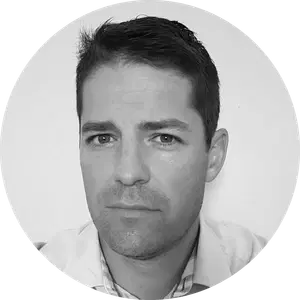

As the Senators host the Boston Bruins on Thursday, it's Hockey Fights Cancer Night in Ottawa. To help promote awareness and prevention, Graeme Nichols described his recent cancer scare and how his early diagnosis happened almost by chance.
It started with an envelope in the mail from the Ministry of Transportation last fall, notifying me that I was due to submit a medical report form as part of the driver's license renewal process.
As a professional firefighter, one condition of the job is to hold and maintain a valid DZ driver's license. A class 'D' vehicle license in Ontario permits the operation of medium-sized commercial vehicles that weigh over 11,000 kg. The 'Z' represents an air brake endorsement that is required to operate vehicles with air brake systems.
Completing a medical report form is a formality required every five years for individuals under 46 years of age.
I looked at it as an annoying inconvenience.
Booking an appointment with a general practitioner (GP) is not a streamlined process. It can often take many weeks or months to get in. There is also the financial consideration in getting the form filled out. Although the employer covers most of the incurred costs, they don't cover them all, and it takes time and paperwork to file the claim and have it processed.
It is not a fun experience.
Eventually, the day of my appointment came. I entered the medical centre and had my height, weight, and vitals recorded. When my GP entered the room for my assessment, everything went well. She asked me questions, boxes were checked, and everything was lining up as I anticipated. Before concluding the exam, she asked whether there was anything else we should discuss.
Having lost my father at the age of 55, I wanted to get checked out for my heart's condition preemptively. Similarly, I had a mole on my shoulder that became raised and irritated after one of my shifts that summer. I asked for it to be examined, along with others on my body, as a precaution. On both fronts, my doctor was receptive and scheduled appointments for me with a west-end cardiology clinic and a dermatologist.
A few weeks later, I had an appointment with a dermatologist, who removed a mole from my shoulder and another from my back. Following a straightforward, relatively quick procedure, the doctor assured me that although they removed the two moles, she was confident the biopsies would be fine.
While driving to the Canadian Tire Centre last January, I received a phone call from the clinic. The results of my biopsy were in. The mole on my shoulder was negative, but the one on my back returned a diagnosis of melanoma.
I was stunned.
What was only a couple of seconds of silence on the phone felt like minutes. It is amazing how quickly thoughts immediately seep into your mind.
The silence was broken by the dermatologist explaining that there was good news. I had a melanoma in situ, which can best be described as a Stage 0 melanoma where the abnormality is confined to the outermost layer of the skin.
The dermatologist believed that the biopsy removed the cancer, but I would have to visit a plastic surgeon to remove more skin from the area to ensure it had not spread.
I met with the plastic surgeon in January. After the procedure was over, I asked her about the melanoma in situ and how long it could have taken for the cancer to spread.
"Likely within a year," she responded.
It was a sobering thought.
That medical report form, which I absolutely resented at the time, put me in a position to help myself without realizing it. I still find myself thinking about its timing. Had I received that form a year later, maybe the melanoma would have spread, and I'm looking at a totally different and more difficult path to recovery.
I got lucky. I got really, really lucky.
I debated whether or not to share my story. Online, I have been guarded about divulging information about my personal life.
In this instance, however, I look at how cancer has affected this organization with Roger Neilson, Mark Reeds, Nicholle Anderson and Susannah Staios. I recall the late and great Bryan Murray, who passed away eight years ago from his battle with stage 4 colon cancer. After his diagnosis in 2014, he became a prominent cancer awareness advocate, urging people to get colonoscopies because he believed his diagnosis would have been preventable if he had undergone the procedure.
With November marking the beginning of the Hockey Fights Cancer campaign and the Senators honouring the event at tonight's game against the Boston Bruins, it is important to me to help promote cancer awareness.
If someone reads this piece and recognizes the importance of taking initiative and preemptively protecting their long-term health, that's a win.
Be vigilant. Self-advocacy is essential. Cover your bases and don't take your health for granted.
By Graeme Nichols
The Hockey News Ottawa
