




It was easy to assume, earlier in the year, that the Philadelphia Flyers’ crease belonged to Sam Ersson.
After all, he’d been carrying the brunt of it for most of the past season and a half—the calm, technical Swede who unexpectedly had to become the starter in early 2024, and was tasked with giving the Flyers stability when they desperately needed it.
For the 2025-26 campaign, the plan seemed straightforward enough: Ersson as the No. 1, a newly acquired Dan Vladar providing competent support, and a steady rotation that would keep everyone fresh.
But plans in hockey are rarely that tidy.
A few weeks in, what was supposed to be a measured 50/50 split has evolved into something more fluid—and, frankly, more fascinating. Vladar has started three straight games, posting the kind of performances that make it impossible for a coach not to ride the hot hand. He’s been, as Rick Tocchet put it after the Flyers’ win in Ottawa, “just solid.”
“There’s some saves there where they’re Grade A shots,” Tocchet said after practice on Friday. “It doesn’t seem like it to the average person, but that’s a good save… He’s making those kinds of saves. He gives us a chance to win every night.”
And right now, that’s exactly what Vladar is doing: giving them a chance.
 Dan Vladar (left) and Sam Ersson (right). (Megan DeRuchie-The Hockey News)
A shift, not a statement
The temptation, of course, is to interpret this stretch as some kind of symbolic changing of the guard—that Vladar’s ascension signals a loss of faith in Ersson. But that’s not really what’s happening here.
This isn’t about demotion or promotion. It’s about momentum.
Vladar is simply playing really good hockey right now, and Tocchet is the kind of coach who rewards that. His decisions don’t lean on pedigree or preconceptions—they hinge on performance. Ersson entered the season with the de facto "starter" title, but Tocchet’s philosophy doesn’t particularly care about titles. If Vladar’s giving the Flyers the best chance to win, he’s going to get the net.
At the same time, this isn’t an indictment of Ersson’s game. He’s been solid in his own right, and his early-season numbers don’t suggest a regression. Rather, what we’re seeing is a situation that every good team hopes to have: two capable goaltenders pushing each other to be better, and a coach willing to navigate the nuance of how to manage both.
Vladar’s moment
What’s notable about Vladar’s current run isn’t just that he’s stopping pucks—it’s how he’s doing it.
For a goaltender who’s never played more than 29 games in a season (that mark coming in Calgary), the 28-year-old looks entirely comfortable in a larger role. His movements are more economical, his reads sharper, his confidence in controlling rebounds and traffic far stronger than it was when he was playing second fiddle.
He looks, simply put, like a goalie who knows he’s being trusted and is thriving on it.
Philadelphia’s defensive structure has helped, too. Tocchet’s system emphasizes layers of support in front of the net and quick outlet passes, which suits Vladar’s reactive, positional style. He doesn’t have to overcommit; he just has to hold his ground, and he’s doing that exceptionally well.
But maybe the most telling part of Vladar’s emergence is how it’s changing the dynamic in net. For the first time in nearly a year, Ersson isn’t shouldering the majority of the load.
Ersson’s new challenge
Since definitively taking over the crease in early 2024, Ersson has lived through the kind of instability that would rattle most goalies. A revolving door of backups, inconsistent workload management, and constant adjustments to new defensive pairings made it difficult for him to settle into a rhythm. Through all of that, though, then-head coach John Tortorella and his staff, along with the Flyers front office, showed unwavering faith in the 26-year-old.
Now, though, he faces a different test: competition from someone who isn’t just passing through. Vladar isn’t another stopgap or a placeholder. He’s a legitimate tandem partner—and potentially a threat to Ersson’s workload.
That’s not a bad thing.
For Ersson, this is the kind of challenge that can elevate him even further. He’s not dealing with a rookie goaltender learning on the fly, and neither is Vladar. Both are in that sweet spot of their careers—old enough to know who they are, young enough to still be hungry. The competition is real, but it’s healthy.
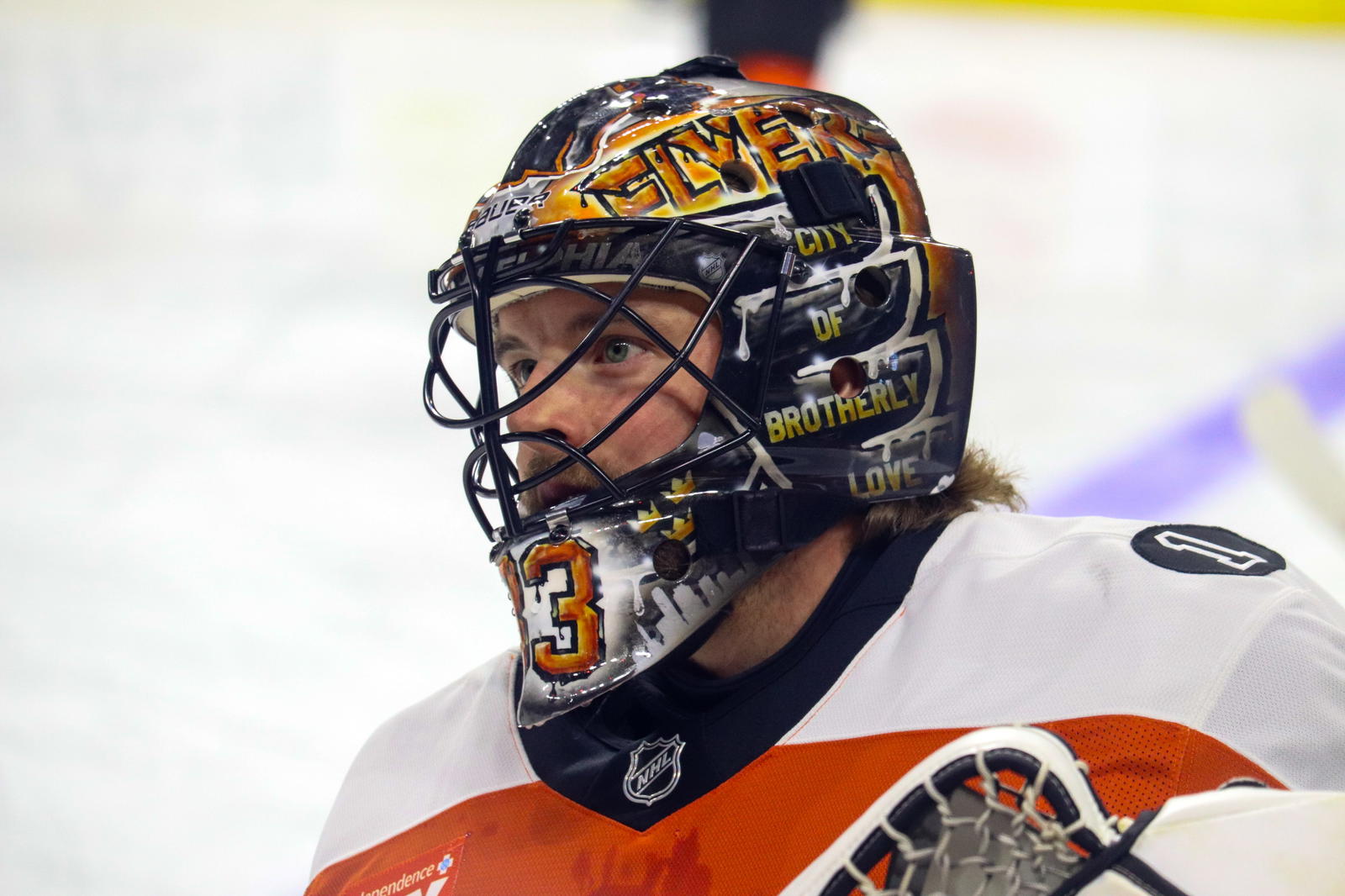
 Sam Ersson (33). (Megan DeRuchie-The Hockey News)
The balance Tocchet needs to strike
This is where Tocchet’s job gets tricky. The art of managing a goaltending tandem is all about balance. He needs to be able to reward the guy who’s rolling, without letting the other atrophy. Overworking one leads to burnout; underplaying the other leads to rust.
The Flyers have already shown signs of learning that lesson. Tocchet’s rotation in preseason was almost deliberately even, letting both goalies find their footing without falling into a rigid starter-backup hierarchy. But as Vladar’s game continues to rise, the challenge becomes keeping Ersson sharp in the margins.
That’s where communication and trust matter. Tocchet has been transparent about his decisions, and both goaltenders have handled the rotation with professionalism. There’s no sulking, no post-game politicking. Just two goalies trying to make their case the best way they know how—by stopping pucks.
A luxury the Flyers haven’t had in years
It’s easy to forget how rare this is for Philadelphia. The Flyers have spent what feels like eons searching for goaltending stability, and, often, it’s been a story of extremes. One goaltender carries the weight, the other fades, and by midseason the team is scrambling for solutions.
Now, they have something different: a tandem that looks balanced.
Ersson brings control, composure, and predictability—the kind of goalie who rarely beats himself. Vladar brings size, athleticism, and a competitive fire that’s palpable in how he tracks pucks through traffic. Together, they offer the Flyers flexibility. Different styles, different rhythms, both capable of winning.
It’s the kind of problem every coach wants: too many good options.
The bigger picture
As the Flyers’ season unfolds, the real test of this tandem won’t solely be about who starts next week or who posts the better save percentage. It’ll be about whether they can maintain this balance over the grind of 82 games, and whether Tocchet can manage the push-and-pull without either losing confidence or burning out.
But so far, the signs are good. Vladar is playing with purpose. Ersson is handling the competition with quiet professionalism. And the team in front of them is playing with a growing sense of trust that whoever’s in the crease will give them a chance to win.
That’s the mark of a real tandem—and something the Flyers haven’t been able to say for a long time.