




Jul 31, 2025 10:21 PM
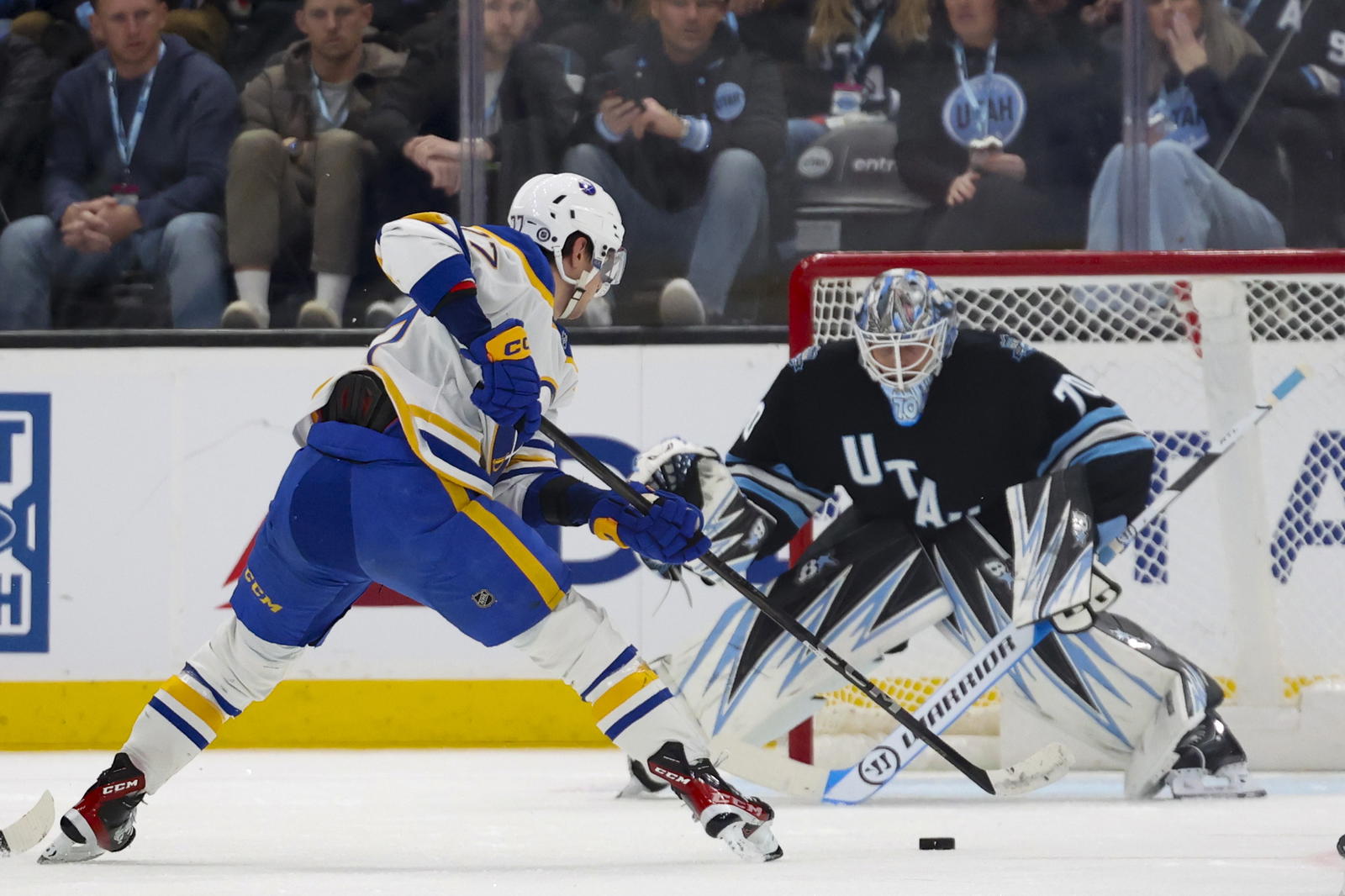 Mar 20, 2025; Salt Lake City, Utah, USA; Buffalo Sabres right wing JJ Peterka (77) looks for a shot against Utah Hockey Club goaltender Karel Vejmelka (70) during the second period at Delta Center. Mandatory Credit: Rob Gray-Imagn Images
Judging a team's ceiling during the offseason is a strange process and its no different for the Utah Mammoth
There are certainly teams easier to judge than others, like the Florida Panthers doing one of the smartest things a team can do: keep and extend players who are certified Stanley Cup winners.
As for other teams, there's certainly much more up for debate. After all, according to ESPN's overall ranking by Goals Above Replacement (GAR), seven of the bottom eight teams were in playoff contention. But only using GAR to predict a team's success would definitely be a mistake.
Falling into this metric doesn't signify that these teams won't be in playoff contention nor does it mean the San Jose Sharks, who ranked first overall on the list, suddenly became playoff contenders. But what it does say is that it's a good time to be making moves and that's exactly what Utah Mammoth has done.
For the Utah Mammoth, who were ranked ninth best on the list, adding talent like JJ Peterka surely means improvement on paper. After all, if Peterka contributes 27 goals and 41 assists for Utah like he did for the Sabres this past season, it's hard not to expect improved offensive play for the Mammoth — as well as more wins.
For a team that was just outside of a playoff berth last season, having moves like this are important as it shows that the team understands you need more than just good prospects to win games.
And that's just looking at one offseason signing. Along with filling out the roster with the likes of Nate Schmidt, Vitek Vanecek, Brandon Tanev, and Scott Perunovich, Utah has certainly been active this offseason.
While the additions are certainly exciting, for the Mammoth to become a playoff team, they'll need to overcome the loss of some key players and the skills they brought to the team.
So what exactly is Utah going to be losing this year? Let's review what the team will need to replace with its new faces.
Michael Kesselring
 Mar 12, 2025; Salt Lake City, Utah, USA; Utah Hockey Club defenseman Michael Kesselring warms up before a game against the Anaheim Ducks at Delta Center. Mandatory Credit: Rob Gray-Imagn Images
Arguably the biggest loss for the Utah Mammoth was having to part with Kesselring to get Peterka, especially since he and fellow trade partner Doan were well-revered in the Utah community.
As the team dealt with injuries to key defensemen John Marino and Sean Durzi for most of the season, Kesselring was reliable when the team needed him most.
Aside from actually playing all 82 games, Kesselring took on an elevated role — going from his usual spot on the third pair to increased minutes as a top-four defenseman, even earning time on the top power-play unit.
And Kesselring played great during those stints. By the end of the year, his 29 points were second highest among Utah defensemen, and at only 25 years old, there was reason to expect even more development in the seasons to come.
Now without Kesselring, Utah has done its part in free agency by picking up two defenders in Schmidt and Perunovich. With Schmidt expected to fill Kesselring’s spot, Utah has to feel good about adding someone with his playoff experience to the roster.
Out of everyone Utah had to part with, losing Kesselring may be the toughest piece to overcome, especially since Utah was able to have talent like him on the third defensive line. As long as the team stays healthy, the current defensive core should help negate the impact of losing Kesselring.

Josh Doan
 Apr 8, 2025; Salt Lake City, Utah, USA; Utah Hockey Club left wing Lawson Crouse (67) celebrates scoring a goal against the Seattle Kraken with center Jack McBain (22) and right wing Josh Doan (91) during the second period at Delta Center. Mandatory Credit: Rob Gray-Imagn Images
Assessing what the Mammoth loses with Doan has more to do with his potential for growth in the future, but that isn't to say that Utah won't miss having around.
To start the season, Doan wasn't consistently earning a spot on the roster, spending a lot of time with Utah’s AHL affiliate, the Tucson Roadrunners.
But as Doan carved out a role on the team and began playing alongside Lawson Crouse and Jack McBain, he showed signs of what he could become in the future.
He fit in well with the physical style both Crouse and McBain brought to the third line, consistently jarring the puck loose from opposing teams and showing real chemistry with his line.
While giving up a prospect like Doan to land Peterka is worth it for Utah, the team will now have to figure out who can slot in with Crouse and McBain. Not only did Doan’s puck pressure help make that trio a pesky presence, but the offensive chemistry between the three was likely to keep improving with more time together.
Getting Peterka without losing any draft capital is certainly a win for Utah, but both Doan and Kesselring should continue to develop and play meaningful minutes for the Sabres. While Peterka should elevate Utah’s offense, the team will need to look to its roster — whether it’s new pickup Brandon Tanev or even fan-favorite Liam O’Brien — to keep the third line strong and gritty.
Matias Maccelli and Nick Bjugstad
 Jan 14, 2025; Salt Lake City, Utah, USA; Utah Hockey Club left wing Matias Maccelli (63) shoots the puck during the second period against the Montreal Canadiens at Delta Center. Mandatory Credit: Chris Nicoll-Imagn Images
In a sense, the Utah Mammoth decided that the team could find replacements for both Bjugstad and Maccelli.
Maccelli's diminishing role, along with the addition of Peterka, ultimately led to him being traded to the Maple Leafs for a 2027 third-round pick — clearly showing that Utah felt it was time to move on from him.
Maccelli was already losing minutes, but with Peterka on the roster, there truly would be no place for him to play. So while it hurts to lose a player who posted a career-best 57 points at only 23 years old the season before, Utah gains more by moving Maccelli as it moves forward with Peterka.

For Bjugstad, who signed a two-year contract with the St. Louis Blues, it was clear that Utah felt it could fill his spot through free agency, as the team never offered him a contract.
While Bjugstad’s numbers were down this season, he still served as a solid complementary player for Kevin Stenlund and Alexander Kerfoot.
Adding Tanev to the team helps neutralize the loss of Bjugstad — with Tanev’s physicality potentially making him a candidate to fill Doan’s former role — but this move more so reflects Utah’s confidence in players already on its roster.
With the Mammoth bringing back Michael Carcone on a one-year deal, already having O’Brien under contract, and even signing Kailer Yamamoto to a two-way deal, Utah is showing that letting go of Bjugstad is less about replacing him externally and more about turning to internal options.
While it’s yet to be seen whether Carcone or O’Brien fills that final starting roster spot, Bjugstad should be the easiest player for Utah to replace.
1
Comments

Powered by RoundtableBuilt on infrastructure designed for real-time media. Learn more at RTB.io.© Roundtable 2026. By using this site you agree to the Terms of Use and Privacy Policy