


Photo: C Benwell

Oct 9, 2025 7:33 PM
At Team Canada’s training block this month in Toronto, Troy Ryan is surrounded by players who wear jerseys during for eight different PWHL (and two NCAA) teams. Some are his own Toronto athletes. Others are opponents who’ll try to beat him come November. But Ryan doesn’t see competing allegiances — he sees shared purpose.
“Every one of those players knows we’ll make decisions that are best for Hockey Canada,” he says. “And then, in a couple of weeks’ time, I’ll make the decisions that are best for Toronto. I think it's really, really important for the integrity of both programs. You owe it to each program, but you owe it to the individuals to be as honest as you can.”
That simple statement — “you owe it to the individuals” — reflects the core of Ryan’s coaching philosophy: respect the players, be honest, and help them get better, no matter which jersey they wear.
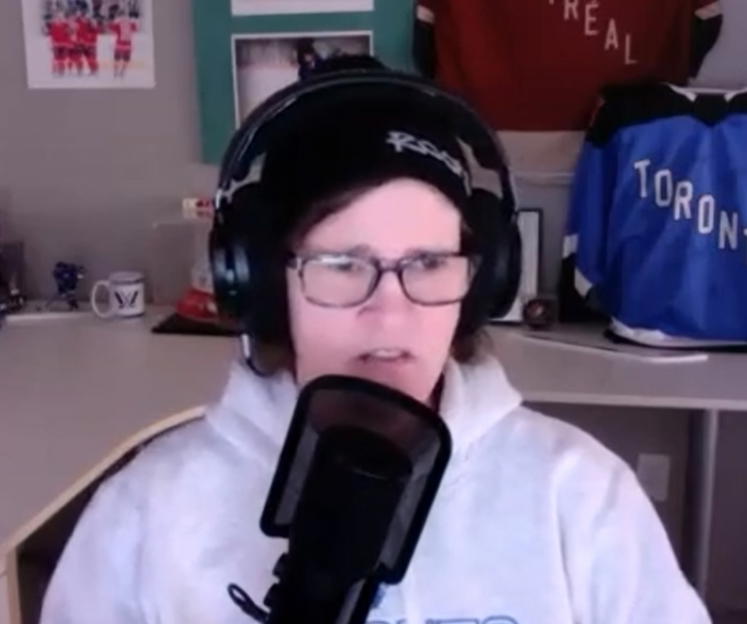
 Coach Troy Ryan at Canada's training camp | Photo: C Benwell
Respecting the player’s season
Ryan’s priority during the first week wasn’t systems or line combinations. It was balance. He knows national-team camps carve time out of players’ short off-seasons.
“We’re kind of taking their summer from them,” he admitted. “Their summer is normally a chance for individual skill development, maybe something in their game last year they weren’t happy with and they want to use the summer to work that out. We want to make sure we’re actually working with them to create that time — and that we’re a good resource for them. For us to have success, I think we have to set them up for success in their season.”
Canada’s calendar leading up to the 2026 Olympics is relentless — training blocks, college seasons, PWHL play, and the Rivalry Series — so this camp is designed to enhance rather than exhaust.
“If we were to step out here right now and grind with them, it wouldn’t really benefit us,” he says. “We’re just trying to enhance their summer training, ease in some concepts, and hopefully be good resources for them.”
The word 'resource' is a big part of Ryan's approach to the job, focusing on supporting players’ growth as much as their results.
Development stories on display
A few players have already embodied what that philosophy looks like in practice. Ryan points to Natalie Spooner as an example.
“Spooner hasn’t had a good summer of training in a while,” he says. “You can see it already — she looks different. She got some rest, actually worked on her strength and speed as opposed to just rehabbing. She’s maximized her summer, and now she looks great.”
Then there’s Chloe Primerano, the 18-year old phenom skating alongside Olympic veterans.
“Chloe’s a high-skilled player that’s got a ton of talent,” he says. “I almost wish we had the old centralization to work with her on a daily basis and get to play in 30 to 50 games, because I think if if she's playing on a day-to-day basis with Renata Fast and Larocque and all these great quality defenders, I think there would be just so much that she could gain from that.”
Letting chemistry breathe
Even the small surprises at camp — like Marie-Philip Poulin and Daryl Watts finding fast chemistry — come from a spirit of experimentation rather than instruction.
“In Calgary we had Poulin and Watts rooming together,” Ryan says. “I felt like there was some pretty good chemistry on the ice. I think it might’ve been a direct effort by Pou to see if there was some chemistry there as well. Both are highly skilled players that are very intelligent on the ice. It’s definitely something you’d consider — maybe five-on-five, or maybe on the power play.”
The staff is creating skills sessions that double as power-play rehearsals, but with every player included, not just the projected special-teams units.
“Normally you’d only work on your power play with the people who’ll be on it,” he explains. “But the one thing we know is that everybody in this group will play on their power plays in the PWHL or the NCAA. We owe it to them to help with those skills. It's again trying to set them up for success wherever they are by providing them with some of the resources that we have available.”
Integrity across programs
Ryan’s dual perspective — national coach, PWHL coach — might invite questions about conflict of interest. He addresses it head-on.
“A lot of people outside the program question things,” he says. “It’s kind of funny to me. I know I can take my hat off and put on a Hockey Canada hat. I’ve been doing it my whole life. It’s other people that seem to struggle that it would affect our decision-making.”
He insists that his staff keeps both programs accountable.
“We challenge our staff to make the best decisions for this program,” he says. The expansion draft might have seen several players move to new teams, but the focus is still on constructing the squad with the best chance for gold.
“If that means having to release a Toronto player from the national team, we do that. Obviously it's difficult because you deal with those players on a daily basis, but you have to do what you have to do.
“And just because someone didn’t stay in Toronto, or we didn’t protect them, doesn’t mean they have any less chance of making the national team. We still see them all as great quality players. Both of them are puzzles you're trying to work out. I don't think one really interferes with the other at all.”
That clarity allows him to coach across programs without friction, earning players’ trust in the process.
A shared purpose
All of this connects back to one principle: success for one program feeds success for the other.
“If they’re in a good place to start their season,” he says, “maybe we benefit from that. Probably sounds a little more complicated than it is.”
For Ryan, success comes down to communication, collaboration, and respect — no matter the logo on the jersey.
2
Comments

Powered by RoundtableBuilt on infrastructure designed for real-time media. Learn more at RTB.io.© Roundtable 2026. By using this site you agree to the Terms of Use and Privacy Policy