


Credit: Izzy Cheung @ THN

Dec 16, 2025 6:12 PM
Updated Apr 20, 2026 10:32 PM
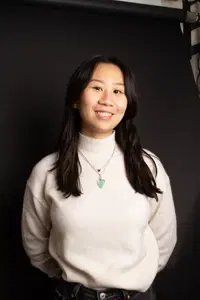
The Hockey News sat down for a chat with Vancouver Goldeneyes goaltender Kim Newell.
The journey to becoming a PWHL goaltender has been a lengthy one for BC-local Kim Newell. Lengthy, but nothing short of admirable. From struggling with her pads early on as a child, to focusing on coaching to find more clarity within the game, every path in Newell’s road to her hometown Vancouver Goldeneyes has been one she needed to take. Here’s her take on the progression of her pro-hockey journey.
How did you first fall in love with hockey?
“I just remember when I was really young. There was one day where I was watching my brother practice. This was at [Burnaby Winter Club] back in the day, and on the rink next door there was a goalie camp going on. So me, being the little kid, I [couldn’t] stay focused. I’m like, running around, and so I’m watching these goalies, and I think there was just something about the equipment and the cool movements and just it being different than the regular player stuff that really just captured my attention. I went back to my parents, and especially my mom, and I was like, ‘I really want to be a goalie, and I want to go to the hockey store and look at goalie gear,’ but my parents were super against it. They were like, ‘No, you’re not going to be a goalie. That’s too expensive. It’s too stressful. You don’t want to be a goalie.’ So I was kind of like, ‘Oh, darn.’ Alittle bit disappointed, but I think because I was so fascinated by it that I just kept asking and kept asking until eventually they gave in.”
Do you remember your first mask?
“On the topic of equipment, I don’t remember my first mask, but I have a funny story about my first set of pads. I first started using a borrowed set from my coach. We were at a tournament in Edmonton, and they had like this super, giant hockey store there [. . . ] we were looking at goalie gear, and we saw this set of little Bauer pads, and we’re like, ‘okay, these fit me.’ And I think at that point, my parents had kind of accepted the fact that I was going to be a goalie. So we ordered this set of pads. Now, back then they had to ship it, and it would take a couple months to ship it from Edmonton to Vancouver. So we came back home after the tournament, and I was so excited, but I had to wait forever for these pads to come, and they finally arrived. So we’re going to the rink. I’m getting all dressed, and as I’m putting on the pads, I just burst out crying. And my parents are like, ‘Why are you crying? What’s happening? What’s going on?’ And I just point at the pads — they had sent two left pads, and so I couldn’t go on the ice in my new goalie gear.”
How long did it take for the right pad to get in?
“Probably equally as long. But all was well. In the end, they sent it, and then I started playing. So it worked out.”
Having played here and having played for a while, when that PWHL Vancouver logo came across the screen when the team was first announced, what feeling came to mind for you first?
“I think it was a moment of reflection for me, because I haven’t been playing the last three seasons. I’ve actually been coaching locally, and so just having spent some time away from playing, but still coaching and being actively involved in the sport, it was kind of a moment of, ‘Do I want to give it a shot and try to come back again?’ Because I had done that post-college as well, and worked a couple years, and then came back to play for the Chinese pro-team. So I just really needed to reflect on what my motivations were and the reasons why I would be pursuing this again, regardless of the outcome, right? And I think a big thing for me is representing where I come from, so when coming back to play for the Chinese team, I was really motivated by my Chinese heritage, and wanting to connect with that, and connect with the Chinese side of my family, like my grandfather, and just exploring the culture and the language and all of that. And so to have a team coming to Vancouver was unimaginable before — that wasn’t even a possibility in my mind. So for it to all sudden be a reality, that happening was just — I felt like I was almost in shock. But then I was like, ‘You know what, this is literally a once-in-a-lifetime opportunity to even attempt to come back and play and make the team.’ So I think that, by itself, was worthwhile to me, and something that I really wanted to give my best shot and see what happens.”
Prior to Vancouver, had you ever had the thought in mind of going down the PWHL route?
“I think there was a little bit of like, I wanted to keep playing, but just how difficult the Olympic year was for me. I went through an injury with my ankle break, and coming back and playing on that somewhat still-injured ankle, it was a lot. I just needed to reconnect with the sport in a different way through coaching, and I think that was really healing for me. I think at the end of the day, it being a team in Vancouver, that was really [what] got me out of my seat to be like, ‘Okay, I’m gonna do this.’”
 Credit: Izzy Cheung @ THN
 Being from BC, do you think the logo and jerseys represent Vancouver?
“I think the logo looks really sharp. I think it’s very unique — when you look at a lot of the other logos and names in the league, I feel like ours stands out amongst those. I think that it’s trying to embody the uniqueness of Vancouver. Because when you look at Canada, Vancouver is a very unique place, just with its geography and its climate, and even like the lifestyle that people live here, I feel like it’s very much centered on the outdoors and nature. I feel like our name and logo reflect that.”
Take me back to your thoughts and feelings throughout the home-opener.
“I think the home-opener was the moment [it] really sunk in that this is happening. I just remember, we were walking around to skate out on the far end for the announcement of the numbers and the names, and we skated out with the smoke and all of the mist. I just remember being like, ‘Oh, I’m getting nervous.’ You could hear all of the people in the stands, and I think you could just feel that there were 15,000 people there. It was almost like there was this electricity in the air that was tangible. You know when you get the chills up your back? I got little chills. And then when it was my turn to go out, I think in my mind, I was just like, ‘Just don’t fall!’ But it was just a really cool moment to look around in the stands and see a lot of people that I had either coached, coached with, or became friends with, just through being involved in the local community. My parents also came out, and so I think it was a really special moment for them.”
1
Comments

Powered by RoundtableBuilt on infrastructure designed for real-time media. Learn more at RTB.io.© Roundtable 2026. By using this site you agree to the Terms of Use and Privacy Policy