




USA left the opening games of the Rivalry Series with a roster that looked close to complete, while Canada had more questions than answers. Who played their way closer to the Olympics, and who played their way out of the conversation?
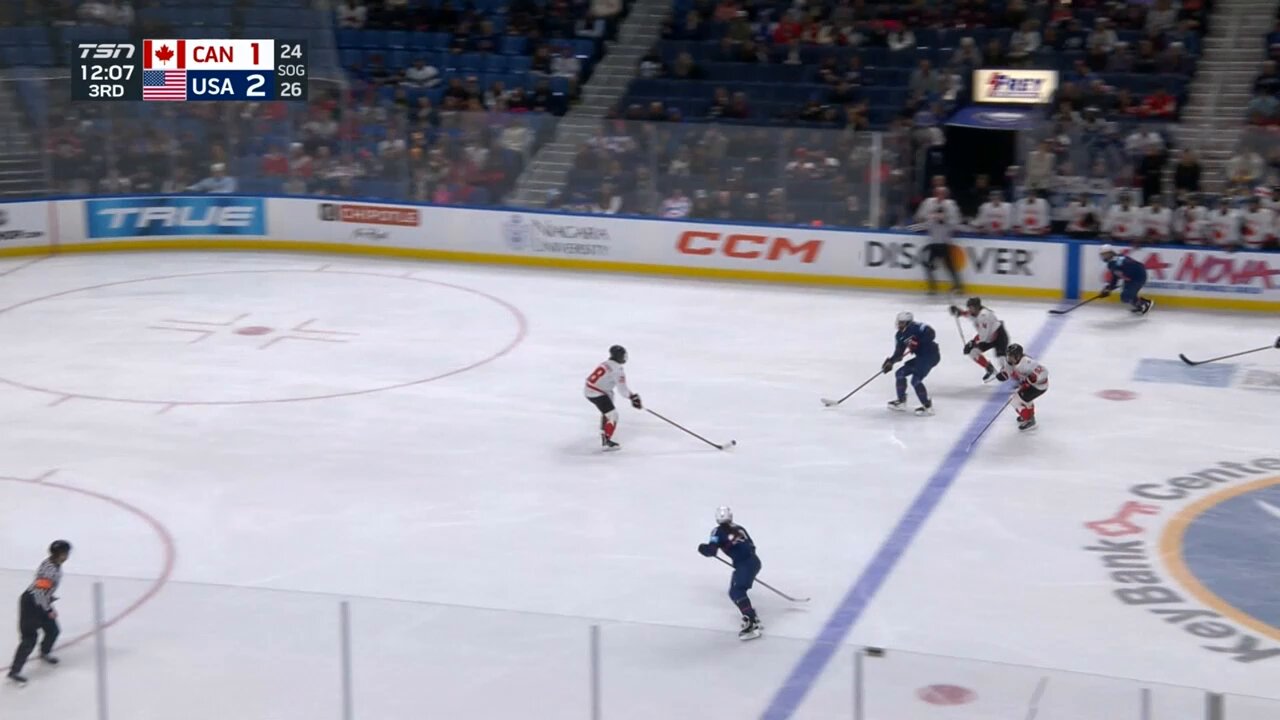
USA outscored Canada 10-2 in the opening two games of the 2025 Rivalry Series, the final preparation games for the national teams ahead of the 2026 Winter Olympics. While USA left with confidence and positive results from an offseason of preparation, Canada left with question marks looming over every part of their roster, and seemingly their own preparation over the last two months.
Most of Canada’s roster looked in need of ice time in game situations, including many of their typically most reliable players. They'll get that opportunity beginning November 21 when the puck drops on the PWHL season before returning for the final two Rivalry Series games in Edmonton on December 10 and December 13.
While Canada would have liked to exit the first leg of the Rivalry Series with a tally mark in the win column, the series was important to both nations for roster selections. USA looked nearly set, while Canada looked like a program in need of going back to the drawing board.
Canada's Standouts Few And Far Between
Canada's struggles against USA were pronounced, but there were a small group that showed well.
Up front, Emma Maltais asserted herself as a physical presence, although at moments she allowed herself to cross a line from effective physicality to plays that put Canada at risk. Still, she was one of the lone forwards who made her presence known and altered the game when she was on the ice.
Canada shied away from reuniting the top line that did the bulk of their production at the 2025 World Championships slotting Daryl Watts in place of Jennifer Gardiner alongside Marie-Philips Poulin and Laura Stacey. Stacey and Poulin each had moments where they threatened and Canadian fans can expect the duo's on-ice chemistry will hit its stride in Montreal. Watts, however, looked out of rhythm with the duo often putting pucks into spaces occupied only by Team USA. She was not the same electrifying player that kept pace with USA's top lines as she was last season. Watts will certainly be back at the top of her game once the PWHL season resumes, but Canada may look to make a lineup shift to find a more suitable line combination for the Toronto Sceptres' star.
There were moments in Canada’s games where players like Natalie Spooner and Sarah Fillier also showed glimpses of the international success they're known for, but there was little consistency up and down Canada’s roster.
This offseason Canada worked to get Hannah Miller's eligibility approved in time for the Olympics, but proceeded in the opening games of the Rivalry Series to bury her down their roster, including starting Miller as the team's 13th forward for the second game of the series. She could be an impact player, but not in the role she was given.
The real question up front for Canada is who will lose their spot when Emily Clark and Sarah Nurse are healthy and ready to compete. Both, along with defender Ella Shelton ,missed the opening games of the Rivalry Series due to injury. The cuts for Canada up front will almost certainly come from Julia Gosling, Danielle Serdachny, Kristin O’Neill, Caitlin Kraemer, or perhaps even Miller or Gardiner. It’s less about their capability to make an impact, and more about Canada’s unwillingness to try new looks up front when things weren’t working. In past competition, Canada's youth including Gosling and Serdachny have helped provide a spark, but they weren't able to do this same this week with limited ice and opportunity.
On the back end, Micah Zandee-Hart was one of the few bright spots for Canada as a positive impact player in both games. She put in reliable minutes for Canada, and will do so again this season as the captain and reigning time on ice leader for the New York Sirens. Canada struggled to consistently shut down high danger opportunities from USA, but Zandee-Hart was not among those offenders. Along with Claire Thompson, Zandee-Hart was Canada's most consistent blueliner. Renata Fast remains a lock, as does Erin Ambrose, and when Ella Shelton is healthy she'll join the blueline, but there are questions about who will fill in Canada's final spots. Fast had uncharacteristic struggles, including a giveaway and bad angle on Laila Edwards' goal in game two, which seemed like a harbinger for the issues across Canada's lineup.
Vancouver Goldeneyes defender Sophie Jaques may find herself on the outside looking in when it's all said and done as she struggled defensively in the opening games. Jaques had similar struggles in her first Rivalry Series two seasons ago before playing her way onto Team Canada last year as a member of the Minnesota Frost. Her spot with Canada will depend on what Hockey Canada intends to do with newcomer Kati Tabin, and longtime national team member Jocelyne Larocque. Despite question marks surrounding Larocque, it's hard to envision the Ottawa Charge defender not being a positive influence on the defensive struggles Canada incurred.
Finally, Eve Gascon and Kayle Osborne both played well in their first appearances with Canada in what appeared to be an open competition for Canada's third goalie role. Despite the lopsided end, Osborne was solid for Canada aside from a misplayed puck that resulted in USA's second goal of the game. Canada's continued refusal to bring Corinne Schroeder, who is arguably Canada's second best goaltender, into the fold could be the difference for the team between gold and silver.
USA Looks Locked In
There wasn't a member of Team USA who looked out of place in the opening games of the Rivalry Series. From the veteran impact of Hilary Knight, Alex Carpenter, Cayla Barnes, and Taylor Heise, to the play in net by Gwyneth Philips, and the youthful skill of Abbey Murphy, Caroline Harvey, and Laila Edwards, USA's play from top to bottom was solid.
Another veteran who looked poised for a signficant season was Hayley Scamurra, who was an impact player providing a physical presence, relentless puck pursuit, and helped turn possession in USA's favour. USA's depth deployment of Lacey Eden and Joy Dunne added a similar impact on and off the puck.
If there's one competition in USA's lineup remaining, it's their final blueline spot with Rory Guilday and Emma Peschel seemingly competing for the seventh defensive slot.
Neither Team Made A Change
Barring injury or a spectacular start to the PWHL season for a player, it would appear Canada and USA have made some decisions in their roster process. USA kept Casey O'Brien, Savannah Harmon, Gabbie Hughes, and Anna Wilgren out of the lineup in both games, which could signal they'll only enter the fold if an injury or issue arises. Similarly, Canada did not name Jocelyne Larocque or Brianne Jenner to their lineup, and kept Nicole Gosling in the stands for both games.
It would not be surprising to see Canada look at a handful of players including Larocque, Gosling, or even Ashton Bell to help stabilize their blueline. Up front, expect Canada to do internal shuffling unless a player makes a significant case in the first two weeks of the PWHL season.