


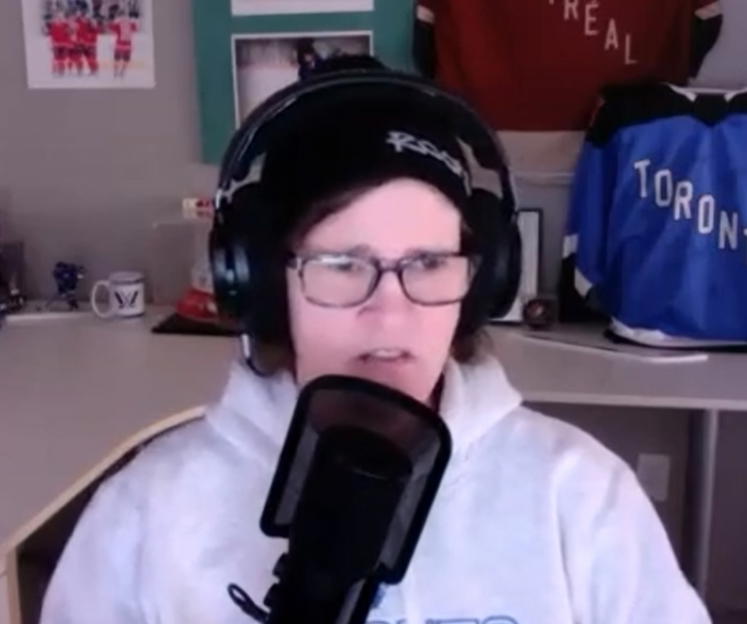

Skills coach Daniel Tkaczuk’s structured approach combines long-term development with immediate game needs for individual players and the team as a whole.
As they continue their post-Olympic push for the playoffs, the Toronto Sceptres have held several skill sessions along with their more typical practices. The driving force is skills coach Daniel Tkaczuk, a 1997 first-round pick of the Calgary Flames (sixth overall).
Behind the skill sessions is a layered, collaborative process — one that blends long-term planning with game-to-game adjustments, and increasingly, input from the players themselves.
There are edgework drills, puck touches, small-area plays — sometimes basic, sometimes highly specific — and not always obviously connected to the next game on the schedule.
But according to Tkaczuk, there is nothing random about it.
“It may look like chaos when it’s out there a little bit,” Tkaczuk said. “But it’s done with purpose.”
Tkaczuk describes the process as a balance between the “macro” and the “micro.”
“There’s an ongoing dialogue with the coaches… what we’re seeing on a game-in and game-out basis,” he said. "They give me space to say, what are you seeing? From there, it’s saying, ‘Okay, what do we want to build a practice around?’”
That can mean designing a session around recurring issues — breakout passes, puck support, stops and starts — or reinforcing habits that will matter later, even if they don’t immediately show up in the next game.
Because improvement at this level rarely works that way.
“I think that’s the hard part,” Tkaczuk said. “Everybody expects that you work on something and it becomes automatic the next game. But it’s not really that way.”
Instead, the focus is on building something more durable.
“We’re not just trying to prepare for the next game,” he said. “We’re trying to give these players skill sets and reading ability and context that are going to apply over a longer period of time through the season with the Sceptres and into their careers.”
Tkaczuk is in his second season with the Sceptres, after a mutual agreement with GM Gina Kingsbury and head coach Troy Ryan to try out the role and play it by ear. It's worked out well for everyone, and has led to Tkaczuk working with Hockey Canada as well.
Back to the basics — even at the top level
One of the more surprising elements of skills work, at least from the outside, is how often they return to fundamentals.
Skating mechanics. Edge control. Puck touches in tight areas.
For a roster filled with elite players, it can feel almost out of place — until you zoom out.
“That’s professional athletics,” Tkaczuk said. “You look across sports… even the best go back to fundamentals.”
He points to quarterbacks refining their dropbacks or mechanics as an example. Without those foundations, more complex systems break down. The same applies on the ice.
“They’re phenomenal athletes,” he said. “But they still have certain areas where they can improve.”
"Skating stride, footwork, shooting, those are meant to feel a certain way."
The same drill can look different depending on the player — whether it’s adjusting body positioning, edge usage, or simply building reps for someone still catching up to the league standard.
From structure to buy-in
What’s changed as he has worked with the team is how much ownership the players themselves have taken.
“Players are coming to me,” Tkaczuk said. “They’re asking, ‘Can you look at my wall play? Can you look at my skating? My shot? I’m getting chances, but I’m not scoring.’”
"They want to get better. Even the established ones, and that's driven by the leadership they have here, Renata Fast, Blayre Turnbull, Allie Munroe, Natalie Spooner. It makes it really easy to work in that space, and then the other players feed off that. These are some of the best players in the world, and they're willing to get better to help drive their own game and help the team game to help us be a better team as the Toronto Sceptres."
And for Tkaczuk (who spent several years coaching with the St. Louis Blues organization), the collaboration is where the real progress happens.
“There may be something I didn’t even think of that a player needs help with,” he said. “Then it’s trying to find a solution… a plan to make that player better.”
That work often happens outside of structured practice time — in small groups, before or after sessions, or during optional ice.
Even brief windows can be valuable.
“Those 10 to 15 minutes… that’s where players can get something really specific to them,” he said.
Translating skill into games
The payoff isn’t always immediate, but it is visible.
Sometimes it shows up in execution of a team concept — a cleaner entry, a more controlled breakout. Other times, it’s subtle — a player making a slightly better read or handling a puck under pressure.
For Tkaczuk, those moments are the most rewarding.
“You see things in games that you’ve worked on,” he said. “That’s the fun part.”
But just as important is preparing for what’s ahead. Different opponents demand different solutions. And there's a larger plan.
"During the course of the regular season, we're trying to do it midway through, but we feel pretty strongly when we put it into practice and anchor it with video and personal touches, because that is something that is likely to come up in the playoffs."
“To give them that confidence that we’re preparing them as best as we can,” he said.
It’s structured, but flexible. Focused on details, but with an eye toward the bigger picture.
“We’re trying to build something that lasts,” said Tkaczuk.
Follow C Benwell on X @gamedayhky on YouTube @gamedayhockey and on Instagram @gamedayhky