




Jun 7, 2025 6:46 PM
Updated Jun 7, 2025 7:08 PM
The Hockey Canada sexual assault trial enters a new stage on Monday.
After 25 days in court, which came after a mistrial, the defense and Crown completed their evidence.
Five players on Hockey Canada’s 2018 world junior team – Michael McLeod, Carter Hart, Alex Formenton, Dillon Dube and Cal Foote – each face a charge of sexual assault in connection with an incident in June 2018 where a woman alleges she was sexually assaulted in a London, Ont., hotel room. McLeod faces an additional charge of party to the offense. The five men pleaded not guilty to the charges.
Michael Traikos speaks with Anthony Fava about what lies ahead in the Hockey Canada sexual assault trial.More Videos
With the completion of the evidence portion, Monday will see both sides begin providing their submissions to the presiding judge, Justice Maria Carroccia.
But what does this process entail, and what can the public expect from this trial moving forward in terms of a verdict?
Let’s discuss that with help from Christopher Sherrin, a former lawyer and current associate dean of the Faculty of Law at Western University in London. Sherrin did not attend the trial but has followed it in the media and can speak on what could generally be expected in the submissions process and the time it takes to deliver a verdict.
What Are Submissions?
After both sides provide evidence, the Crown and defense can provide their arguments to the court to support their case, which can use the evidence gathered throughout the testimony process.
The submissions are basically the closing arguments of the trial. In the Hockey Canada trial, the arguments will be told to the judge after Carroccia discharged the jury on May 16.
Sherrin explained how the submissions process is a way to narrow the evidence that was introduced into a legitimate, law-based argument.
"A closing argument is basically an opportunity to marshal the law and the evidence that's been induced and the law that applies, and try to convince a judge that she should find these facts and draw these inferences and apply these legal principles and come to the conclusion that the lawyer is seeking,” Sherrin said.
Both sides must take what has been heard and convert that into an argument for their client. The Crown will try to convince the judge that the five men are guilty beyond a reasonable doubt, while the defense will try to prove the Crown has been unable to do that.
That process isn’t happening overnight in this case. After the defense completed its evidence early on June 2, the judge, Crown and defense decided that submissions would not begin until June 9.
This week-long break may seem like a bit much at first, but as Sherrin explained, a week's break is not out of the ordinary.
“In judge-alone trials, it's not uncommon,” Sherrin said. “It just gives the parties an opportunity to organize themselves, review the evidence and hopefully come with very, sort of tailored, succinct submissions.”
How A Judge-Alone Format Affects The Submissions Phase And The Time To Deliver A Verdict
When Carroccia discharged the first jury during the first week of the trial in late April, she declared a mistrial, selected a new jury and restarted the trial. After a juror alleged that the demeanor of Formenton’s defense lawyers was disrespectful to them, something the lawyers said was an unfortunate misinterpretation, the judge dismissed the second jury, and all parties decided to proceed judge-alone.
This shift does raise the question, however, of whether the submissions and verdict processes will be affected by the non-jury format.
If anything, the absence of a jury will make the process quicker and concise, Sherrin said.
“Not only do you no longer need to wait for a jury to file in and out, but also, you can expect that the submissions would be shorter and more to the point, and more business-like,” Sherrin said.
“Different advocates are going to have different styles, so it's a little hard to speak in generalities, but nonetheless, on the whole, a closing in a judge-alone trial is going to be more business-like partly because, as the advocate, you don’t need to explain to the judge basic legal principles, because the judge already knows them.”
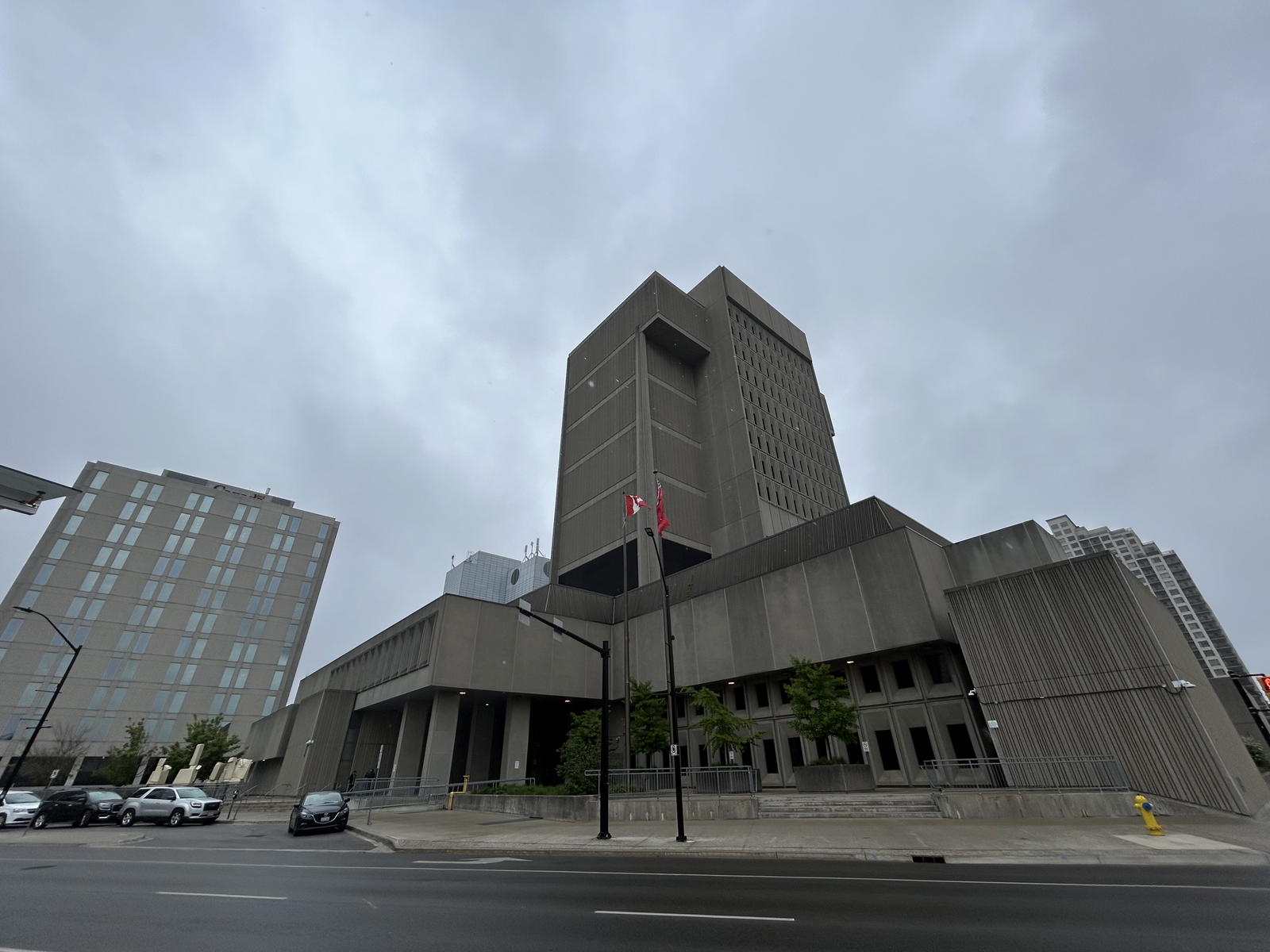 The Hockey Canada sexual assault trial is taking place at the Ontario Superior Court in London, Ont. (Anthony Fava)
 The time it takes to deliver a verdict, though, won’t be as quick and concise. Those without a legal background may think that once the submissions are done, Carroccia will return the same day with her verdict prepared. That is likely not the case, Sherrin said.
“Whether it'll be days, weeks or months, it could be any of the above,” Sherrin said. “If I were to guess, and it really would be a guess, I'd say least likely to be days, much more likely to be weeks and possibly months.”
As this trial enters the submissions period, we must be prepared for another break afterward. Regardless of the break, this trial is close to its conclusion, even if the verdict may take some additional time to render.
Get the latest news and trending stories by following The Hockey News on Google News and by subscribing to The Hockey News newsletter here. And share your thoughts by commenting below the article on THN.com.
1
Comments

Powered by RoundtableBuilt on infrastructure designed for real-time media. Learn more at RTB.io.© Roundtable 2026. By using this site you agree to the Terms of Use and Privacy Policy