


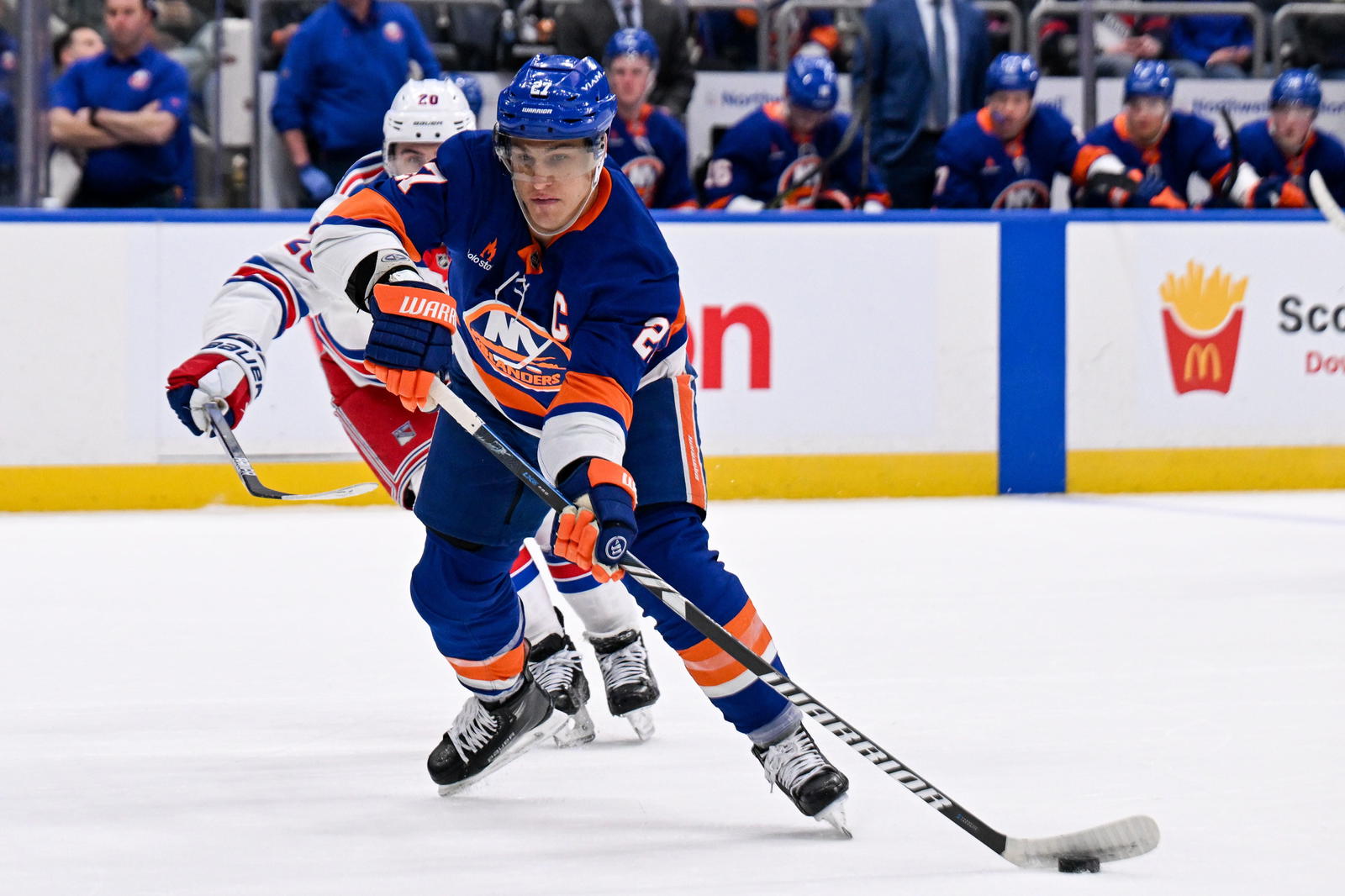
Eric Hartline-Imagn Images


Aug 18, 2025 2:50 PM
The 2024-25 season was anything but easy for New York Islanders forward Mathew Barzal.
The 28-year-old suffered an upper-body injury just 10 games in during an October 30 matchup against the Columbus Blue Jackets.
He returned in mid-December, but 20 games later, on February 1, a blocked shot against the Tampa Bay Lightning ended his season.
From start to finish, the year was defined by adversity.
Barzal opened the preseason alongside Anthony Duclair, the Islanders’ major offseason acquisition who brought much-needed speed to the lineup, and Bo Horvat, with the trio finding instant chemistry.
Then, just five games into the season, Duclair went down with a long-term injury, immediately shaking up the top line.
When Barzal returned, Duclair was still sidelined.
Just weeks after Duclair’s comeback, defenseman Noah Dobson went down with a lower-body injury, removing the team’s second-best puck mover and a central piece of Barzal’s power-play success.
Without those key linemates for much of the season, his power play production – 20, 19, and 25 points over the previous three seasons, respectively – dropped off sharply.
During his 20-game stretch between injuries, Barzal tallied 15 points (four goals, 11 assists), but only one point – an assist – came on the power play. He finished the season with just four points on the man advantage.
After the season, Barzal described the year as an endless uphill battle.
“It was long, felt like endless hours rehabbing,” Barzal said. “It puts things into perspective when you miss this much time, the little things like being around the boys and competing. It was tough,” Barzal said.
“I’m not sugarcoating [missing games], it was horrible mentally, but I’m fortunate to have a lot of great guys in this room and great staff, coaches, and management to lift my spirits.”
Ending the year with 20 points (six goals, 14 assists) in 30 games – a 16-goal, 55-point pace over 82 games – was frustrating, especially with the Islanders missing the playoffs for just the second time since 2019.
Still, the season wasn’t without positives, particularly in the defensive zone.
Moving from center to wing, Barzal posted career-bests at 5v5: a 57.42% shot share, 68.57% goals percentage, 61.61% expected goals percentage, and career lows in both goals against (1.37) and expected goals against (2.05) per 60 minutes, per Natural Stat Trick.
With Barzal on the ice, the Islanders consistently generated more – and higher quality – chances than they allowed, tilting the ice firmly in their favor when the British Columbia native was out there.
Final Verdict: B

When you miss 52 games due to injuries, it’s hard to earn a strong grade, but Barzal lands in a respectable range.
The Islanders’ struggles on the man advantage weren’t exclusive to their top forward, so he can’t receive all of the blame, as just about everyone posted disappointing totals.
Defensively, both the eye test and advanced metrics showed plenty to like, offering optimism that he can put all the pieces together to become a dynamic offensive threat while continuing to provide a positive defensive impact.
While Barzal has missed 76 regular-season games over the past two years, he has generally been healthy throughout his career, missing just 85 total regular-season games to injury since his rookie campaign in 2017-18.
Looking ahead to 2025-26, Barzal is expected to shift back to center after spending much of the past few seasons on Horvat’s wing.
While unconfirmed, Barzal will likely play alongside Anthony Duclair, with Simon Holmstrom and Kyle Palmieri the leading candidates to round out the line.
Barzal has logged just 63 minutes at 5v5 with Palmieri over the past two seasons, but in that limited time, they’ve outscored opponents 2-1 and outshot them 42-30.
His precise passing and elite skating could complement Palmieri’s ability to drive the net-front areas and generate shots from tight spaces.
If Holmstrom joins the line, Barzal would benefit from an elite shot paired with underrated agility and speed, as Holmstrom quietly set career highs in top skating speed (22.18 mph) and Speed Bursts Over 20 mph (76.5) last season, per NHL Edge.
Back at center, it will be worth watching how Barzal fares without Horvat on his wing. If he stays healthy, builds chemistry with his new linemates, and the Islanders’ power play takes a step forward, a 20-goal, 80-point season is within reach. More realistically, the Islanders can expect a 15-18 goal, 65-75 point center who still provides strong defensive value.
CoreNHL’s model projects Barzal to provide an estimated $8.1 million of value in 2025-26.

Latest Outlooks:

Stefen Rosner contributed to this report.
Stay updated with the most interesting Islanders stories, analysis, breaking news and more! Tap the star to add us to your favorites on Google News to never miss a story.
Comments

Powered by RoundtableBuilt on infrastructure designed for real-time media. Learn more at RTB.io.© Roundtable 2026. By using this site you agree to the Terms of Use and Privacy Policy