


Ryan Sun-Imagn Images


Aug 21, 2025 4:47 PM
When Rick Tocchet talks about coaching, it’s rarely about grand declarations or lofty promises. Instead, his words are grounded in the game itself — in video, practice reps, tactical tweaks, and the small adjustments that can unlock a player’s true ceiling.
That’s what makes his recent comments about two of the Philadelphia Flyers’ most dazzling offensive weapons, Matvei Michkov and Trevor Zegras, so telling. Tocchet is not in awe of their highlight-reel potential; he’s already dissecting how to maximize it, how to sand down the edges, and how to prepare them for the attention that comes with stardom.
The Tocchet Way
Rick Tocchet has never been one to sugarcoat things. As a player, he carved out a reputation as both a scorer and an enforcer, a rare hybrid who could pile up 40 goals in a season and still drop the gloves without hesitation.
As a coach, that edge remains, but it’s coupled with a pragmatism that has served him well: star players don’t need to be told who they are; they need to be given the tools to become the best versions of themselves.
When Tocchet talks about the Flyers’ two brightest offensive pieces — Matvei Michkov and Trevor Zegras — the balance in his approach becomes clear. He’s not dismissing their creative instincts, nor is he demanding they conform to a rigid mold. Instead, his words suggest a craftsman’s mindset: take the raw brilliance, smooth out the rough edges, and give it structure without dulling the shine.
Trevor Zegras: Turning Flash Into Foundation
Few players in the NHL divide opinion quite like Trevor Zegras. To some, he’s a marketing dream — a player who sees the game like an open canvas, always ready to try the daring, the viral, the impossible. To others, he’s raw, undisciplined, too risky to build around.
Tocchet, it seems, falls into neither camp.
"I said I've coached games where you have played center and I understand the reason why (the Ducks) put him on the wing,” Tocchet said to NHL.com. “I know his strengths. Through the neutral zone he can pass on his backhand and his forehand, he's got great hands, he can make a play. We know that.
“He said to me, I had some problems down low, some coverages and boxing out some people. And I said that's the stuff we'll work on with video and practice. We're going to work on that stuff."

This is Tocchet’s gift: clarity. He acknowledges the obvious — Zegras is an elite puck-mover, a magician through the neutral zone — while addressing the shortcomings without drama.
There’s no panic in his tone, no hint of “this guy can’t do it.” Instead, it’s a teacher’s reassurance: here are your strengths, here are your gaps, and here’s how we’ll fix them.
For Zegras, that’s critical. His offensive instincts don’t need to be reinvented; they need to be housed within a framework that doesn’t leave the Flyers vulnerable defensively. Tocchet’s plan — video, practice reps, repetition — isn’t glamorous, but it’s exactly the kind of structured support that could elevate Zegras from a mercurial talent to a consistent difference-maker.
Matvei Michkov: The Chess Player
If Zegras is a canvas, Michkov is a chessboard. Tocchet’s admiration for the 20-year-old Russian phenom borders on reverent.
"He thinks the game two steps ahead,” Tocchet said. “It's like chess. I think before he gets the puck, he knows what his options are. I think that's one of his special talents. His hands around the net, his ability to make those plays around the net, those are tough guys to find. Being able to score in tight or whether to thread a needle pass. To me, we can really help him out."
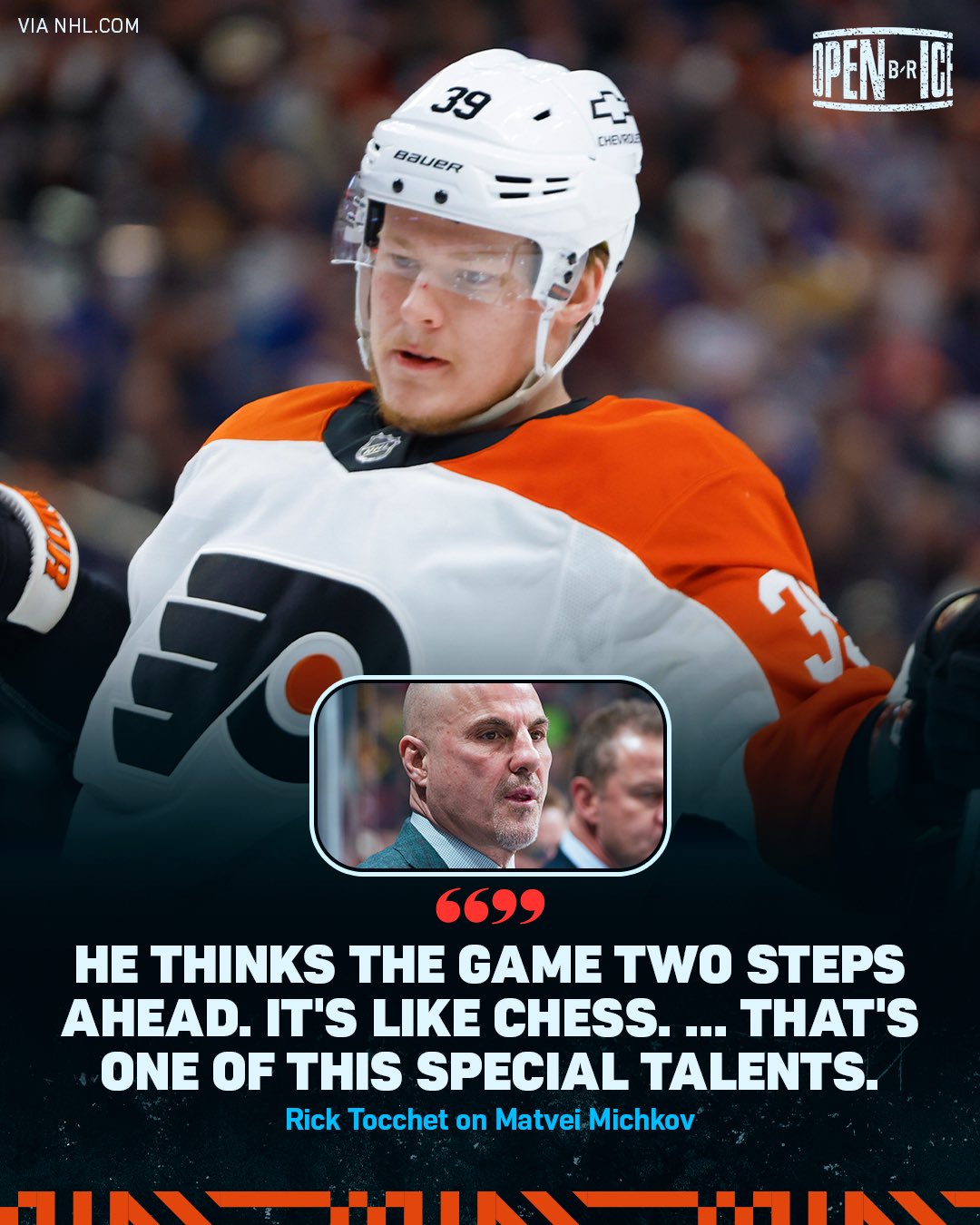
What separates Michkov isn’t just skill — plenty of players have hands or a shot. It’s the processing speed, the ability to manipulate defenders and see the game unfold before it actually does. That’s why Tocchet compares him to a chess master, always planning two or three moves ahead.
But Tocchet’s second point is just as important: adaptability.
"I really believe that for a guy like him, you know he's going to get special attention,” the head coach continued. “When players make a name for themselves, other teams scout them and other teams game plan against them, or they have certain defenses against them. So, we feel we can help him combat some of that stuff that teams will do against him, that we can help free him up a little bit in other areas."
Michkov’s brilliance will attract defensive schemes specifically designed to smother him. That’s the burden of stardom. Tocchet understands this and, more importantly, is already planning how to outmaneuver it — whether that means tweaking Michkov’s positioning, diversifying his entries, or building set plays to free him in the offensive zone.
Two Paths, One Philosophy
What makes this pairing so fascinating is how different they are. Zegras is improvisation; Michkov is calculation. One thrives on audacity, the other on foresight. And yet Tocchet seems uniquely suited to coach both.
He doesn’t come across as someone eager to clip their wings. Instead, his philosophy is more about guardrails — a way to let skill run wild inside a system that ensures it benefits the team, not just the highlight reel.
For Zegras, that means confronting defensive responsibilities head-on while still unleashing his artistry. For Michkov, it means preparing him for the chess match of NHL defenses, equipping him with the adaptability to stay unpredictable even when opponents scheme against him.
The Tocchet Factor
It’s worth remembering who Tocchet was as a player. He wasn’t born a star. He became one through relentless competitiveness, adaptability, and a willingness to learn. That’s why his words carry weight. He knows firsthand that skill is only the beginning; resilience, versatility, and structure are what carry careers.
And that’s the underlying theme here: Tocchet’s approach isn’t about dousing flair with water. It’s about making sure the fire burns clean and strong. He sees Zegras and Michkov not just as offensive weapons, but as pillars — players who can define the Flyers’ identity if nurtured the right way.
Philadelphia’s Next Offensive Era
The Flyers haven’t had two offensive players of this caliber in a long time. Zegras brings the electricity, the ability to draw fans out of their seats with a single rush. Michkov brings the inevitability, the sense that the puck is going to end up in the net because he’s already thought five steps ahead.
Under Tocchet, their challenge will be the same: turn brilliance into consistency. Make magic a nightly expectation, not just an occasional spark. And if Tocchet’s early comments are any indication, he’s ready to build the environment where that can happen.
The Flyers are betting big on flair, vision, and creativity to lead them forward. With Rick Tocchet at the helm, that flair might just be given the structure it needs to grow into something unstoppable.
Because for Zegras and Michkov, the artistry is already there. Tocchet’s job — and perhaps his greatest strength — will be making sure the masterpiece lasts.
4
Comments

Powered by RoundtableBuilt on infrastructure designed for real-time media. Learn more at RTB.io.© Roundtable 2026. By using this site you agree to the Terms of Use and Privacy Policy