




Jul 2, 2025 2:01 AM
Updated Jul 10, 2025 12:18 AM
The Hockey News has released its archive to all THN subscribers: 76 years of history, stories, and features.
Also, go to thn.com/free to subscribe.
Burns VS Karlsson - Dec. 4, 2017 – Vol. 71, Issue 08 - Tom Thompson
Analytics experts make a convincing argument that two of the most important statistics are puck possession and the shots on goal that are generated from it. Coaches make an equally compelling case that their primary objective is to minimize goals against by preventing the opposition from creating odd-man situations. Hockey people appear to agree the most important players in maintaining puck possession and generating odd-man rushes are offensive defensemen. They have become the NHL’s most valued commodity. No team can hope to compete for the Stanley Cup without an efficient puck-moving defense corps. And no blueline can be considered elite without a star member who serves as the focal point of his team’s attack.
The NHL is blessed with a number of first-rate offensive defensemen. Over the past two seasons combined, 15 blueliners have totalled between 91 and 119 points: Victor Hedman (119), Roman Josi (110), John Klingberg (107), Dustin Byfuglien (105), Kris Letang (101), Kevin Shattenkirk (100), Duncan Keith (96), Mark Giordano (95), Torey Krug (95), Drew Doughty (95), Oliver Ekman- Larsson (94), Shea Weber (93), Dougie Hamilton (93), Ryan Suter (91) and P.K. Subban (91).
Two others, however, stand well above the rest. Ottawa’s Erik Karlsson has 153 points and San Jose’s Brent Burns has 151. They’re definitely the top two offensive defensemen in hockey. But how do they generate such a high level of offense, and how do they compare to each other?
It is obvious that both are world-class skaters, puckhandlers, playmakers and shooters. Both have exceptional hockey sense and they’re competitive and durable. And both are gamblers who, at times, leave their teams vulnerable defensively. Their offensive totals over the past two years are remarkably similar. Each has had one “monster” playoff season where he carried his team on his back and each was a probable Conn Smythe Trophy winner had their team prevailed.
However, there are obvious differences between the two, which go far beyond the length of their facial hair. Karlsson came into the NHL as a slightly built Swede whose size and strength were questioned by pundits. He is now adequately sized at six-foot and 192 pounds, but his game is still based on intelligence and finesse. Burns came in as a power forward who was converted into a defenseman. He has become a physical behemoth at 6-foot-5 and 230 pounds who can combine power and polish. Let’s examine how each of them has developed their games to the level that is so far ahead of their NHL contemporaries.
Karlsson protects territory defensively. He closes the gap and leads with his stick. He wants you to dump the puck into the Ottawa zone. Once he retrieves the puck in the defensive zone, he is at times facing his own net. His ability to pivot quickly and immediately be in position to make a crisp pass brings back memories of Bobby Orr. Some of his long-distance “saucer” passes immediately after escaping the first forechecker defy belief. He advances the puck with his head up and can make any type of pass to either side when necessary. He doesn’t have great speed, but he has tremendous first-step acceleration and alertness when he wants to join the rush.

Of all his attributes, Karlsson’s play at the point may be his finest. His shot is above average, but he is as good as any point man I have seen in avoiding blocked shots. He either can get the shot directly on goal or shoot quickly off the backboard with the proper angle to create a scoring chance. His real forte at the point is drawing defenders out of position as he fakes shots and passes with his head up. He can then make a crisp, accurate pass to a teammate in shooting position. In pressure situations in the playoffs, I marveled at his poise and execution.
Burns has obviously enjoyed his role as a full-time defenseman the past two seasons. He has taken his game to another level, and his style is unique in the NHL. He is anything but a protector of territory defensively. He forces the play at all times in the neutral and defensive zones. On occasions, he even forechecks in the offensive zone. He sometimes leads with his long stick, often leads with his body and it’s not unusual for him to leave his feet and dive at the puck. His feet are always moving, and he’s attempting to force you all over the ice.
When Burns gets the puck in the defensive or neutral zone, his first instinct is to move with it. He has tremendous foot speed for a big man, and he uses it to beat forecheckers on a regular basis. He’s also very conscious of the “home run” pass. His passes usually are made at a high rate of speed. He is not looking to “saucer” the puck. Whether he is carrying the puck or joining the rush, he’s usually doing it at full throttle. He’s a force to contend with and draws many penalties because of it. From his position at the point, Burns keeps his head up and can make good passes to teammates in shooting position. However, his priority is to look for a shot on goal. If Weber is the gold standard for slapshots, Burns is without peer for his wrist shots. Standing still at either point or “dancing” laterally from the right point towards the middle of the ice, Burns is the only point shooter who can consistently beat unobstructed goalies with his wrister. To lead the NHL in shots on goal, as he did last season with 320, while playing defense is a remarkable achievement.
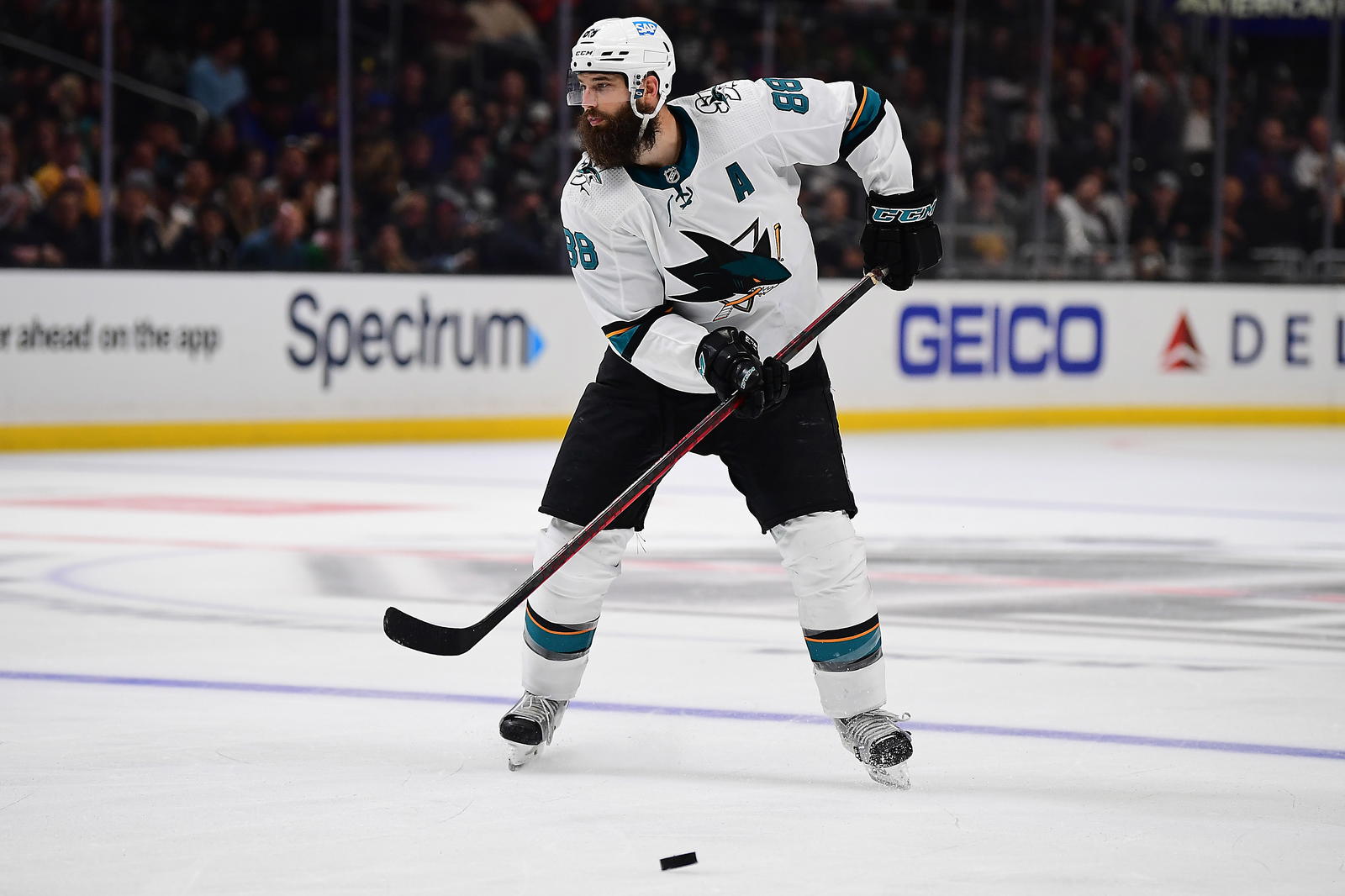
What conclusions can be drawn from these descriptions? The first is easy. Karlsson and Burns are indisputably the two best offensive blueliners in the NHL. The only other D-men who have shown the potential to come close are Hedman, if he continues to develop, and Letang, if he can get back to his pre-injury form. Karlsson and Burns get similar results from different styles. The distribution of their points is different. Karlsson has 33 goals and 120 assists the past two seasons. Burns has 56 goals and 95 assists. In their big playoff seasons, Karlsson had two goals and 16 assists and Burns, playing in five more games, had seven goals and 17 assists. Both have had a high percentage of points on the power play. Both take risks defensively. Burns can get burned when he leaves his feet, and he’s known for heading up ice prematurely. Karlsson is prone to “fencing” with his stick, making him vulnerable in his own zone.
Karlsson is nowhere near the physical specimen that Burns is. His major attributes are hockey sense, playmaking and poise with the puck. Burns is at the elite level in all of those categories, but, in each case, Karlsson is better. Karlsson’s defensive shortcomings are not as dramatic. He is less likely to leave his feet and miss the puck or be caught forechecking and leave a forward to play defense. His reliance on finesse and playmaking make him a more consistent offensive producer, and he makes better use of his teammates than Burns.
Both of these players are at the top of the pyramid in the most-valuable-job category in the NHL. After generational players Sidney Crosby and Connor McDavid, there is a valid argument that Karlsson and Burns bring as much value to their team as any other player in the NHL at the present time. Either one can alone improve the performance of their team significantly. Burns, 32, brings a package that is unique in the NHL. Karlsson is younger at 27, has been an elite defenseman longer and he may involve a little less risk for the same results. I look at both of their faces in the NHL Official Guide & Record Book and my decision is Erik Karlsson over Brent Burns – but just by a whisker.


1
Comments

Powered by RoundtableBuilt on infrastructure designed for real-time media. Learn more at RTB.io.© Roundtable 2026. By using this site you agree to the Terms of Use and Privacy Policy