




Aug 7, 2025 5:14 PM
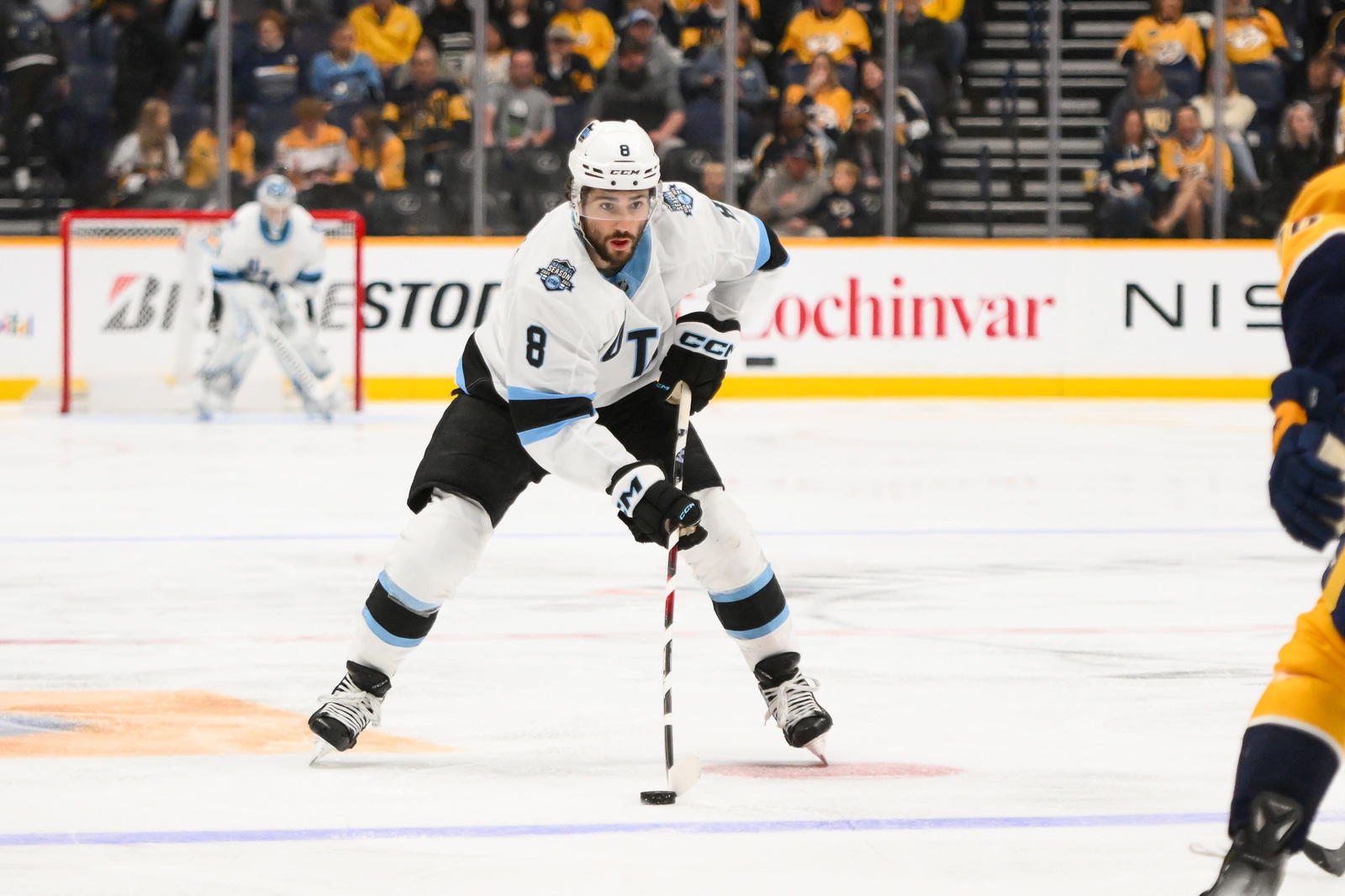
This post from The Hockey News Archive looks at just how bad things were in Arizona years before they eventually moved to Utah and became the Utah Mammoth.
The Hockey News has released its archive to all THN subscribers: 76 years of history, stories, and features.
Subscribe now to view the full THN Archives here
Also, go to thn.com/free to subscribe.
A Slow Death In The Desert - Dec. 29, 2008 - Vol. 62, Issue 13 – Adam Proteau
DEPENDING WHO IS TALKING about them, the Phoenix Coyotes are either (a) in the direst of financial straits, hemorrhaging money like a North American auto company and on the verge of either bankruptcy, relocation, or both; or (b) cautiously tiptoeing their way through a corporate minefield laid out by the unprecedented global economic crisis, battening down all organizational hatches and awaiting rewards for shrewd planning.
Even if the truth lies between those two mindsets, the prospect of a longterm future for the Coyotes in Arizona is unworthy of a weighty wager.
According to a report in the Globe and Mail, Coyotes owner Jerry Moyes is foundering under the burden of massive, multi-organizational debt – and annual NHL-related losses totaling between $25-35 million each season – and may have no choice but to relinquish control of the team, whether he has found a buyer for it or not.
IN PHOENIX, YOU CAN SCORE FOUR TICKETS, FOUR DRINKS AND FOUR HOT DOGS FOR LESS THAN $92
But it isn’t as if the Coyotes are the only NHL team hurting for money. Multiple NHL sources told The Hockey News that, in addition to Phoenix, franchises in Atlanta, Florida, Nashville, Long Island, N.Y., New Jersey and Carolina each will lose at least $5 million this season, barring lengthy and lucrative playoff runs.
“And that’s before the bad (economic) news really hits the fan,” one high-ranking league executive, who requested anonymity, told THN. “I don’t think (the league) believes the sky is falling, but to say there’s a fairly palpable sense of fear out there would not be an exaggeration.”
In fact, in the majority of NHL marketplaces, disposable income projections aren’t very encouraging.
Thanks to the implosion of the automobile industry, the mighty Detroit Red Wings have to sell $9 tickets to fill the upper regions of their arena – a task that, prior to the 2004-05 lockout, was a foregone conclusion to many.
In Columbus, the Blue Jackets’ ‘$10 Super Value Plan’ permits fans to buy two tickets for games against prime time teams such as the Red Wings, San Jose Sharks and Chicago Blackhawks for $5 apiece – less than half of the price of a standard adult movie admission.

In Phoenix, you can score four tickets, four drinks and four hot dogs – and submit to the usual Ticketmaster gouging – for less than $92. To get a ticket for a Florida Panthers game this season, you don’t need any money at all – as part of a team promotion, a driver’s license will do the trick.
All in all, it amounts to a league retrenching on price points and product valuations. And for one veteran sports marketer, that approach doesn’t amount to much.
“The whole world is changing,” said Dr. William Sutton, former NBA vice-president for team marketing and business operations, and now associate director of the University of Central Florida’s DeVos sport business management program. “What you’ve got is an economy right now where consumers are afraid. The only way you’re going to convince the consumer to act is to convince them that this is such a good deal or opportunity, you shouldn’t pass it up, regardless of the economic climate.
“It’s a value equation and you’re trying to figure out a way that’s going to tip the equation in your favor,” said Sutton, who also has worked as a consultant for the NHL and Major League Baseball. “But…you have to be smart enough to not be undermining your season ticketholders, by making deals for new buyers so good that you’re hurting the season ticketholder who was paying likely a lot more money for the same type of seats.
“At the same time, you also have to restructure your business in a way that, when the economy does come back, you haven’t put yourself in such a hole (in terms of low ticket prices) that you can’t crawl out.”
Sutton doesn’t see much worth in the devalued ticket approach many NHL teams have turned to of late.
“I’m not a big fan of that philosophy,” Sutton said. “The NHL is made up of passionate fans who want to go to every game they can and you’re going to put people beside them in the stands who haven’t paid nearly as much money for their seat as longtime hardcore fans have? That doesn’t make any sense.
“And there’s no brand loyalty (for devalued tickets); if for whatever reason I can’t make it out to a game where I’m only spending $5 for a ticket, that only leaves me $5 out of pocket, so what do I really care?”
In defense of his Coyotes, team president and COO Doug Moss points to increased interest in Phoenix’s on-ice product as proof the organization is on the proper path to eventual stability and profit.
“We have to date sold 77,000 more tickets this year than we did last year at this time,” Moss said in late November. “Am I happy with where we are? No, not at all. We could certainly sell more tickets. We’re not happy with where our base is, but it’s trending in the right direction.”
Moss believes prolonged mismanagement in Phoenix’s hockey operations department and the team’s relatively recent entry into the Arizona marketplace make the Yotes an easy and unfair target.
“Here’s the reality – the Coyotes haven’t made the playoffs in five years,” Moss said. “If you don’t win, if you don’t make the playoffs five or six years in a row, it’s going to wear very, very thin on your fan base.
“What it comes down to is the ability to provide hope and the credibility of your organization. I mean, we didn’t make the playoffs last year, but we still saw an increase in ticket sales this season. That’s because people know we’re staying with our young players and they trust in the plan (GM) Don (Maloney) and (coach) Wayne (Gretzky) have put together and that we’re going to be better.”
Unfortunately, time and history may not be on the Coyotes’ side.
“It wouldn’t be hyperbole if I told you Phoenix is front and center among the NHL’s top concerns these days,” said one league executive. “With the other operational issues (Coyotes owner) Jerry Moyes will be facing in his other businesses, I just don’t see how he holds onto that club…the only question to answer will be, does he manage to find a taker – I don’t think it matters whether the (new owner) would keep the team in Phoenix – or does he throw up his hands and turn it over to the league to run.
“If I had to bet on it, I’d bet against (Moyes) finding (a buyer). Too many ‘cons’ and not enough ‘pros’ to make it work in Phoenix.”
As the NHL’s board of governors learned in Palm Beach in early December, the troubles in Phoenix may be only the beginning.
“When you see or hear some of the projections being made – not just by (the NHL), but by other sports leagues and entertainment companies – there’s not a chance the NHL comes out the other side without some serious bumps and dents,” one source said. “That may mean moving a franchise or two. Or more. But nobody knows – and for now, I don’t think people want to know what the future holds, because they know whatever the case, it’s not going to be positive.”


1
Comments

Powered by RoundtableBuilt on infrastructure designed for real-time media. Learn more at RTB.io.© Roundtable 2026. By using this site you agree to the Terms of Use and Privacy Policy