


Jun 23, 2025 4:05 PM
Updated Jun 28, 2025 2:37 AM
The 2025 NHL draft cycle nears the end, and it’s been a unique class.
We don’t have a generational player on the level of Connor McDavid. There isn’t a franchise-changing player like Auston Matthews. That doesn’t mean there aren’t some high-end, quality players who will get drafted on June 27 and 28.
This class is closer to the 2021 and 2017 NHL drafts. Those classes had a bit of murkiness near the top, and each produced talented players from outside the top three who have become NHL stars and award winners.
This year’s draft will produce some effective talent and fan favorites. If you want a further explanation of the method to the madness and what goes into my evaluation process, check out the explainer at the start of my pre-world juniors rankings, and check out a recent piece on the lessons I’ve learned from recent drafts.
Once again, thank you for tracking the NHL draft with me. It’s a massive task, and I appreciate all of the support (as well as the kind and always constructive criticism) throughout the year. As always, feel free to comment below or reach out on X, where you can find me @TheTonyFerrari if you have any questions or comments on the rankings.
Without further ado, let’s get to the final cut of my 2025 NHL draft rankings.
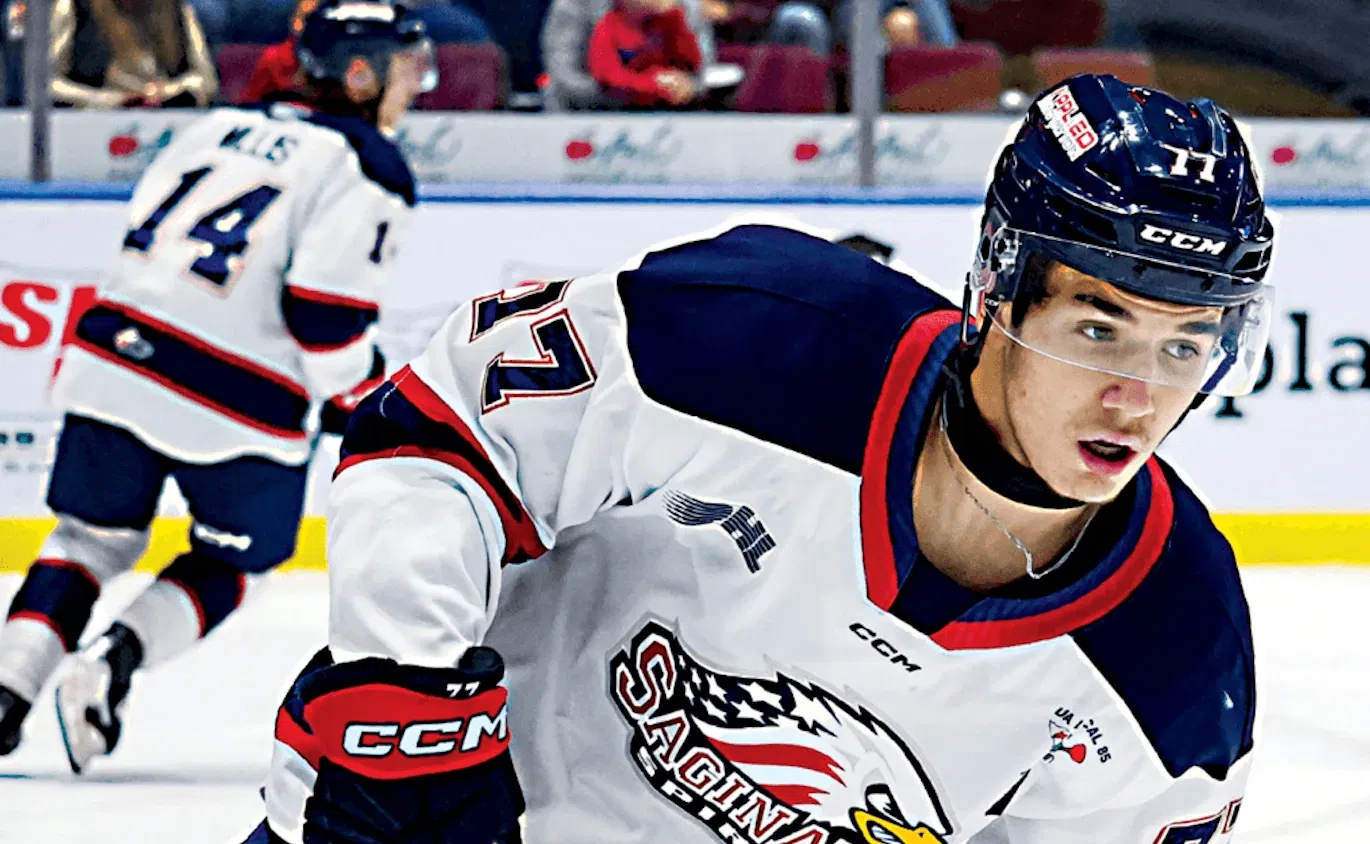
1. Michael Misa, C, Saginaw (OHL), 6-foot-1, 182 pounds
In a true 1A and 1B situation, Misa winds up at No. 1 on my board as he has all season long.
The CHL’s leading scorer and second-leading goal-scorer was simply unstoppable until he was injured in the first round of the playoffs for Saginaw. Misa is one of the most intelligent and tactical players in the draft. His ability to read plays and exploit holes in the defensive coverage or create small advantages for himself in battles is impressive. He’s a refined center who doesn’t always show the upper-echelon skill, but when he needs to bust it out, he is more than capable.
 Michael Misa (Natalie Shaver/OHL Images)
Misa’s 62 goals and 134 points are historic numbers for a draft-eligible player in the OHL. He is a well-rounded center who should translate down the middle at the next level. He has some experience on the wing, helping win the Memorial Cup as a left winger last year, but his game seemed fully unlocked as a pivot. He diversified his offensive game as a shooter and playmaker when he got more space at center. Misa could be a legitimate top-line pivot.
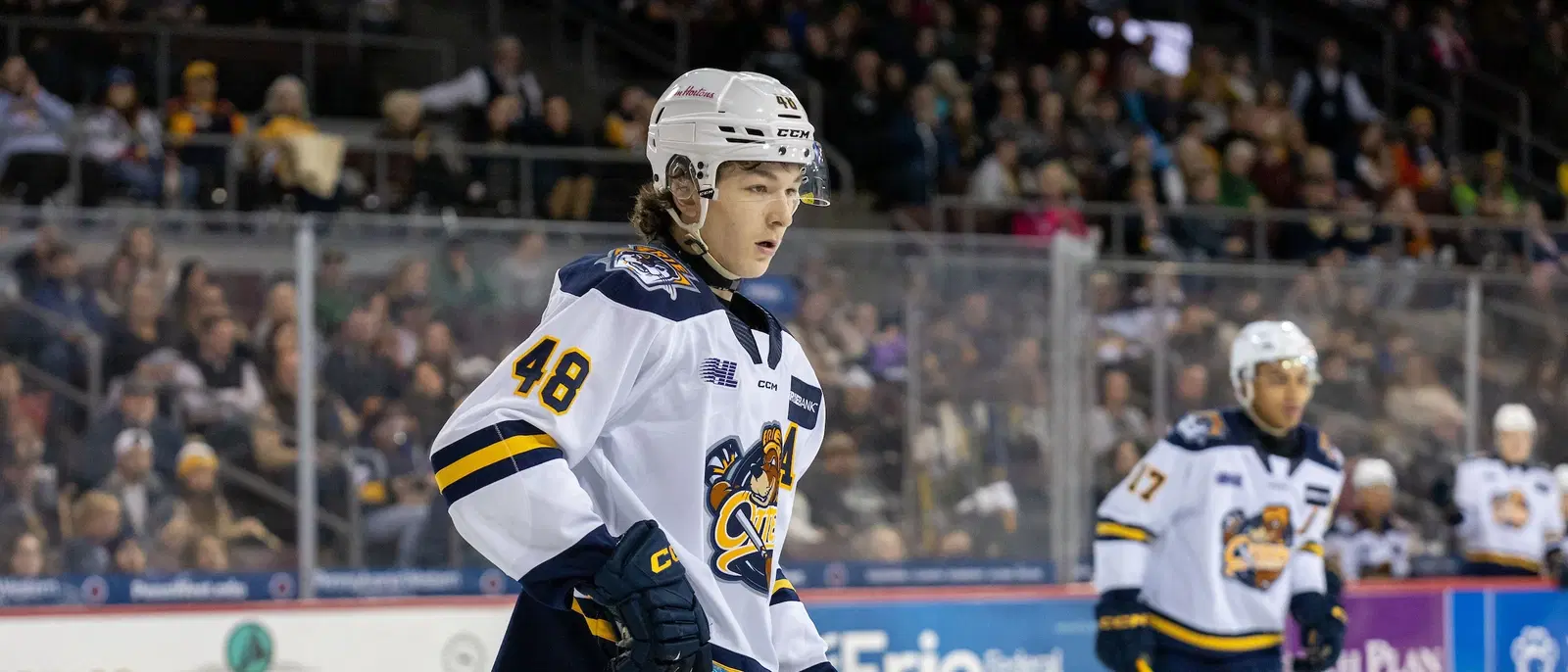
2. Matthew Schaefer, D, Erie (OHL), 6-foot-2, 186 pounds
Although he’s sitting at No. 2 here, Schaefer is a true first-overall-quality defender.
Since 2007, only three defenders have gone first overall, with Owen Power, Rasmus Dahlin and Aaron Ekblad accomplishing the feat. Among those players, Schaefer is ahead of where Power was when he was drafted, and although he’s a vastly different player than Ekblad, he would likely slot ahead of him as well. Schaefer has the potential to be a legitimate top-pair defender and impact the game in all three zones, with his transition ability being the most underrated part of his game.
Schaefer is a skilled stickhandler and shifty offensive playmaker who leverages his high-end four-way mobility to evade pressure and find lanes to attack as a skater or passer. He is an excellent shooter for a blueliner, getting to dangerous areas in the slot or on the backside of the play, inside the dots. Defensively, Schaefer isn’t an overly physical presence, but he is excellent at cutting down play with his feet and stick and turning things around quickly.
Schaefer has deserved all of the hype he’s received despite not playing much this season due to injury.
3. James Hagens, C, Boston College (NCAA), 5-foot-10, 186 pounds
Coming into the season, Hagens was at the head of the class, but with a couple of players improving their stock and Hagens showing some growing pains in college, he’s fallen slightly.
Hagens is in a tier of his own, not quite with Misa and Schaefer but ahead of the next group of players.
He didn’t have a bad season in the NCAA by any means, putting up 37 points in 37 games while centering arguably the best line in the country. The issue is that recent high-end NCAA players, such as Adam Fantilli and Macklin Celebrini, were Hobey Baker winners.
Hagens shows high-level hands and escapability as a supremely skilled playmaker, but he developed his physicality the most this year. He will never throw big hits, but engaging and winning more puck battles has been a good sign.
Hagens plays a very slick offensive game that relies on his elite vision and quick thinking. If he were to go first overall, it wouldn’t be entirely insane because he has a boatload of potential.
4. Victor Eklund, LW, Djurgarden (Swe.2), 5-foot-11, 169 pounds
The buzzsaw that is Victor Eklund could be one of the steals of the NHL draft. His season in the Allsvenskan compares to those of William Nylander and David Pastrnak statistically.
Eklund is one of the most exciting players to watch in this class because he will never cheat his team of an honest effort. Eklund leveraged his quickness and skill in board battles, getting under bigger, stronger defenders and coming out with the puck or finding a way to get it to a teammate amid the mess.
Eklund is a shooter who gets to the slot and finds himself routinely in the home plate area. He works off the wall and attacks inside, putting defenders on their heels. His work ethic is through the roof, and he finds a way to play his high-paced game with excellent puckhandling and skill.
When playing alongside fellow draft prospect Anton Frondell, Eklund drove play and consistently set his linemate up for success as a playmaker. Some will complain that his size is an issue, but the difference between 5-foot-11 and six-foot (the arbitrary line that scouts say is good) is negligible. Eklund plays bigger than he is.
5. Porter Martone, RW, Brampton (OHL), 6-foot-3, 204 pounds
In most years, when a draft-eligible player puts up nearly 100 points in the OHL, plays at the World Junior Championship and skates in the men’s World Championship, that player is considered one of the best in the class. That’s exactly the case with Martone.
The Steelheads' captain has become one of the best power playmakers we’ve seen come through the draft in years. While most power forwards focus on driving the net and attacking defenders with force, Martone looks to draw pressure and then pass out of it as lanes open.
Martone’s pace is the most glaring issue, but he understands he must address that area of his game. Martone brings so many of the things that NHL scouts love, from the intangibles to the physical play. His playmaking is the base of his game, but he has a very heavy shot and should be a legitimate dual threat at the next level.
6. Anton Frondell, C, Djurgarden (Swe.2), 6-foot-1, 204 pounds
After dealing with fluky and unfortunate injuries that bled into the start of this season, Frondell was finally able to show exactly what he’s capable of this season at Sweden’s second level. Although he only played 29 games in the Allsvenskan, he put up 25 points. On a per-game basis, only Elias Pettersson had a higher scoring rate in their draft year.
Frondell plays a pro-style game already. He forechecks hard, gets to the net and always seems to be on the right side of the puck in board battles. His shot is a legitimate weapon from all over the ice, and his passing is efficient in all three zones. He’s developing into a very steady 200-foot forward as well.
Frondell’s biggest question is about just how high in the lineup he winds up. If the injuries over the last couple of years impact his development, he may wind up as a solid middle-six winger. If he can stay healthy and stay on the path that we saw him on at the end of the regular season, Frondell has a chance to be a very good second-line center.
7. Lynden Lakovic, LW, Moose Jaw (WHL), 6-foot-4, 200 pounds
At his size, you’d want to see Lakovic assert himself physically, but so much of his game is enticing. He is an excellent skater who uses his length to power himself around the ice, but he pairs that with the precise and quick footwork that allows him to work the small-area game as well. He uses his length and skill to deke either outstretched from his body or pulled in tight to his feet.
Lakovic consistently looks to get the puck into dangerous areas, understanding that sometimes the best opportunity is creating a shot for a teammate. He shoots for weak points, looking to exploit gaps in goaltenders' coverage above the pad or by their ear when down in the butterfly. Lakovic is a dual-threat scorer who can fit in with various linemates.
8. Jackson Smith, D, Tri-City (WHL), 6-foot-4, 199 pounds
The highly mobile and confident two-way defender recently committed to Penn State for next season, where he can work on finding more consistency in his game.
Smith is arguably the best transition defender in the class, shutting things down with his skating and stick work while closing out physically when needed. Smith is a more than capable puck-mover who displays some creativity in his evasions of forecheckers. He uses head fakes and shimmys to evade pressure.
Smith’s offensive game flashes some impressive passing and even some willingness to attack downhill. He has an excellent shot and doesn’t force himself to fire slapshots into traffic. Smith feathers wristers and snap shots accurately through the mess in front, hoping to create havoc in tight. Smith has plenty of potential outcomes, as he has the tools to become a very well-rounded defender.
9. Carter Bear, C/LW, Everett (WHL), Six-foot, 179 pounds
Bear is a dog on a bone and is one of the most relentless players in the draft class. He plays with an intensity most teams covet when the playoffs roll around, and he does so in every aspect of his game.
Bear’s style of play can be best described as controlled chaos. He wreaks havoc on opposing defenders and loves to create 1-on-1 situations, knowing he will, at the very least, outwork the opposing player.
Bear plays bigger than he is already, so as he fills out, he will be even more to handle. Bear has shown some nice skill in open ice, but he’s at his best when challenging defenders head-on, powering through them or attacking the inside and using a burst of speed to get by them. Bear is all around the net, looking to redirect pucks or clean up garbage around the crease, but he possesses a quality shot and gets to the slot to unload it. He may not be ‘The Guy’ on a line, but he allows ‘The Guy’ to play to their strengths and elevates the tempo.
10. Jake O'Brien, C, Brantford (OHL), 6-foot-2, 177 pounds
The enticing part about O’Brien is that although he is already arguably the best playmaking center in the draft, there looks to be so much more room for growth as he physically matures. O’Brien sees the ice in a way unlike just about any player in the draft class. His touch as a passer is wildly impressive, and he became a much more confident shooter this season. O’Brien simply understands how to advance play.
What helped take O’Brien to the next level was that he became more deceptive and tactical this year. He used his reach to pass around players, or he would fake a shot before slap passing the puck to the back door. He forced defenders to open lanes for him to make them pay. Having just turned 18 days ago, he is on the younger side of the class as well, so when he fills out, he could be even more of a handful.
11. Braeden Cootes, C, Seattle (WHL), Six-foot, 186 pounds
Cootes captained the Thunderbirds as they went through a step-back year, and he put together quite a solid season.
Cootes’ game is built on his endless effort and relentless motor. He forechecks as hard as any draft-eligible player, pestering defenders with his stick and some physicality at times. Cootes lacks the upper-echelon skill that some others in the draft possess, but it hasn't ever stopped him from elevating his game in big moments.
When his WHL season ended, he joined Canada’s U-18 team, captaining them to a gold medal and leading the team in scoring. Cootes plays a well-rounded, complete game. It’s not always beautiful or dazzling, but he’s such an effective and efficient player that it’s hard to ignore him.
12. Cullen Potter, C/LW, Arizona State Univ. (NCAA), 5-foot-10, 172 pounds
Although some have concerns about Potter’s size, the speed at which Potter plays the game and the motor he has as an offensive driver leave me satisfied that it won’t be an issue. Potter leverages his speed and agility to open up lanes. Potter tended to skate himself into trouble at times, but it was often because he was just operating at a higher pace than his linemates and lacked support. With the puck, he attacks up ice and consistently looks to create some opportunity.
Potter was fantastic for Arizona State for much of the year, putting up 13 goals and 22 points as a freshman playing on a team that doesn’t have much true high-end talent.
Potter and Hagens were freshmen this season, with Hagens being the more highly touted player. Potter scored more goals playing with guys who just hope to have pro hockey careers in any league, while Hagens played between two of the most highly touted NHL prospects in the NCAA, Ryan Leonard and Gabe Perreault. Potter could have reasonably been more than a point-per-game player in a better situation.
13. Radim Mrtka, D, Seattle (WHL), 6-foot-6, 218 pounds
NHL teams love a big defender, and Mrtka is exactly that. He uses his size effectively in various ways, not just to throw big hits. Mrtka has the requisite puck skill to evade traffic, but his ability to absorb contact and handle pressure makes him valuable. Some consistency issues creep up from time to time, and his decision-making on breakout passes can be questionable, but there is a package that could be something quite solid.
Offensively, Mrtka uses his mobility to open lanes and find teammates. Every once in a while, he can jump up and engage, but he’s at his best when playing simple hockey and making plays to his teammates. He has a good shot from the point, but he’s likely not going to be an impact offensive player; rather, he’ll be a capable facilitator from the blueline.
14. Bill Zonnon, LW, Rouyn-Noranda (QMJHL), 6-foot-2, 185 pounds
The QMJHL has struggled to produce top-end talent because, although the players coming out of the league are highly skilled, they lack pace and functional physicality. Although that is still true for the league, Bill Zonnon breaks the mold and shows that playing with NHL pro-style attributes can breed success in the ‘Q.’ Zonnon is among the hardest-working players in the class, relentlessly attacking play at both ends of the ice.
Zonnon is a skilled playmaker who draws defenders in and then plays the puck through their vacated space. His skating is a little wonky-looking, but he never fails to get to his spot, and he wins races to the puck with regularity. Zonnon may not be a high-end producer, but he makes a team vastly better because of the qualities that he brings every shift.
15. Caleb Desnoyers, C, Moncton (QMJHL), 6-foot-1, 182 pounds
Admittedly, I am among the lowest on Desnoyers, but I have come up from where I was earlier in the year. This could be my biggest miss of the draft, but I can’t argue with what I have seen over numerous viewings from the QMJHL’s regular season and playoffs, the CHL-USA Prospects Challenge, the Memorial Cup and even the Hlinka. Desnoyers is a very good player who could end up being a very steady, complementary center who fits in perfectly with a play-driving winger.
Desnoyers is smart and plays very solid positional hockey, ensuring that he can always exploit mistakes or take advantage of opportunities that fall into his lap. His passing is the strong point of his offensive game, and he could be quite the playmaker on the power play.
I have qualms about his pace of play and ability to create something from nothing. On many occasions, Desnoyers would have the time and space to allow play to come to him and then make the next move. He wasn’t the one dictating play at times. That said, Desnoyers is a very safe bet to be a quality NHLer.
16. Eric Nilson, C, Djurgarden Jr. (Swe.), Six-foot, 166 pounds
Playing primarily at the Swedish junior level, Nilson impressed throughout the year, which had him go from a relative unknown to as high as No. 6 on NHL Central Scouting’s list of international skaters. Nilson was an early favorite of mine this year because of his intelligence, committed two-way effort and how it seemed like everything on the ice flowed through him. Nilson used his passing to be a constant creator. I would love to see him develop his shot a bit more, but he has the framework to be a very solid middle-six center.
17. Blake Fiddler, D, Edmonton (WHL), 6-foot-4, 220 pounds
A defensive defenseman often throws big hits, kills plays and relies on their partner to move the puck or create offensively. This leaves them in a tough position when the puck gets to them in the offensive zone or when an opposing team keys in on their puck-moving partner on the breakout. It’s a flaw in the ‘defensive blueliner’ archetype that we’ve all come to know.
Fiddler breaks through that by possessing very good mobility, precise and intelligent passing and the ability to start plays himself to help give his partner and the forwards on the ice more room to operate. Fiddler is everything you want from a modern-day defense-first blueliner.
18. Roger McQueen, C, Brandon (WHL), 6-foot-5, 198 pounds
McQueen is a big, physical, skilled forward who had a statement game to open the season, scoring four goals and putting the draft world on notice.
He has nice hands and a great shot. He can impose himself on opponents physically, with or without the puck. But I have been lower on McQueen all season long, even prior to his injury, because of his pace and mobility. You can usually get away with lacking pace if you’re a good skater, and you can get away with some skating issues if you play with pace. You rarely get away with both.
McQueen has plenty of upside, but he must be more than a big, physical shooter. He must diversify his offensive game and up the tempo. Getting a bit quicker will help, but it won’t solve the issue. Pairing that with a back injury, specifically a pars fracture, could hamper his development. McQueen is a risk, but he may just be worth it.
19. Michal Svrcek, C, Brynas Jr. (Swe.), 5-foot-10, 189 pounds
Although on the smaller side, Svrcek quickly became one of my favorite players in the 2025 draft class. His speed, tenacity and playmaking were all fantastic at the junior level, but what really sold me was his play in the Swedish League.
Against men, Svrcek was versatile in his role, grinding and forechecking hard on every shift and providing his team with a burst of energy every time he stepped on the ice. He is involved in all three zones and finds a way to make a positive impact everywhere. Svrcek needs to get stronger and continue to prove that he can hang against men, but the building blocks are all there.
20. Cameron Schmidt, RW, Vancouver (WHL), 5-foot-8, 160 pounds
Schmidt is small, and he can sometimes get pushed around, but he has one of the best shots in the draft class, plays with speed and isn’t afraid to get involved in the play anywhere on the ice. Schmidt won’t back down in post-whistle scrums or when he’s hit by a bigger player. Instead, he will go right back at them. Schmidt elevates the pace of the game whenever he has the puck. He must get more involved defensively because when he does, he makes very good plays.
21. Logan Hensler, D, Univ. of Wisconsin (NCAA), 6-foot-2, 196 pounds
After a slow start to his freshman season at Wisconsin, Hensler began to showcase the quality that had some believing he could be the second-best defender in the draft coming into the year. Hensler is a mobile, right-shot blueliner who showed he can be a responsible, two-way defender as the season wore on. On most shifts, he plays mistake-free hockey, but every once in a while, Hensler shows the puck skill and playmaking ability to be a catalyst from the back end.
22. Brady Martin, C, S.S. Marie (OHL), Six-foot, 186 pounds
Martin plays the kind of brash, physical hockey the world saw from the Stanley Cup-champion Florida Panthers. He goes into every game knowing he will blow someone up, get involved early and often with the body.
He has a solid offensive repertoire to go with it. He goes hard to the net and cleans up the rebounds, but he is also a very steady passer who can advance the play. He’s not really a dynamic presence, but he should be a stout physical forward who can chip in offensively.
23. Benjamin Kindel, RW/C, Calgary (WHL), 5-foot-10, 180 pounds
Kindel is an intelligent, tactical forward who moves quickly and has the passing ability right up there with almost anyone in the draft. He’s a bit slight, which has some scouts concerned, but he doesn’t need to be a physical presence to play his style of game. He pressures puck carriers on the breakout and forces mistakes. Kindel reads the ice so well, exploiting gaps in coverage and small mistakes by finding teammates in prime position to score. If he fills out, he could have some interesting upside.
24. Sascha Boumedienne, D, Boston Univ. (NCAA), 6-foot-2, 184 pounds
Boumedienne is the true wild card among the blueliners in the class.
He is an elite skater who grew quite a bit throughout the season. His growth defensively was particularly impressive, using his mobility to kill plays before they got a chance to really get going. He shadows puck carriers and fights through layers of coverage. His offensive game was conservative at the college level, but he was a man on a mission at the U-18s for Sweden, where he set a tournament record for scoring by a defender and won a silver medal. The upside could be as high as any blueliner outside of Schaefer.
25. Cole Reschny, F, Victoria (WHL), 5-foot-11, 180 pounds
Reschny is a highly skilled playmaker who can dish with the best of them. He creates from all over the offensive zone. He can pass from down low or fire passes across the slot on the rush.
Reschny is on the smaller side, but he plays a much tougher game than you’d expect. He goes into board battles and fights for the puck, but there are times when he’s just not strong enough, and his work ethic isn’t able to get him out of trouble. Reschny is the kind of player you want to be an NHLer because it would be fun to see, but he has to find some balance between playing bigger than he is and leveraging his size for the advantages it could bring.
26. Malcolm Spence, LW, Erie (OHL), 6-foot-1, 190 pounds
Spence is one of the more interesting “safe” prospects in the 2025 draft class, bringing a pro-style workmanlike game that should do well in the NHL. The question is whether he has the upside of a top-six player or if he winds up being a third-liner who can chip in offensively.
Spence is a very good playmaker who shows some creativity and good vision. He brings a physical edge that allows him to impact the game on the forecheck. His defensive game must find some consistency, but when engaged, he could be a very solid defensive winger.
27. Shane Vansaghi, RW/LW, Michigan State Univ. (NCAA), 6-foot-2, 212 pounds
Vansaghi is one of the most physically imposing players in the draft. He plays with relentless pace, which makes him difficult for defenders to handle along the boards and down low. Vansaghi can make plays under pressure and advance the puck to an advantageous position. He’s not the flashiest player, but he makes life difficult for opposing teams.
28. Justin Carbonneau, RW, Blainville-Boisbriand (QMJHL), 6-foot-1, 205 pounds
With hands that can dazzle and the desire to funnel pucks to the middle, Carbonneau could be such an interesting top-six contributor. He can make plays with opposing defenders on him and handle pressure, but he isn’t a true power forward, excelling when he is in space with his eyes up.
His defensive game is an issue when he sometimes lacks competitiveness, starting right from when the opposing team is on the breakout. Carbonneau has the skill and offensive tools to be a very fun player at the next level, but his issues could prevent an NHL coach from putting him in a position to succeed.
29. Gustav Hillstrom, C, Brynas Jr. (Swe.), 6-foot-2, 174 pounds
Hillstrom is a solid 200-foot center who moves quite well and plays with excellent instincts. His offensive tools are still developing, but he always finds himself in an excellent position to score or make plays because of his intelligence. Whether he is cleaning up rebounds around the net or picking up a loose puck and firing a pass to a teammate in the slot, Hillstrom finds ways to make things happen. The upside may not be at the high end, but he brings a package you want for a third-line center who could help in the top six in a pinch.
30. Cole McKinney, C, USA U-18 (NTDP), Six-foot, 200 pounds
With excellent penalty-killing, true two-way center capabilities and a knack for making things happen around the net, McKinney is a player NHL coaches will love. He is a versatile pivot who is detail-oriented at both ends of the ice. He likely projects as a solid bottom-six center who can be used in various situations.

31. Milton Gastrin, C, Modo Jr. (Swe.), 6-foot-1, 194 pounds
Gastrin has consistently strong intelligence, motor and defensive IQ, and there are flashes of high-end play on top of all that. He moves well and could stick down the middle long-term because of his mobility and play-reading ability at both ends of the ice. If he elevates his skill and becomes a bit more creative, there could be something more than a No. 3 center, but as of now, that’s what he’s projected to be.
32. Ryker Lee, RW, Madison (USHL), Six-foot, 185 pounds
Lee is one of the most skilled and interesting offensive talents in the draft, possessing everything you want when in the offensive zone. He is a slick passer and a smooth and creative puckhandler with a very good shot. The issue is that his pace and skating are a work in progress. If you draft him and get him to work with a skating coach, you’ll get one of the most talented offensive players in the draft.
33. Cameron Reid, D, Kitchener (OHL), Six-foot, 183 pounds
The modern game features more fast, skilled, offensive-minded defensemen than ever. Reid is that kind of blueliner with high-end skating, very promising puck skill and a desire to get involved on offense. He’s a creative passer, using his evasiveness along the blueline to create space for himself and open up passing lanes. He needs to work on his defensive game because there are some miscues and mistakes that will frustrate NHL coaches, but there’s plenty of promise.
34. Adam Benak, C, Youngstown (USHL), 5-foot-7, 164 pounds
Benak’s downside is obvious. He’s quite undersized, which leads to him getting pushed around in board battles and around the net at times. Thankfully for Benak, he possesses an unreal level of skill and vision, completing some of the most bonkers passes we’ve seen from a draft-eligible player this year. He has been a bit more of a complementary, offensive-focused player in the United States League this season, but we’ve seen him take over at international tournaments at times. Benak might be a guy you can get in the mid-rounds because of his size, and if you can, bet on the upside.
35. William Moore, C, USA U-18 (NTDP), 6-foot-2, 180 pounds
When play needs to be advanced, Moore is the kind of player teams love having on the ice. He simply makes plays that get the puck up the ice, creates some interesting looks as a passer and finds a way to put his team in position to succeed. His tools are all slightly above average, and he is an intelligent tactician. With some physical maturation and a bit of growth as a skater, he could be a very solid prospect.
36. Benjamin Kevan, RW, Des Moines (USHL), Six-foot, 179 pounds
One of the better USHLers in the draft this year, Kevan’s package revolves around his speed and skill with the puck. He lacks physicality and struggles to defend at times, which are the major concerns NHL teams have. Drafting Kevan is betting that some physical growth and a slight change in mindset toward the defensive side of the ice can reward a team looking for a potential top-six option outside of the first round.
37. Arvid Drott, RW, Djurgarden Jr. (Swe.), Six-foot, 187 pounds
Drott is a burner who is lethal off the rush, but he must learn to slow his game down at times and create a bit more through his passing. That said, he’s one of the youngest players in the draft.
Drott can shoot off either foot, making it difficult for goalies to read him. Drott also shows flashes of power in his game at times. There are certainly some details he must work on, but the speed and shot are worth taking a swing on.
38. Jamiro Reber, LW, HV71 (Swe.), 5-foot-10, 176 pounds
I’m generally fairly reserved regarding overage players, but Reber was a personal favorite last year, and he deserves to be drafted this year after a solid year in the SHL. His mobility and motor are impressive, and he continued to show growth as a playmaker against pros in Sweden. Reber displayed a much more structured game this year as well.
39. Theo Stockselius, C/W, Djurgarden Jr. (Swe.), 6-foot-3, 196 pounds
With excellent size and a willingness to use it, combined with a nose for the net, Stockselius is an intriguing package. He finished second in scoring among draft-eligibles at the junior level in Sweden this year. His skating was a bit of a concern coming into the year, but he showed improvement in the area since the beginning of the season. He is a quick-thinking forward who always finds himself in the center of the action.
40. Viktor Klingsell, LW, Skelleftea Jr. (Swe.), 5-foot-10, 188 pounds
Klingsell has flown under the radar all season. He is a highly intelligent forward who can chain together plays, reading the ice a step ahead of his competition. Klingsell isn’t the most fleet of foot, but he’s smooth, and he makes up for lackluster straight line speed with excellent crossovers through the neutral zone. Improving his pace and skating a bit would go a long way.
41. L.J. Mooney, C/RW, USA U-18 (NTDP), 5-foot-7, 160 pounds
Mooney is a dynamic playmaker who can electrify crowds with his skill and offensive prowess, but he was injured for a large chunk of the season. When he returned from the leg injury, he didn’t look like himself for a couple of months. All that, combined with his short stature, has likely made NHL teams doubt the incredibly skilled and driven forward. Despite his size, Mooney attacks the middle of the ice, gains inside position and creates his offense from dangerous areas. The size will be an obstacle, but he could be a massive steal depending on how far he falls.
42. Eddie Genborg, LW, Linkoping Jr. (Swe.), 6-foot-2, 205 pounds
Genborg is a powerful winger who throws his weight around with purpose. He split his season primarily between the SHL and the Swedish junior level.
Against junior competition, he was a physical presence who bullied his way to scoring areas and wreaked havoc around the net. At the pro level, his physicality and energy translated perfectly, making him an ideal bottom-six forward. His skill is limited, and he likely projects as a bottom-six winger, but he could be a headache to match up against for opposing teams.
43. Jakob Ihs Wozniak, F, Lulea Jr. (Swe.), 6-foot-2, 190 pounds
With a wicked shot and deft passing ability, Ihs Wozniak was projected to be quite a high pick in this year's draft. As the year progressed, the up-and-down nature of his game became more prominent. His pace of play was lackluster, and he struggled to drive play. He showed the capability to be an excellent off-puck offensive threat who can receive a pass and fire a shot in one motion or draw pressure before feathering a pass through traffic to a teammate. Ihs Wozniak is an interesting complementary offensive piece.
44. Kashawn Aitcheson, D, Barrie (OHL), 6-foot-2, 199 pounds
I understand why NHL teams have been making heart eyes at Aitcheson all season long, and there has been no shortage of public analysts who have jumped on board. I could very well be wrong, but like with Desnoyers, I can’t deny or argue with what I have seen from him. He is mean and nasty, throws some big hits, and he put up great point totals that included 26 goals. Aitcheson will have a role at the next level.
The issues in his game begin with his defensive play, particularly in transition. He is a good skater but pivots and flips his hips late, and he often goes chasing hits rather than playing actual defense.
He can make some wonky decisions on the breakout as a passer as well. There is no doubt that he has a big shot, but he likely won’t be able to use it as often at the pro level, where play will close down on him much more quickly.
Aitcheson is a very good player, and his highlights are plenty of fun, but there is more refinement than most are accounting for in his game to become a legitimate top-four defenseman in the NHL. He will play, but he may be limited in how high up the lineup.
45. Topias Hynninen, C, Jukurit (Fin.), 5-foot-10, 172 pounds
Hynninen showcased his tactical play with intelligent passing and constant involvement in a breakout draft-plus-one season. He was involved in just about all of Jukurit’s offense when he was on the ice and consistently found ways to advance play. He remains a bit on the small side and his physicality is lacking, but his ability to chain together small plays to generate great results is well worth a pick in this year’s draft.
46. Filip Ekberg, LW, Ottawa (OHL), 5-foot-10, 170 pounds
After a bit of a disaster start in Ottawa, Ekberg adjusted to the North American game, became a bit more comfortable playing north-south and showed that he can weave in his skill and slick passing. Ekberg’s production exploded in the second half of the season, and he built on that at the U-18s where he was the tournament’s leading goal scorer (10) and point getter (18). He could be poised for a monster draft-plus-one campaign after learning to play his high-skill game within the system of North American hockey.
47. Sean Barnhill, D, Dubuque (USHL), 6-foot-5, 214 pounds
Barnhill is a simple, effective defensive blueliner that might have a bit more to give offensively. He skates extremely fluidly for his size and his defensive intelligence is up there with the best in the class. He defends with an active stick, and he can bring the boom when needed. He jumps up into play at times but doesn’t always seem to have a sense for what to do what where to be offensively. If he can add that, he could be a mid-round steal.
48. Mason West, C/RW, Edina High School (USHS-MN), 6-foot-6, 218 pounds
The top high schooler in this class is also one of the most tantalizing players. West has an August birthday, which makes him one of the youngest in the class, but he’s already a massive forward who skates extremely smoothly. He can flip his hips and change directions like a player who stands 5-foot-10. West showed how much his game had to offer with a number of impressive flashes at the USHL level in his stint with Fargo at the end of the season.
He must refine things, and he is a long-term projection, but he has massive upside. He will finish his high school career next season at Edina High, where he is also a well-regarded quarterback. He’s stated his intentions on playing hockey going forward after that and has committed to Michigan State University for the 2026-27 season.
49. William Horcoff, C, USA U-18 (NTDP), 6-foot-5, 203 pounds
Just scratching the surface of his offensive potential, Horcoff is already well regarded as a stout defensive forward who willingly uses his size to gan advantages in puck battles. He started the year with the NTDP before an injury sidelined him until the new year. When he was healthy again, he made the rare mid-season jump to the NCAA. Horcoff is an interesting player who has a great base to build off of, but he will need to work on getting a bit faster and finding a bit more offensive touch. He’d be a pick on the safer side of things.
50. Alexander Zharovsky, RW, Ufa Jr. (Rus.), 6-foot-1, 163 pounds
With some of the purest skill in the draft class, Zharovsky is among the most entertaining players in the class. He can create offense out of nowhere at times. Zharovsky was on a tear after the first month and a half of the season, putting up big point totals as he acclimated to the MHL. He must work on some things like getting a bit quicker, adding some jam to his game and not taking so many risks as a passer but the ingredients for a creative and intuitive playmaker with a good shot to keep goalies honest is there. He just needs to put it together.
51. Jack Nesbitt, C/LW, Windsor (OHL), 6-foot-4, 186 pounds
52. Viggo Nordlund, LW, Skelleftea Jr. (Swe.), 5-foot-9, 168 pounds
53. Anthony Allain-Samake, D, Sioux City (USHL), 6-foot-2, 183 pounds
54. Conrad Fondrk, C, USA U-18 (NTDP), Six-foot, 202 pounds
55. Tinus Luc Koblar, C, Leksand Jr. (Swe.), 6-foot-4, 189 pounds
56. Quinn Beauchesne, D, Guelph (OHL), Six-foot, 184 pounds
57. Vaclav Nestrasil, RW, Muskegon (USHL), 6-foot-6, 185 pounds
58. Ludvig Johnson, D, Zug Jr. (Sui.), Six-foot, 181 pounds
59. Jack Murtagh, C/LW, USA U-18 (NTDP), Six-foot, 198 pounds
60. Luka Radivojevic, D, Muskegon (USHL), 5-foot-9, 165 pounds
61. Charlie Cerrato, LW, Penn State Univ. (NCAA), Six-foot, 190 pounds
62. Max Westergard, RW/LW, Frolunda Jr. (Swe.), 5-foot-11, 161 pounds
63. Harry Nansi, RW, Owen Sound (OHL), 6-foot-3, 186 pounds
64. Haoxi Wang, D, Oshawa (OHL), 6-foot-6, 212 pounds
65. Leo Sundqvist, RW, Brynas Jr. (Swe.), 5-foot-9, 170 pounds
66. Lev Katzin, C, Green Bay (USHL), 5-foot-8, 171 pounds
67. Luca Romano, C, Kitchener (OHL), 5-foot-11, 177 pounds
68. Daniil Ustinkov, D, Zurich (Sui.), 6-foot-1, 201 pounds
69. Matej Pekar, C/LW, Seattle (WHL), 5-foot-10, 163 pounds
70. Dakoda Rheaume-Mullen, D, Univ. of Michigan (NCAA), Six-foot, 182 pounds
71. Jimmy Lombardi, C, Flint (OHL), Six-foot, 175 pounds
72. Tomas Galvas, D, Liberec (Cze.), 5-foot-10, 154 pounds
73. Charlie Trethewey, D, USA U-18 (NTDP), 6-foot-1, 200 pounds
74. Zeb Lindgren, D, Skelleftea Jr. (Swe.), 6-foot-1, 198 pounds
75. Ivan Ryabkin, C, Muskegon (USHL), 5-foot-11, 210 pounds
76. Kurban Limatov, D, Dynamo Moscow Jr. (Rus.), 6-foot-4, 190 pounds
77. Bruno Osmanis, RW, Bjorkloven (Swe.2), 5-foot-11, 170 pounds
78. Rio Kaiser, D, Peterborough (OHL), 6-foot-7, 230 pounds
79. Maxim Agafonov, D, Ufa Jr. (Rus.), 6-foot-2, 198 pounds
80. Melvin Novotny, LW/C, Leksand Jr. (Swe.), 6-foot-1, 185 pounds
HM. Oliwer Sjostrom, D, Lulea Jr. (Swe.), 5-foot-11, 165 pounds
HM. Cole Temple, LW, Regina (WHL), 5-foot-10, 163 pounds
HM. Alexander Donovan, RW, Shattuck St. Mary's (USHS-Prep), 5-foot-10, 170 pounds
HM. Owen Griffin, C, Oshawa (OHL), 5-foot-10, 160 pounds
HM. Jordan Gavin, C/LW, Tri-City (WHL), 5-foot-11, 187 pounds
HM. Mikkel Eriksen, C, Farjestad Jr. (Swe.), 5-foot-11, 187 pounds
HM. Ivan Fomin, LW/RW, Primorsky Krai Jr. (Rus.), 5-foot-8, 137 pounds
HM. Lukas Kaplan, LW, Everett (WHL), 5-foot-8, 157 pounds
HM. Tomas Poletin, LW, Pelicans (Fin.), 6-foot-1, 206 pounds
HM. Nicolas Sykora, LW, Omaha (USHL), Six-foot, 179 pounds
HM. Carson Cameron, D, Peterborough (OHL), 6-foot-1, 193 pounds
HM. Cooper Simpson, RW/C, Shakopee High (USHS-MN), Six-foot, 180 pounds
HM. William Belle, RW, USA U-18 (NTDP), 6-foot-4, 225 pounds
HM. Nathan Behm, LW, Kamloops (WHL), 6-foot-2, 202 pounds
HM. Jan Chovan, C, Tappara Jr. (Fin.), 6-foot-2, 190 pounds
HM. Max Psenicka, D, Portland (WHL), 6-foot-5, 185 pounds
HM. Carter Amico, D, USA U-18 (NTDP), 6-foot-6, 232 pounds
Get the latest news and trending stories by following The Hockey News on Google News and by subscribing to The Hockey News newsletter here. And share your thoughts by commenting below the article on THN.com.
10
Comments

Powered by RoundtableBuilt on infrastructure designed for real-time media. Learn more at RTB.io.© Roundtable 2026. By using this site you agree to the Terms of Use and Privacy Policy