


Mar 2, 2025 11:01 PM
The New Jersey Devils acquired Paul Cotter and a third-round pick from the Vegas Golden Knights on June 29 in exchange for Alexander Holtz and Akira Schmid.
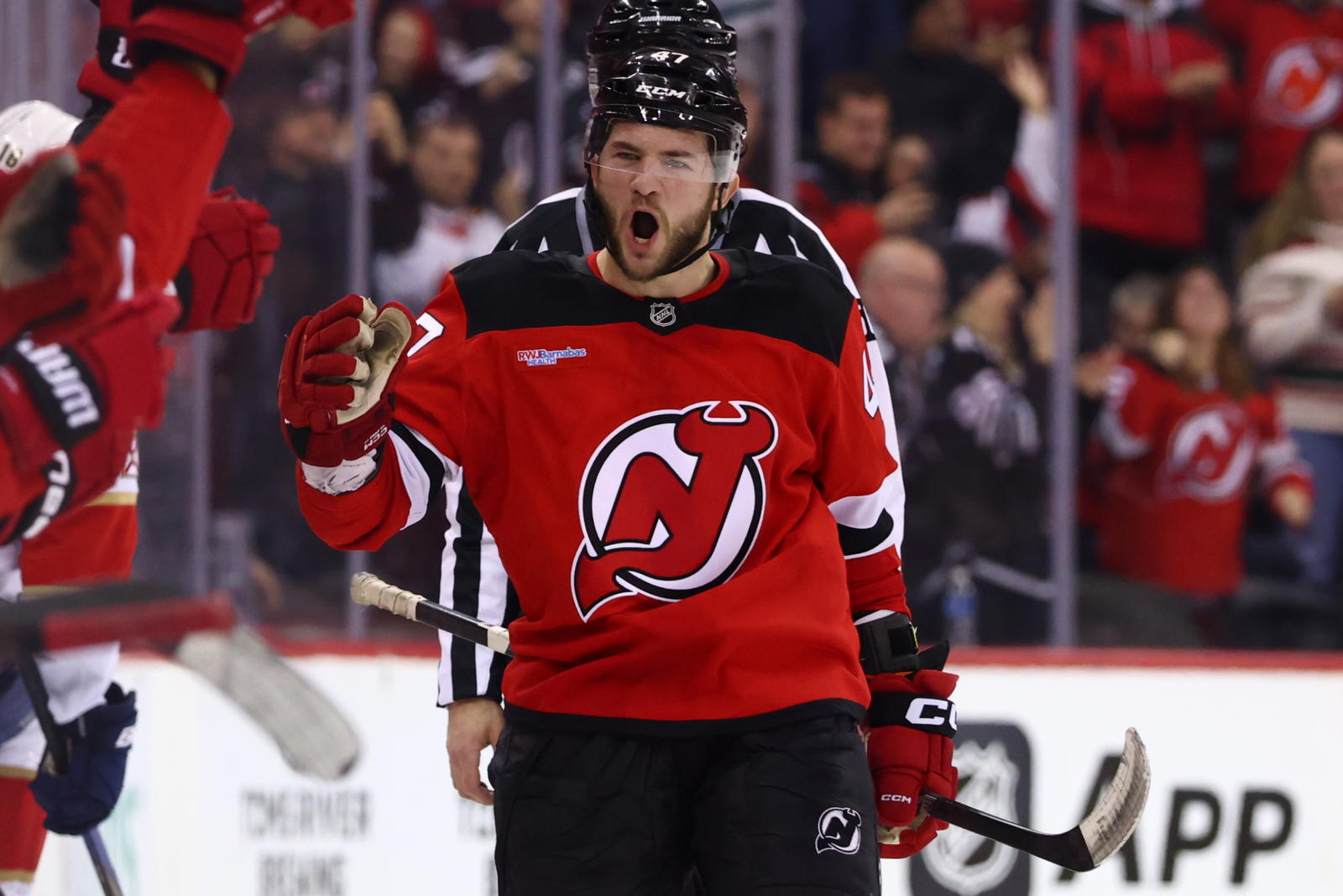
Jan 14, 2025; Newark, New Jersey, USA; New Jersey Devils center Paul Cotter (47) celebrates his shootout goal against the Florida Panthers at Prudential Center. Mandatory Credit: Ed Mulholland-Imagn Images
Over the first 61 games of the 2024-25 season, Cotter has collected 19 points (13 goals, six assists) and has been the physical presence the team has needed.
After a recent practice, The Hockey News sat with Cotter for a mini Q&A. During the interview, he spoke about his love for the game, career trajectory, and more.
The Hockey News: Lisa Kudrow has publicly spoken about how it took a few years to settle into her Friends character, Phoebe Buffay. How long did it take you to get comfortable and understand what it takes to be an NHLer, day in and day out?
Paul Cotter: Oh, boy.
I would say after my first year. I think that going into my second year, I had a little bit more confidence. As the first year went on, you gained more, but I would say after the first year. Going into the second, I was like, alright, this is normal life.
There are guys that you have looked up to for your whole life, and you have had posters of these people on your wall, and now you are playing against them, so it is a little weird to start with. Even guys you play with. For me, it was Jack Eichel, Phil Kessel, Jonathan Quick, you know, guys like that. Once you meet them and become buddies and stuff, it becomes normalized, and it is just normal life.
THN: Is there a particular moment in your career that you would love to show to your younger self to say this is going to be you in the future?
Cotter: Probably the moment when I was raising the Cup. I don't think I would have believed that. When I was 15 years old, I couldn't even make a AAA hockey team. So, it would be kind of a stretch to see that picture.
It is cool to look back and see pictures and videos because it is one of those things that you are kind of in a little bit of a daze. You don't even really believe it is happening. I don't even know how to describe it.
THN: Was there ever a moment in your career when you started to lose your love for the game?
Cotter: Yeah. I mean, there are ups and downs, right?
The downs are tough. For instance, in Vegas, when I came in, I started to have success during injuries, and then those guys came back, and I went from playing 16 minutes back to eight. It is kind of like, why is this happening? How do I get through this?
For me, I then move to a new team and sometimes I play a lot, sometimes I don't. Sometimes, it is hard on your mind. You wonder why you are not in this situation. You have to remember it is a pretty good gig, right?
You have to be a good teammate, but it is hard sometimes mentally. Everybody here is so passionate; I think that is the reason that when you don't perform how you want or don't get the opportunities that you want, it is hard. So, I think it all comes down to people being passionate and wanting so much. That is how we all got here. Wanting so much and when you don't get it, it is hard.
THN: What has hockey given you?
Cotter: Quite a bit.
I think the sport, in general, does a pretty good job of teaching you adversity real quick. You learn how to deal with people. You have teammates, and you learn how to be a person.
It teaches you so (much at a) young age. When you are part of a team, and everyone is hitting each other and chirping at each other, how to take some heat when needed and take accountability. It turns you into a person who understands certain lessons from being on a team, physicality, and stuff like that that other sports and people don't get. So it is kind of unique.
THN: Was there ever a moment in your life that you wanted to quit hockey?
Cotter: Oh, yeah. So many times. Countless. All throughout my career.
I mean, it was one thing after another. It was kind of hard for me because I didn't really stay in a place for more than a year. I was always growing at a level somehow. The year to climb the ladder from the bottom to the top was tough.
It has always been a grind. There were times when I was 15 or 18 when I thought this doesn't make sense. It is not worth it. I mean, I am sure some guys have similar stories. You know, some guys have been the best of the best for their whole life, but (in that situation) the spotlight is on you 24/7, and sometimes that is not the greatest feeling either.
I said I was going to quit, but I don't really know if I can do anything else.
**Editor's note: When asked what his backup plan was, he said he always wanted to have his own private practice for psychology but continued to say it might be tough to do without a college degree.
Make sure you bookmark THN's New Jersey Devils site for THN's latest news, exclusive interviews, breakdowns, and so much more.
1
Comments

Powered by RoundtableBuilt on infrastructure designed for real-time media. Learn more at RTB.io.© Roundtable 2026. By using this site you agree to the Terms of Use and Privacy Policy