




The Philadelphia Flyers resume play Sunday night in Seattle with a clear objective: pick up where they left off before the holiday pause and continue translating process into points.
Philadelphia enters the game well positioned in both the Metropolitan Division (3rd place) and the Eastern Conference overall (4th place), largely because they have minimized volatility. They are not winning with extreme shooting percentages or goaltending benders; instead, they have been steady across five-on-five play, increasingly efficient on special teams, and more difficult to play against shift by shift.
Seattle, meanwhile, remains a team in the middle tier—capable of punishing mistakes but inconsistent in dictating play for full games. That dynamic frames this contest clearly: if the Flyers manage the game correctly, they should control long stretches.
Transition and Neutral-Zone Control
The most important tactical area in this matchup is the neutral zone. Seattle has struggled when opponents attack with pace through the middle rather than defaulting to wide entries or dump-ins. The Kraken’s structure can become compressed when their defense is forced to retreat quickly, creating seams for late-arriving forwards and trailing defensemen.
Philadelphia has been more effective recently at exploiting those situations. Their forwards have supported the puck well through the middle of the ice, allowing cleaner entries and reducing the need for low-percentage plays at the blue line. Maintaining that approach will be critical, especially early. Turnovers at either blue line are where Seattle does its best work, generating odd-man rushes and quick strikes that can swing momentum.
The Flyers’ defense will also be tested by Seattle’s tendency to activate from the weak side. Holding tight gaps without overcommitting is essential; Seattle is less dangerous when forced into prolonged zone time but becomes opportunistic when defenders lose spacing.
Offensive-Zone Play and Shot Quality
At five-on-five, this is a game where shot quality should matter more than volume. Seattle allows chances from the interior when opponents are patient enough to work pucks low and force defenders to turn. Philadelphia’s recent success along the boards and below the goal line aligns well with that weakness.
Sustained offensive-zone time will be especially important for the Flyers’ bottom six. Seattle’s depth lines can be exposed when pinned in their own end, and extended shifts create favorable matchups later in periods. Philadelphia’s ability to roll four lines and maintain pressure without sacrificing defensive structure has been one of its quiet strengths over the past few weeks.
The Flyers should also look to involve their defense selectively. Point shots are less about raw velocity in this matchup and more about creating rebounds and second opportunities. Seattle’s goaltending has been inconsistent when traffic is layered properly, and Philadelphia has been more committed to net-front presence of late.
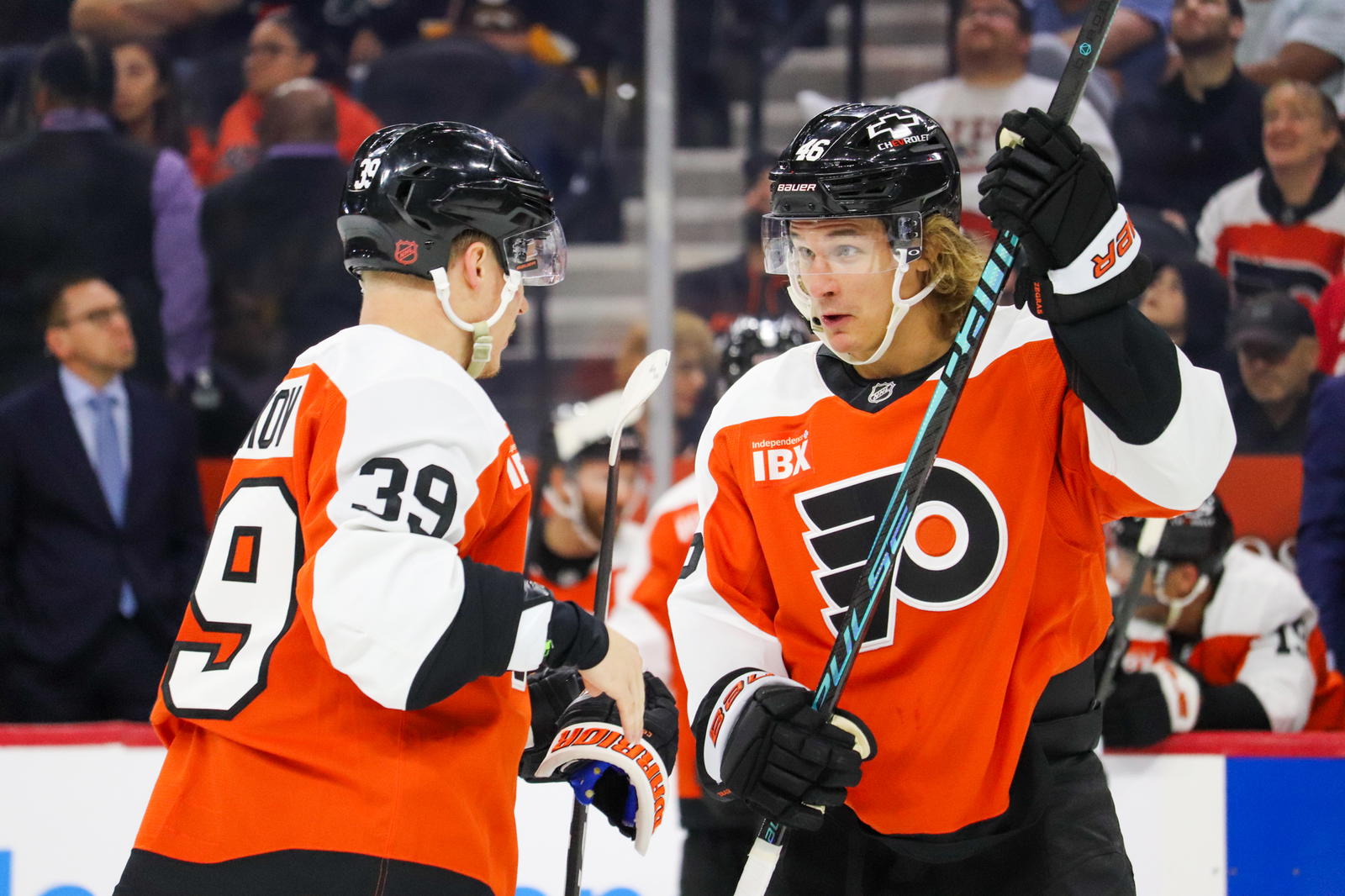
 Matvei Michkov (39). (Megan DeRuchie-The Hockey News)
Defensive Detail and Game Management
From a defensive standpoint, the Flyers’ priorities are clear: protect the slot, eliminate second chances, and manage puck decisions under pressure. Seattle generates a significant portion of its offense from broken plays and extended scrambles. Clean clears, strong stick positioning, and decisive first passes will go a long way toward keeping the game on Philadelphia’s terms.
Goaltending support will be just as important as goaltending performance. Philadelphia’s recent defensive play has allowed its goalies clearer sightlines and fewer east-west looks. Against a team like Seattle, that structure must remain intact, particularly after turnovers or line changes.
Context and Consistency
Zooming out, this game fits squarely into the Flyers’ larger objective. They have earned their position in the standings through consistency rather than bursts, and maintaining that trajectory requires winning games like this—on the road, after a break, against a team that will capitalize if given openings.
Seattle is beatable, but not passive. The Flyers don’t need to chase the game or manufacture energy. If they manage pace, control the neutral zone, and stay disciplined, the matchup favors them. The challenge is not ability, but execution. How well Philadelphia handles those details Tuesday night will say a lot about whether their recent groove is sustainable as the season moves forward.
Projected Lines
Philadelphia Flyers
Forwards:
Trevor Zegras - Christian Dvorak - Travis Konecny
Denver Barkey - Sean Couturier - Owen Tippett
Matvei Michkov - Noah Cates - Bobby Brink
Carl Grundstrom - Rodrigo Abols - Nikita Grebenkin
Defense:
Cam York - Travis Sanheim
Emil Andrae - Jamie Drysdale
Nick Seeler - Rasmus Ristolainen
Goalies:
Dan Vladar
Sam Ersson
Seattle Kraken
Forwards:
Kaapo Kakko - Matty Beniers - Jordan Eberle
Eeli Tolvanen - Chandler Stephenson - Frederick Gaudreau
Berkly Catton - Shane Wright - Jared McCann
Tye Kartye - Ben Meyers - Jacob Melanson
Defense:
Vince Dunn - Adam Larsson
Ryan Lindgren - Cale Fleury
Ryker Evans - Jamie Oleksiak
Goalies:
Joey Daccord
Philipp Grubauer