


Nick Turchiaro-Imagn Images


Nov 9, 2026 3:40 AM
Every Sunday of the NHL season, Mike Fink empties the notebook with some thoughts, quick hits, and anything in between on the New Jersey Devils.
The play by Luke Hughes on Saturday night still stands out. Not the fight with Matthew Schaefer, although that’s noteworthy as well. The play does involve Hughes and Schaefer, though.
It’s the overtime play where Hughes closes in on Schaefer, who has a chance to end the game with a breakaway goal. Then, Hughes breaks up the scoring chance, steals the puck, and sends it up the ice to his brother Jack Hughes for the overtime winner.
The play might have been a penalty, or at least a borderline call. It’s how Schaefer felt afterwards, expressing frustration on the ice. However, that play speaks to the improvements Hughes has made on defense, allowing the New Jersey Devils to win that game 5-4 and become one of the top teams in the NHL.
Hughes is where this week’s Devils notebook should start. After all, it’s been quite the week for the young defensemen. He’ll get a deep dive, but first, some thoughts on the recent 4-0 win over the Toronto Maple Leafs.
Maple Leafs Remind The Devils Of The Woes They Addressed
The 4-0 final indicates that the game was lopsided. The play was even at the start but the Devils wore the Maple Leafs down and pulled away. The pace and how the Devils took over was a reminder of many issues that had to be addressed this season to become a contender.
The noticeable one was a slow defense, which the Devils fixed and the Maple Leafs stil have. Throughout the latest game, Jack Hughes and the fast-paced skaters blew by the Maple Leafs defensemen, many of which are veterans in their 30s who have lost a step.
Outside of Luke Hughes, the Devils defense is older yet doesn’t play that way. One reason why is the Declan Chisholm addition, as the 26 year old defenseman adds a burst of speed to the third pair, and he gets ice time when the matchups call for it.
Speaking of wearing the opponent down, the Devils managed to do so to the Maple Leafs despite playing with 11 forwards. Another issue general manager Sunny Mehta addressed this offseason was the depth and he wanted the forward unit to have multiple lines that could come at teams. They have throughout the season and they wore down the Maple Leafs.
The other key is in the net. The Maple Leafs thought their fix was signing Sergei Bobrovsky, which is fair considering his playoff success. The problem is that they are relying on two goaltenders who have slowed down in the regular season with injuries and don’t have a workhorse who can get them throught the season. It’s costing them as the Maple Leafs lost their third game in a row and sit at the bottom of the Atlantic Division.
The Devils meanwhile addressed their issues in the net with the Connor Hellebuyck move. It’s a risk considering his playoff woes but his success in the regular season has boosted the Devils. His 23-save shutout against the Maple Leafs was his best start as a Devil and proved why he was worth making the move to acquire. He gives them stability in the net while the rest of the roster makes them an early season Cup contender.
Luke Hughes Leaning Into His Strengths To Become An Elite Defenseman
Hughes has always been a great skater, which has typically helped him offensively. According to NHL Edge, his 30 bursts in the 20-22 miles per hour range are tied for sixth-most among defensemen in the NHL. He is not only fast but also accelerates and joins plays in a hurry.
This season, he’s leaning into his speed to impact the games defensively. The play in overtime against Schaefer is a prime example, as he chases down the Islanders defenseman and breaks up the scoring chance. It’s also become a common occurrence for Hughes, where he’ll close in on the skater with the puck and either break up a rush chance or a shot in the slot.
Moreover, it allows Hughes to play in the right position or, more accurately, circle back into position in the defensive zone. It’s something Keefe has preached to the defense throughout the season, and noticed during the hot streak. “I think that the guys away from the point of contact or away from the puck have worked to get back to position and have been more disciplined to be in position so that if something happens, if a puck gets through, somebody's there to clean it up,” Keefe noted after the Oct. 24 3-1 win over the Los Angeles Kings.
While Hughes is an aggressive defenseman, often joining the play on offense, he has the speed to make up for it on the defensive end, and it’s reflected in his 1.4 defensive point shares, which are second-most on the Devils behind only Brett Pesce.

Speaking of Pesce, another factor is the improvements from Hughes. Young defensemen who are learning the position but have the skill offensively need a veteran on their pair to both cancel out their mistakes and teach them firsthand. Pesce has done that in the past, and it’s paying off this season.
It’s also a reminder that Hughes needed time to learn the position. Defensemen typically need NHL action and games to develop. Hughes is 23 and closing in on 250 games (he’s nine away, following the game against the Maple Leafs).

Along with the speed is the puck-handling ability, a quality that turns defense into offense. It’s something many defensemen were taught at the development level, where possession and the ability to move the puck out of the defensive zone and into the offensive zone are prominent in Cale Makar, Quinn Hughes, and Schaefer’s play. The Devils' young defenseman has focused on his puck handling to help the defense and offense.
“He's controlling the pace, he's controlling the puck, and he wants the puck on his tape,” Connor Hellebuyck stated after the game against the Blues when asked about Hughes and his defensive play. “Guys like that, they have a way of really pushing the other team back,” Hellebuyck added. When Hughes is on the ice, the opponent is on their heels and can’t forecheck the way they typically would, knowing the pressure the defenseman can generate the other way.
What about his play on the offensive end? His career-high for goals came in his first full season in the NHL, scoring nine in 2023-24. Hughes has six goals and 11 points through 18 games. It’s a credit to his willingness to shoot and take on a more aggressive mindset in the offensive zone.

Hughes won’t be in the Norris Trophy conversation. Likewise, he’s not one of the handful of elite defensemen in the NHL. However, the best teams in the NHL often have an elite number-one defenseman. The Devils look like they found their answer in Hughes.
Timo Meier’s Fight To Be A Team Player
In the game against the St. Louis Blues, Timo Meier dropped the gloves with Jake Neighbours after the Blues skater delivered a big hit on Nico Hischier. Meier was given a game misconduct for instigating the fight.
After the game, head coach Sheldon Keefe said something interesting about fighting and the way it’s changed recently. “The guy who threw the hit is often the first one to get his gloves off and throw the first punch. That’s happening a lot around the league.” It suggests that when a player delivers a hit, even if it’s clean, they are anticipating a fight right away.
I reached out to multiple former NHL enforcers turned scouts (as an aside, a surprising number of former enforcers are now scouts) for their thoughts on this. Here are three takeaways about what’s happening in the league.
- The player who delivers the hit is anticipating a fight, whether it’s a clean hit or not. They might not drop their gloves, but they have their head on a swivel, knowing someone is likely coming after them.
- When a hit happens, it’s easy to miss it. However, the skaters must make a snap decision. Either they can play on or drop the gloves and stick up for their teammates. They must make this decision with the game being played at warp speed, and ignoring the hit for a few seconds can make the skaters look like bad teammates.
- It’s why most players will stand up for their teammates and drop the gloves regardless of the hit. Meier wants to be known as someone who will stand up for his captain, and likewise, the coaching staff wants to see players respond. The opposite was on display last season when Radko Gudas injured Auston Matthews with a knee-on-knee hit, and the lack of a response from the Maple Leafs was a bad look.
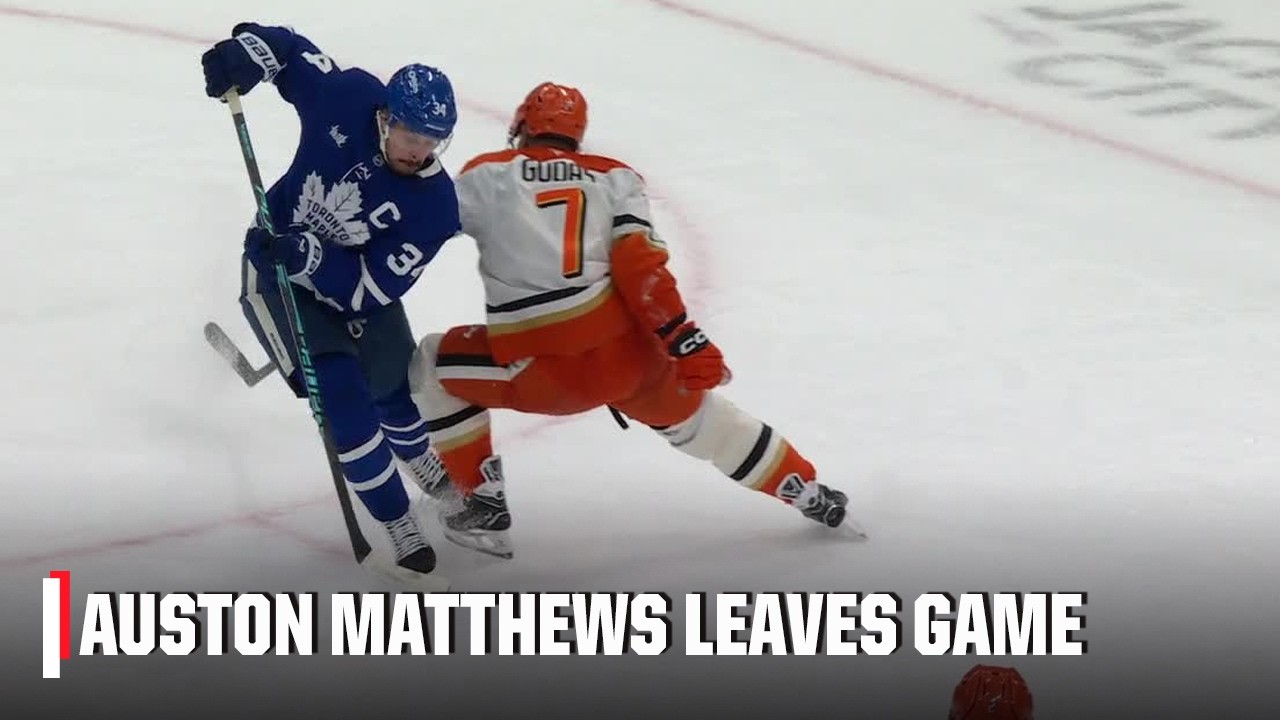
A problem is how these fights are officiated. Meier was given a game misconduct for instigating. It’s a side effect of fighting returning to hockey and referees not being used to seeing them, certainly not as often as they used to.
Moreover, the NHL has turned over many of the older officials recently, many of whom have retired, for younger refs. The pros are that they can skate with the players and keep up with plays. They see more. The downside is that they are making more calls both because they see more and don’t have the same feel for the game. They’ll make the right call by the book but not for the flow.
That’s also been a trend in the NHL. The refs are making more calls and calling more penalties. The Devils game against the Edmonton Oilers had a combined nine penalties called, which disrupted the flow of the game and made it longer. It’s a fine line between making the right calls and managing the game, making sure it’s not too long (plus, allowing the players to police the game themselves). The younger officials are still learning where the line is and how to control a game because of it.
As for Meier, it’s been a frustrating season for him. It’s what made his two-goal night against the Maple Leafs a relief. He’s been playing the right way yet hasn’t had the puck luck. He was due for a big game and finally got it.
Quick Hits
The Utica Comets swept their back-to-back this weekend. The Devils' American Hockey League affiliate is 8-2 and has the best winning percentage in the North Division (third-most points). They are a good team, and oddly enough, they mirror how the Devils are built.
The Comets have four forward lines that come at teams in waves, a young rising star on the defense (in this instance, it’s Devils prospect Anton Silaev), and steady goaltending. It’s great for the Devils' future and the present.
With Anthony Mantha out and missing time, the Devils might turn to one of the Comets to add depth for the time being. Stefan Noesen is the go-to call-up considering his time with the Devils, and he’s a depth veteran. Riley Tufte is a power forward who can slide in on the fourth line. Then there’s Lenni Hämeenaho, a 23-year-old forward who leads the AHL team with eight points in 10 games, the one fans will want to get a glimpse of.
The Devils' 4-3 win over the Oilers was in a shootout. It’s always fascinating to see who goes in the shootout and how coaches decide who takes a shot. Every team has the usual suspects (for both teams, it was Jack Hughes, Jesper Bratt, Connor McDavid, and Leon Draisaitl), but then some coaches must guess, rely on instinct, or rely on what the players say.
The Devils went with Evan Rodrigues for the third attempt and Arseny Gritsyuk for the fourth and game-winner. “Putting together historical data, stats, and how guys have done. Rodrigues is right up there with our top guys, especially if you just factor in recent years,” Keefe stated on the selection, adding Gritsyuk has a small sample; he’s only taken one shot in the NHL, but he’s done well in the KHL previously, and obviously he's the hot hand.” It’s something Keefe had in his back pocket for the Devils' first shootout, and it worked. Chances are the next time the Devils are in a shootout, they’ll go with Hughes, Bratt, and Grityuk.
The upcoming week will be an interesting one, to say the least. It starts with the big news on Sunday night that Hellebuyck won't start the Tuesday night game against the Jets, a game many anticipated he would get the nod for, as it's the first time he makes the trip back. There will be plenty of coverage of it here at The Hockey News.
Comments

Powered by RoundtableAn AI/DeFi-powered Enterprise Media Operating System. Learn more at Roundtable.io.© Roundtable 2026. By using this site you agree to the Terms of Use and Privacy Policy